
Philodendron Verrucosum Identification Guide
Identify Philodendron verrucosum by its velvety heart-shaped leaves with pale veins, red undersides, and distinctively hairy petioles.
Read the full Philodendron Verrucosum encyclopedia entry →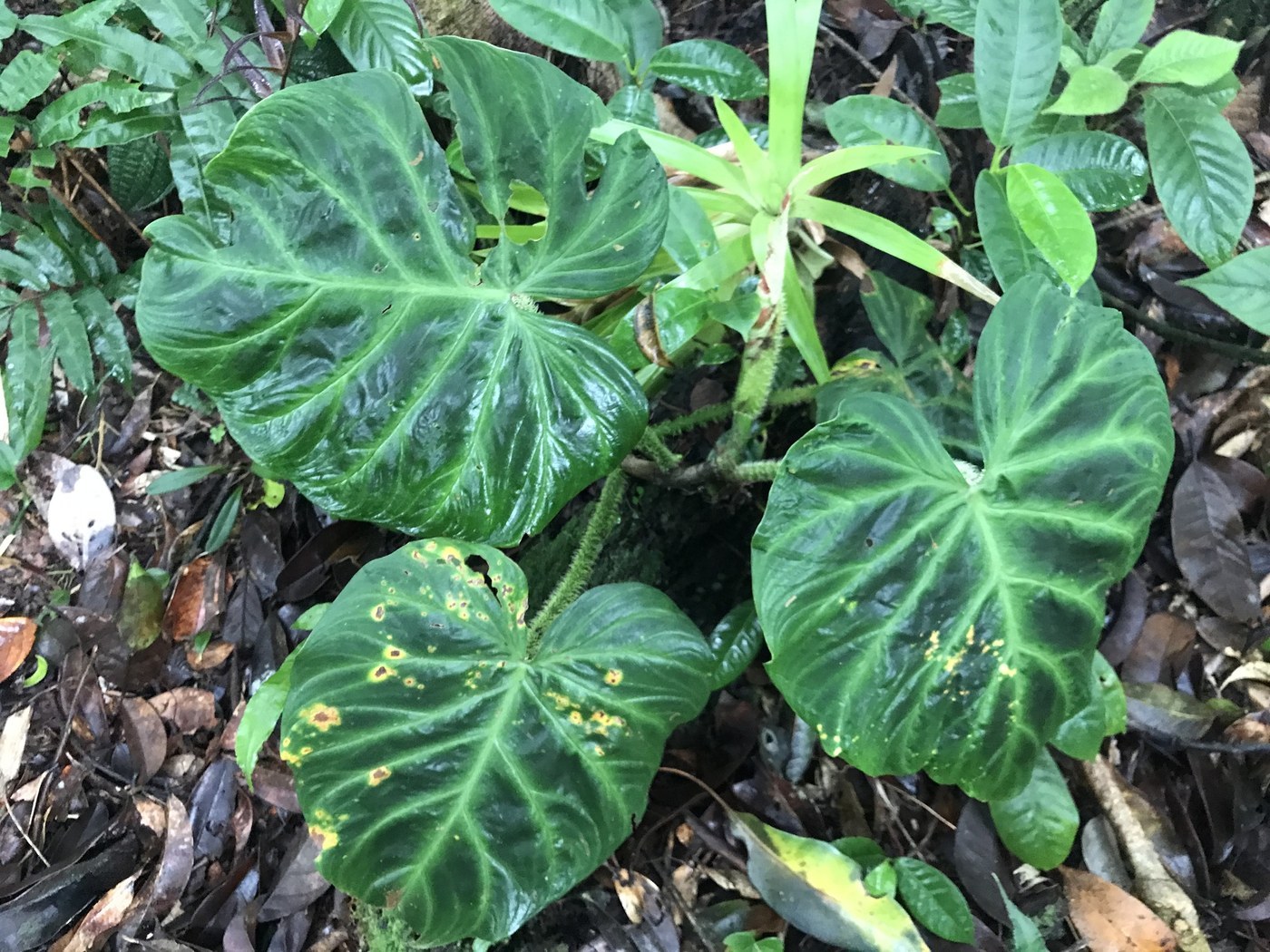
Key Identifying Features
Philodendron verrucosum is a prized velvet-leaf climber. Identify it by:
- Broad, heart-shaped velvety leaves in deep emerald green
- Pale green to yellow-green veins with a contrasting iridescent sheen
- Distinctive hairy (verrucose) petioles bearing soft bristly hairs
- Reddish to maroon leaf underside
Leaves & Stems
Leaves are large, cordate (heart-shaped) with a velvety, light-absorbing surface that can look bronze, emerald, or near-black depending on light, often with subtle blue-green iridescence. Lighter green primary veins form a bold pattern, and the underside is flushed red to deep maroon. The single most diagnostic feature is the petiole: it is covered in soft, hair-like green or reddish bristles (the 'verrucose' warty-hairy texture) that no other common velvet philodendron shares. It is a climber with aerial roots, producing larger leaves as it ascends a support.
Flowers & Fruit
As an aroid it can produce a spathe-and-spadix inflorescence, greenish-white, but flowering is uncommon and unremarkable in cultivation. Grown for foliage.
How to Tell It Apart from Look-Alikes
- Philodendron melanochrysum: velvety too, but leaves are elongated and narrow with gold veins, and the petiole is smooth (not hairy).
- Philodendron micans: small trailing velvet heart leaves, smooth petioles, no hairy stalks.
- Philodendron gigas: velvety broad leaves but smooth petioles and less red underside.
- Philodendron 'Splendid' (verrucosum x melanochrysum): intermediate; petioles are less densely hairy than pure verrucosum.
The hairy petiole + velvet heart leaf + red underside combo confirms verrucosum.
Where You'll Find It
Native to Central and South American cloud forests (Costa Rica to Ecuador and Peru), it climbs tree trunks in cool, humid, shaded conditions. As a houseplant it is demanding, wanting high humidity, cool-to-warm temps, a moss pole, and bright indirect light. You will find it among serious collectors rather than general retail.
Quick ID Checklist
- Velvety heart-shaped leaves
- Pale green veins, iridescent sheen
- Hairy/bristly petioles (key trait)
- Red to maroon underside
- Climbing vine with aerial roots
- Larger leaves with maturity on a support
Frequently asked questions
What is the most reliable way to identify verrucosum?
Check the petiole. Philodendron verrucosum has soft, hairy, bristly petioles, a feature that separates it from nearly all other velvet-leaf philodendrons, which have smooth stalks.
How is it different from melanochrysum?
Verrucosum has broad heart-shaped leaves with pale veins and hairy petioles, while melanochrysum has long, narrow leaves with golden veins and smooth petioles.
What color is the underside of the leaf?
Reddish to deep maroon, which is a helpful confirming feature alongside the hairy petiole.
Why is verrucosum considered hard to grow?
It originates from cool, humid cloud forests and needs high humidity and stable conditions, making it more demanding than most houseplant philodendrons.