
How to Care for Pickerelweed
Grow Pickerelweed, an easy native marginal aquatic with glossy heart-shaped leaves and violet-blue flower spikes for pond edges.
Read the full Pickerelweed encyclopedia entry →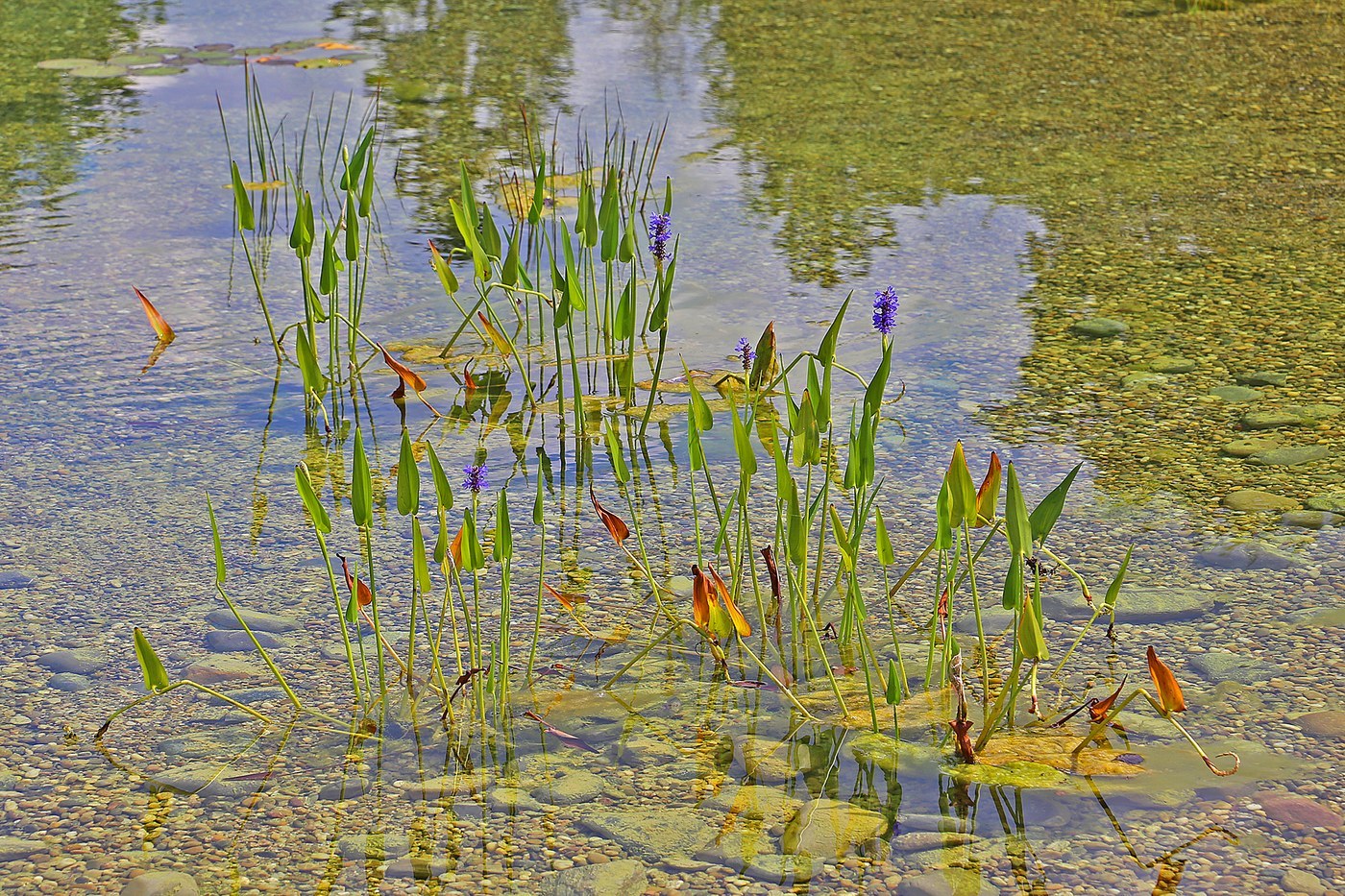
Pickerelweed (Pontederia cordata) is a hardy native aquatic marginal grown for its glossy, heart-shaped leaves and showy spikes of violet-blue flowers held above the water through summer. It is an easy, vigorous plant for pond edges, water gardens, and boggy margins.
Light
Pickerelweed flowers best in full sun, which drives strong, upright growth and abundant bloom spikes. It tolerates partial shade but produces fewer flowers and looser foliage. Give it as much sun as your water feature allows.
Water
This is a true aquatic marginal that wants its roots in shallow standing water. Plant it with the crown just at or below the waterline, typically in up to a few inches of water over the soil surface. It also thrives in permanently saturated bog and pond-edge mud. Never let its rootzone dry out during the growing season.
Soil & Potting
Grow in heavy, rich loam or a dedicated aquatic planting mix - not lightweight potting mixes, which float and cloud the water. Use an aquatic basket or a solid pot without drainage holes, topped with a layer of gravel to keep soil in place and deter fish from disturbing the roots. The soil should be fertile and dense.
Humidity & Temperature
As an aquatic, humidity is a non-issue. Pickerelweed is cold-hardy across a wide range of temperate climates; its top growth dies back in winter and resprouts from the rootstock in spring. In very cold regions, keep the crown below the ice line by lowering the basket into deeper water for winter.
Feeding
Growing in fertile aquatic soil, it needs little feeding. For extra vigor and bloom, push a slow-release aquatic fertilizer tablet into the soil near the roots in spring and again at midseason. Avoid broadcasting loose fertilizer into the water, which fuels algae.
Propagation
Propagate most easily by dividing the creeping rhizomes in spring or early summer; cut the rootstock into sections each with growing points and replant in aquatic baskets. It can also be grown from seed sown onto wet soil, though division is faster and keeps vigorous clumps.
Repotting / Pruning
Divide and repot crowded clumps every two to three years in spring to maintain vigor and flowering. Remove spent flower spikes and yellowing leaves through the season to keep the planting tidy. Cut back dying top growth in late autumn as the plant goes dormant.
Common Problems & Pests
Pickerelweed is largely trouble-free. Aphids sometimes cluster on flower stalks - a strong rinse of water usually clears them. Chewing damage from aquatic insects or waterfowl can occur but rarely harms established clumps. The main issues are cultural: too little water, too much shade, or a lightweight mix floating away. Vigorous clumps can spread, so contain them in baskets if you want to limit expansion.
Seasonal Care Tips
Plant or divide in spring as growth resumes. Through summer keep the rootzone submerged, deadhead spent spikes, and enjoy the long bloom. In autumn cut back fading foliage. In cold climates move baskets to deeper water for winter so the crown stays below freezing ice, then return to the shallows in spring.
Frequently asked questions
How deep should I plant Pickerelweed?
Set the pot so the crown sits at or just below the waterline, with roughly up to a few inches of water over the soil. It also grows well in saturated bog and pond-edge mud.
Why isn't my Pickerelweed flowering?
The usual cause is too much shade. Move it into full sun for the strongest, most abundant flower spikes, and make sure its roots stay in fertile, consistently wet soil.
Is Pickerelweed winter hardy?
Yes, it is hardy across a wide temperate range. Top growth dies back and resprouts in spring. In very cold areas, lower the basket into deeper water so the crown stays below the ice line.
What soil should I pot Pickerelweed in?
Use heavy loam or a dedicated aquatic planting mix in an aquatic basket, topped with gravel. Avoid lightweight potting mixes, which float, cloud the water, and wash away.