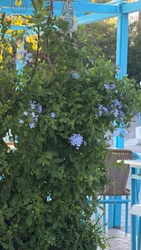
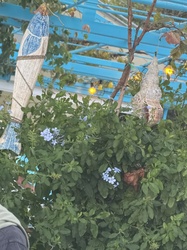
Plumbago Identification Guide
Identify Plumbago (Plumbago auriculata) by its sky-blue phlox-like flower clusters, sprawling lax stems, and sticky seed capsules that cling to clothing.
Read the full Plumbago encyclopedia entry →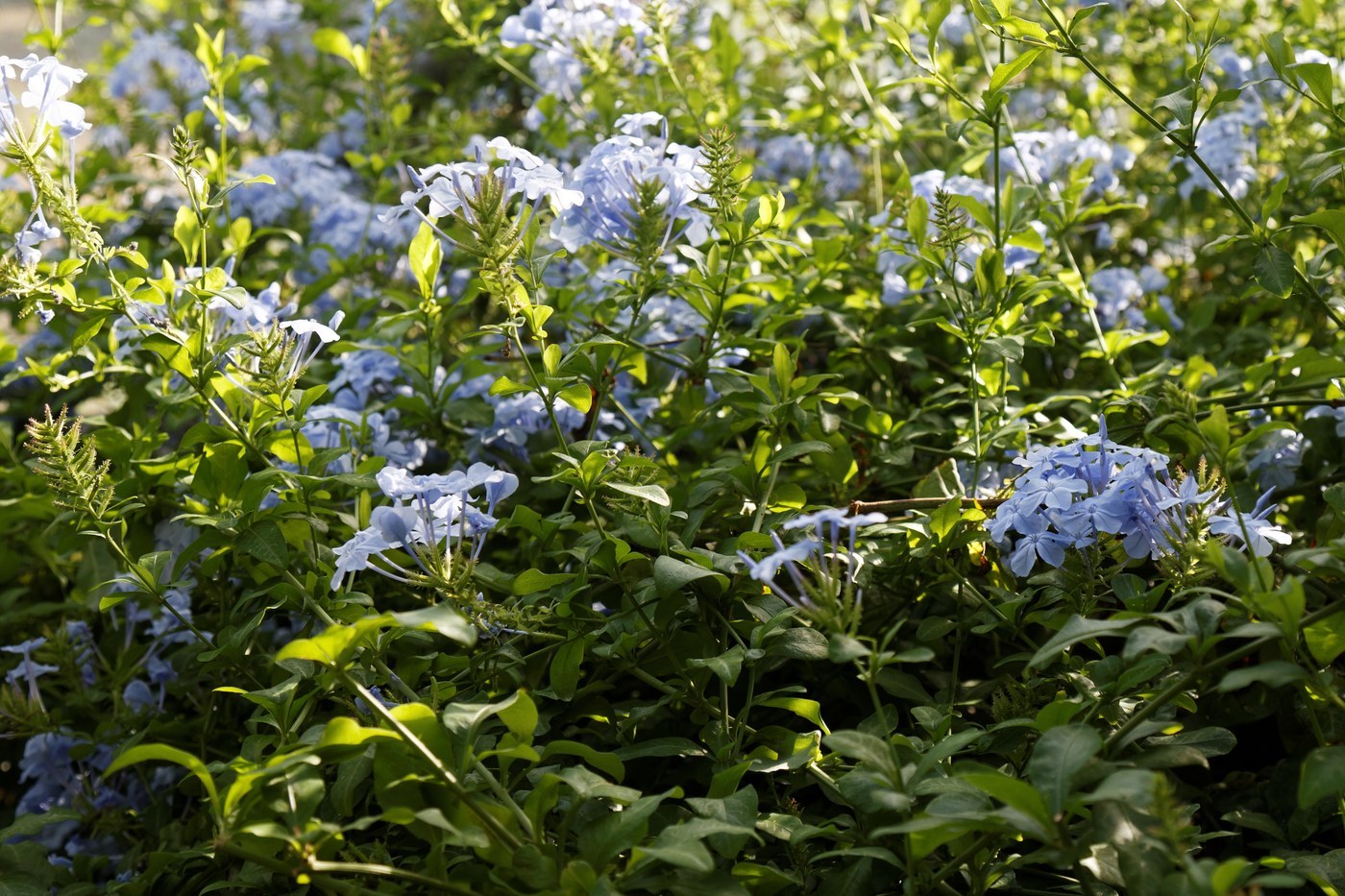
Key Identifying Features
Plumbago (Plumbago auriculata, syn. P. capensis), or Cape leadwort, is a sprawling evergreen shrub in the leadwort family (Plumbaginaceae). It is recognized by its clusters of pale sky-blue (sometimes white) phlox-like flowers, lax, scrambling stems, soft green leaves, and sticky, gland-covered seed capsules that cling to clothing and fur like burrs.
- Sprawling, mounding-to-climbing evergreen shrub, 3–6 ft (can scramble higher)
- Pale sky-blue flowers in rounded terminal clusters
- Long bloom season in warm weather
- Sticky calyx/seed capsules that stick to clothing
Leaves & Stems
Leaves are alternate, simple, oblong to spoon-shaped (obovate), 1–2 in long, soft, thin, and medium green with smooth margins, often with small ear-like lobes (auricles) at the base (hence auriculata). Stems are slender, green, lax and somewhat vining, tending to sprawl, mound, or scramble over supports rather than stand stiffly upright.
Flowers & Fruit
Flowers are borne in dense, rounded clusters (heads) at the branch tips, each flower a slender tube flaring into five flat lobes, about 1 in across — strongly resembling phlox. The classic color is a soft powder/sky blue, with white-flowered forms ('Alba') and a deeper-blue cultivar ('Royal Cape'). Bloom is long and heavy through warm months. The tubular calyx is covered in sticky, sticky-tipped glandular hairs, and the resulting seed capsules adhere to clothing and animal fur — a memorable ID trait.
How to Tell It Apart from Look-Alikes
- Phlox: Flowers look similar, but garden phlox is a herbaceous perennial with opposite leaves and lacks the sticky burr-like calyces and woody sprawling stems.
- Blue plumbago vs. dwarf plumbago (Ceratostigma): Ceratostigma is a low groundcover with gentian-blue flowers and red-tinged foliage in fall — different habit and deeper blue.
- Leadwort relatives: Share the genus traits but differ in habit and flower color.
The sky-blue phlox-like flower clusters + lax scrambling stems + sticky glandular seed capsules combination is diagnostic.
Where You'll Find It
Native to South Africa; widely grown in warm climates (USDA zones 9–11, often as an annual or container plant in cooler areas) as a sprawling hedge, bank cover, fence-scrambler, and butterfly plant. It loves full sun and heat and tolerates drought once established.
Quick ID Checklist
- Sprawling/scrambling evergreen shrub with lax green stems
- Alternate, soft, smooth-edged spoon-shaped leaves
- Rounded clusters of sky-blue (or white) phlox-like flowers
- Five flat lobes on a slender flower tube
- Sticky, glandular seed capsules that cling to clothing
- Long, heavy bloom in warm weather; loves full sun
Frequently asked questions
Why do Plumbago seeds stick to my clothes?
The tubular calyx surrounding each flower is covered in sticky, glandular hairs, so the developing seed capsules cling to clothing and animal fur like tiny burrs, which helps the plant disperse seed.
Is Plumbago the same as phlox?
No, though the flowers look alike. Plumbago is a sprawling woody shrub in the leadwort family with sticky calyces, while phlox is a herbaceous perennial with opposite leaves and no burr-like seeds.
What color are Plumbago flowers?
The classic color is a soft powder-blue or sky-blue, with white-flowered forms and a deeper-blue cultivar also available.
Where does Plumbago grow well?
It thrives in full sun and heat in warm climates (zones 9-11), sprawling over banks and fences, and is often grown as an annual or container plant in colder regions.
Plumbago identified by the community
Recent Plumbago specimens identified with Plant Identifier.