
Poppy Identification Guide
Identify poppies by their papery crinkled petals, nodding buds that straighten as they open, milky or colored sap, and distinctive pepper-shaker seed pods.
Read the full Poppy encyclopedia entry →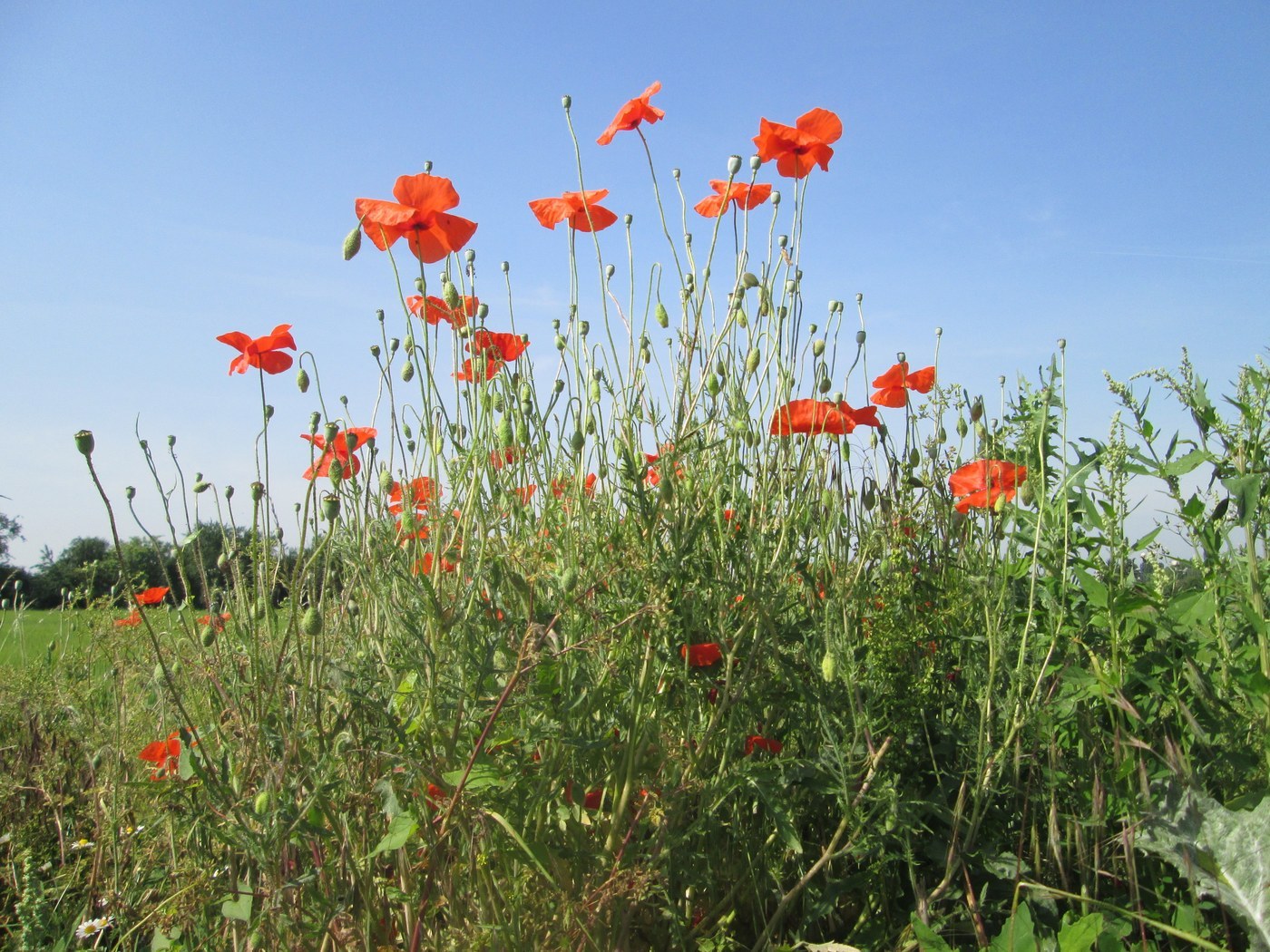
Key Identifying Features
Poppies (family Papaveraceae, including Papaver and relatives) are recognized by their delicate, papery, often crinkled petals, hairy nodding flower buds that lift upright as they bloom, and a unique urn-shaped seed capsule with a flat top and ring of pores that scatters seed like a pepper shaker. Most exude milky white or colored latex when cut.
- Thin, silky, crepe-paper petals (usually 4-6)
- Drooping fuzzy buds on long stalks that straighten when opening
- A central knob (the ovary) ringed by many dark stamens
- Milky or colored sap from stems
Leaves & Stems
Leaves vary by species but are often deeply lobed, toothed, or finely divided, and many are covered in bristly hairs (as in the common red field poppy and oriental poppy). Foliage is frequently gray-green or blue-green. Stems are slender, usually hairy, and leafless near the top, holding a single flower each. When broken, stems release a milky latex that is white in many species but yellow or orange in others such as the Welsh and California poppies.
Flowers & Fruit
Flowers are typically bowl- or cup-shaped with 4 to 6 broad, overlapping petals that look and feel like tissue paper and often have a dark blotch at the base. Colors include scarlet-red (field poppy), orange (California poppy), and the white-to-purple of opium poppy, plus many cultivated pastels. At the center sits a prominent ovary surrounded by a fringe of numerous stamens. The hallmark fruit is a rounded or oblong capsule topped by a flat disc; when ripe, pores open just under the rim so wind shakes out the tiny seeds.
How to Tell It Apart from Look-Alikes
- Anemone (windflower): similar cup of petal-like sepals, but lacks the poppy's distinctive pepper-pot seed capsule and milky sap.
- Ranunculus / buttercup: glossy (not papery) petals and different seed structure.
- Flax: five separate petals that drop quickly, and round capsules without the rimmed pores.
- Tulip: bulb plant with strap leaves and no latex.
The trio of papery petals, milky/colored sap, and a rimmed pepper-shaker pod is essentially unique to poppies.
Where You'll Find It
Poppies grow across temperate and Mediterranean regions worldwide. The red field poppy is famous in grain fields, meadows, and disturbed roadsides; California poppy carpets dry hillsides and grasslands; ornamental oriental and Iceland poppies are common garden perennials and annuals. Most favor full sun and well-drained, even poor, soil.
Quick ID Checklist
- Papery, crinkled, tissue-like petals (4-6)
- Hairy buds that nod, then lift upright to open
- Central ovary ringed by many stamens
- Milky white, yellow, or orange sap when cut
- Urn-shaped seed pod with a flat top and ring of pores
Frequently asked questions
What is the most reliable way to identify a poppy?
Look at the seed pod: poppies form a distinctive urn-shaped capsule with a flat top and a ring of small pores under the rim that shakes out seeds, combined with papery petals and milky sap.
Do all poppies have white milky sap?
Most exude latex, but the color varies; it is milky white in opium and field poppies, but yellow or orange in plants like the California and Welsh poppies.
Why do poppy buds hang down before opening?
The nodding, hairy bud protects the developing petals; as the flower matures the stalk straightens and lifts the bud upright just before the papery petals unfurl.
How do I tell a poppy from an anemone?
Both have cup-shaped flowers, but poppies have papery petals, milky sap, and the unique rimmed pepper-shaker seed pod, none of which anemones share.