
Pothos Identification Guide
Recognize pothos (Epipremnum aureum) by its glossy, waxy, heart-shaped leaves on trailing vines, and learn to tell it apart from the very similar heartleaf philodendron.
Read the full Pothos encyclopedia entry →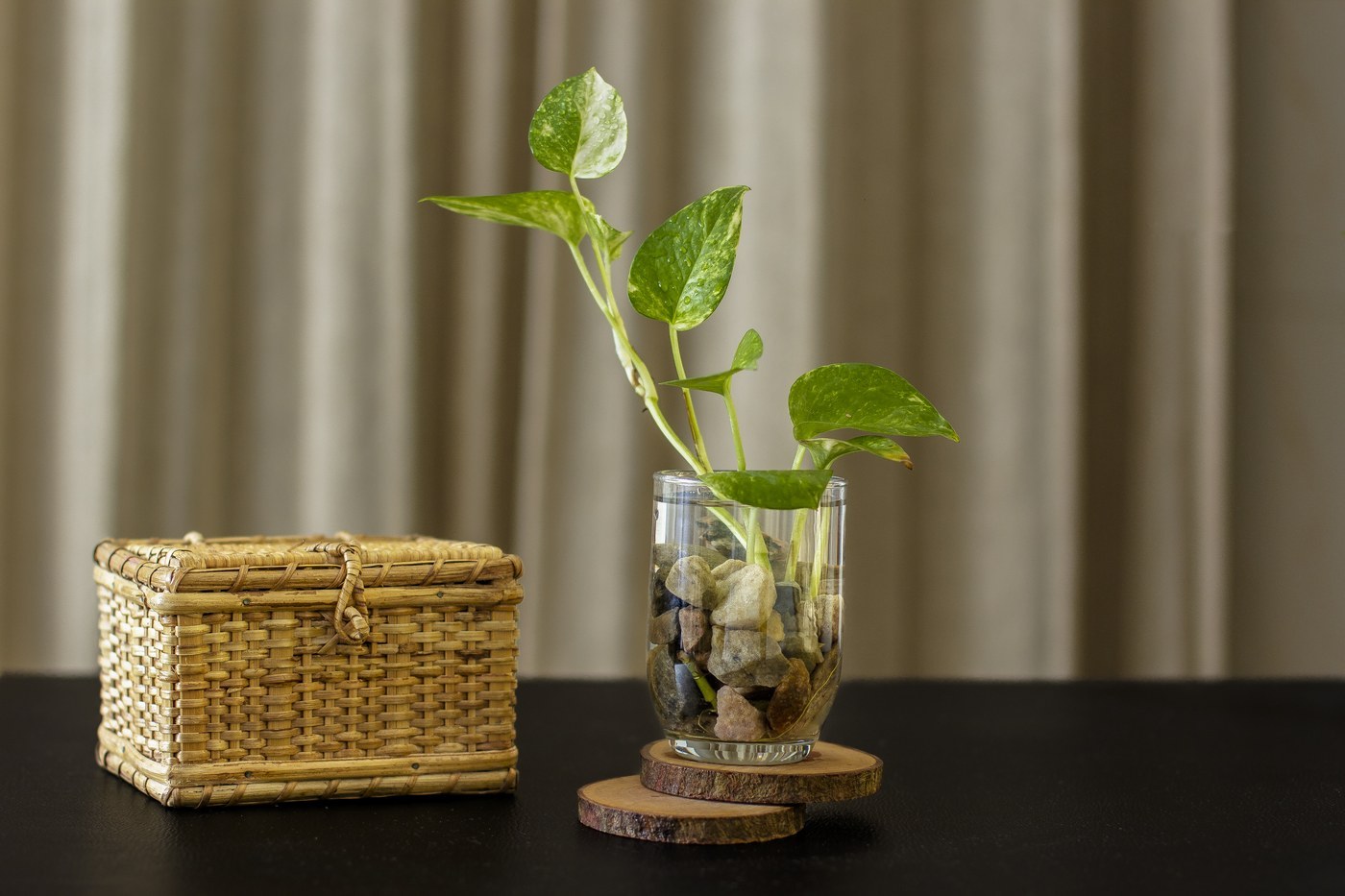
Key Identifying Features
Pothos (Epipremnum aureum, also called devil's ivy) is a trailing/climbing vine identified by:
- Thick, waxy, heart-shaped leaves with a slightly leathery feel.
- Frequent gold, white, or cream variegation splashed irregularly across the leaf.
- Long, trailing or climbing stems with aerial roots at the nodes.
Leaves often have a subtle asymmetry — one side of the heart slightly larger than the other.
Leaves & Stems
Pothos leaves are glossy, firm, and somewhat thick, usually 7–15 cm (3–6 in) on houseplants but able to grow huge (and develop splits) when climbing in the tropics. The leaf surface feels waxy and rigid compared to softer philodendron leaves.
Stems are green, grooved, and trailing, rooting readily at nodes. New growth emerges from the existing leaf — there is no papery protective sheath (cataphyll) wrapped around the new leaf, an important difference from philodendron. Popular forms include golden (yellow streaks), marble queen (heavy white marbling), neon (chartreuse), and jade (solid green).
Flowers & Fruit
Pothos almost never flowers in cultivation — mature flowering with an aroid spathe occurs only in old wild plants and requires a hormone the cultivated juvenile form lacks. For identification purposes, treat pothos as a non-flowering foliage vine.
How to Tell It Apart from Look-Alikes
The classic confusion is heartleaf philodendron (Philodendron hederaceum):
- Leaf texture: pothos leaves are thicker, waxier, and slightly bumpy; philodendron leaves are thinner, softer, and more matte.
- New growth: philodendron new leaves emerge from a papery sheath (cataphyll) and are often reddish/bronze; pothos new leaves unfurl directly from the previous leaf and are pale green.
- Petiole: pothos petioles are grooved/indented; philodendron petioles are round in cross-section.
- Aerial roots: pothos has a single, stubby nub per node; philodendron often has multiple thin roots.
Where You'll Find It
Native to French Polynesia (Mo'orea) and naturalized across the tropics, where it can become an invasive climber smothering trees. As a houseplant it's ubiquitous worldwide for tolerating low light and irregular watering. Outdoors it survives only in frost-free, humid zones (10–12).
Quick ID Checklist
- Thick, waxy, glossy heart-shaped leaves
- Irregular gold/white/cream variegation (most forms)
- Slightly asymmetric leaf shape
- Grooved petiole, trailing stems, stubby aerial roots
- No papery cataphyll on new growth
If you see a tough trailing vine with thick, waxy, often-variegated heart leaves and grooved leaf stalks, it's pothos rather than a philodendron.
Frequently asked questions
How do I tell pothos from a heartleaf philodendron?
Pothos leaves are thicker, waxier, and slightly bumpy with grooved petioles, and new leaves unfurl from the previous leaf. Philodendron leaves are thinner and softer with round petioles, and new growth emerges from a papery sheath, often tinged red.
Why is my pothos losing its variegation?
Variegated pothos needs bright, indirect light to maintain its gold or white markings. In low light it produces more chlorophyll and reverts toward solid green leaves.
Does pothos ever flower?
Almost never in cultivation. The plants sold as houseplants are in a permanent juvenile stage and lack the maturity needed to produce the aroid flower, so you can treat it as a non-flowering foliage vine.
What are the common pothos varieties?
Popular named forms include golden (yellow streaks), marble queen (heavy white marbling), neon (solid chartreuse), and jade (solid green), all sharing the same thick, waxy, heart-shaped leaf.