
Radish Identification Guide
Identify the radish plant (Raphanus sativus) by its rough lobed leaves, swollen colorful taproot, pungent mustard scent, and white-to-pink four-petaled flowers.
Read the full Radish encyclopedia entry →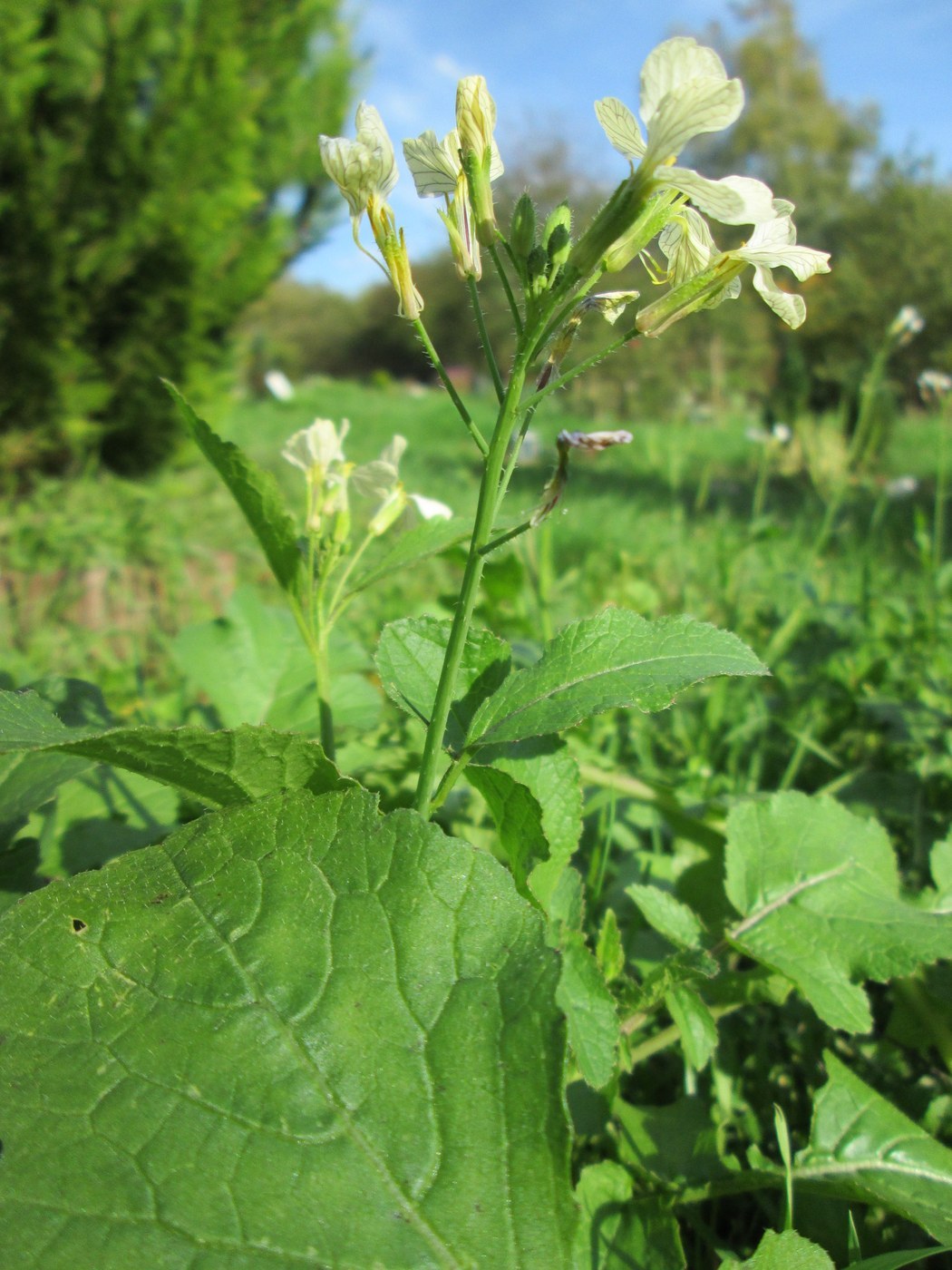
Key Identifying Features
The radish (Raphanus sativus) is a fast-growing cool-season root plant in the cabbage family (Brassicaceae). Recognize it by a rosette of rough, lobed leaves, a swollen, brightly colored taproot (red, white, pink, purple, or black), a pungent mustard-oil scent, and pale four-petaled flowers that appear when it bolts.
Leaves & Stems
- Leaves grow in a low basal rosette directly from the root crown.
- Foliage is rough-textured and bristly-hairy, with lyrate-pinnatifid leaves — a large rounded terminal lobe and smaller side lobes down the stalk.
- Leaf color is medium-green; stalks may be tinted pink or purple near the root.
- Crushed leaves and root release a pungent mustard-oil scent.
Roots
- The hallmark is the enlarged taproot sitting at or just below the soil surface, often shouldering up visibly.
- Shape ranges from round/globe to long cylindrical (daikon); color includes scarlet, pink, white, purple, and black.
- Flesh is crisp and white (sometimes pink or green inside).
Flowers & Fruit
- When bolting, radishes send up a branched flowering stalk with white, pale-pink, or lilac four-petaled flowers, often with darker veins, in the typical cross shape.
- Seed pods are plump, beaked siliques; the beaked tip is a characteristic detail.
How to Tell It Apart from Look-Alikes
- Turnip (Brassica rapa): similar swollen root and brassica leaves, but turnip leaves are usually less bristly, and the root is typically white with a purple top.
- Beet: smooth, glossy leaves with red veins and a rounded earthy-colored root rather than a slender taproot.
- Wild radish (Raphanus raphanistrum): a weedy relative with similar flowers but a thin, woody, non-swollen root.
- Mustard greens: similar foliage but no swollen root.
Where You'll Find It
Radishes are a quick cool-season garden plant, maturing in as little as 3–4 weeks, grown in rows, beds, and containers in full sun. Spring and fall are ideal; heat makes them bolt and turn woody. Look for small leafy rosettes with a colorful root shoulder poking above the soil.
Quick ID Checklist
- Low rosette of rough, bristly lobed leaves
- Swollen, brightly colored taproot at soil surface
- Crisp white flesh
- Pungent mustard-oil smell
- White/pink/lilac four-petaled flowers when bolted
- Plump beaked seed pods
Frequently asked questions
How do I tell a radish from a turnip?
Both are brassicas with swollen roots, but radish leaves are rougher and bristlier. Turnips are usually larger and white with a purple top, and their leaves are less prickly.
Why did my radishes grow lots of leaves but no big root?
This often happens in heat, crowding, or rich nitrogen soil, which pushes leaf growth and bolting instead of root swelling. Cooler temperatures, thinning, and timely harvest produce the characteristic swollen root.
How quickly does a radish plant grow?
Radishes mature very quickly, often in as little as 3 to 4 weeks in cool weather, which is one reason a small rosette with a fast-swelling colorful root shoulder is a good identification clue.
Are radish flowers and pods normal?
Yes. When a radish bolts it produces white, pink, or lilac four-petaled flowers followed by plump beaked seed pods. This is a normal part of its life cycle, though by then the root is usually woody.