
Ranunculus Identification Guide
Identify ranunculus by its many tightly packed, rose-like layers of thin papery petals, finely divided celery-like leaves, and tuberous claw-shaped roots.
Read the full Ranunculus encyclopedia entry →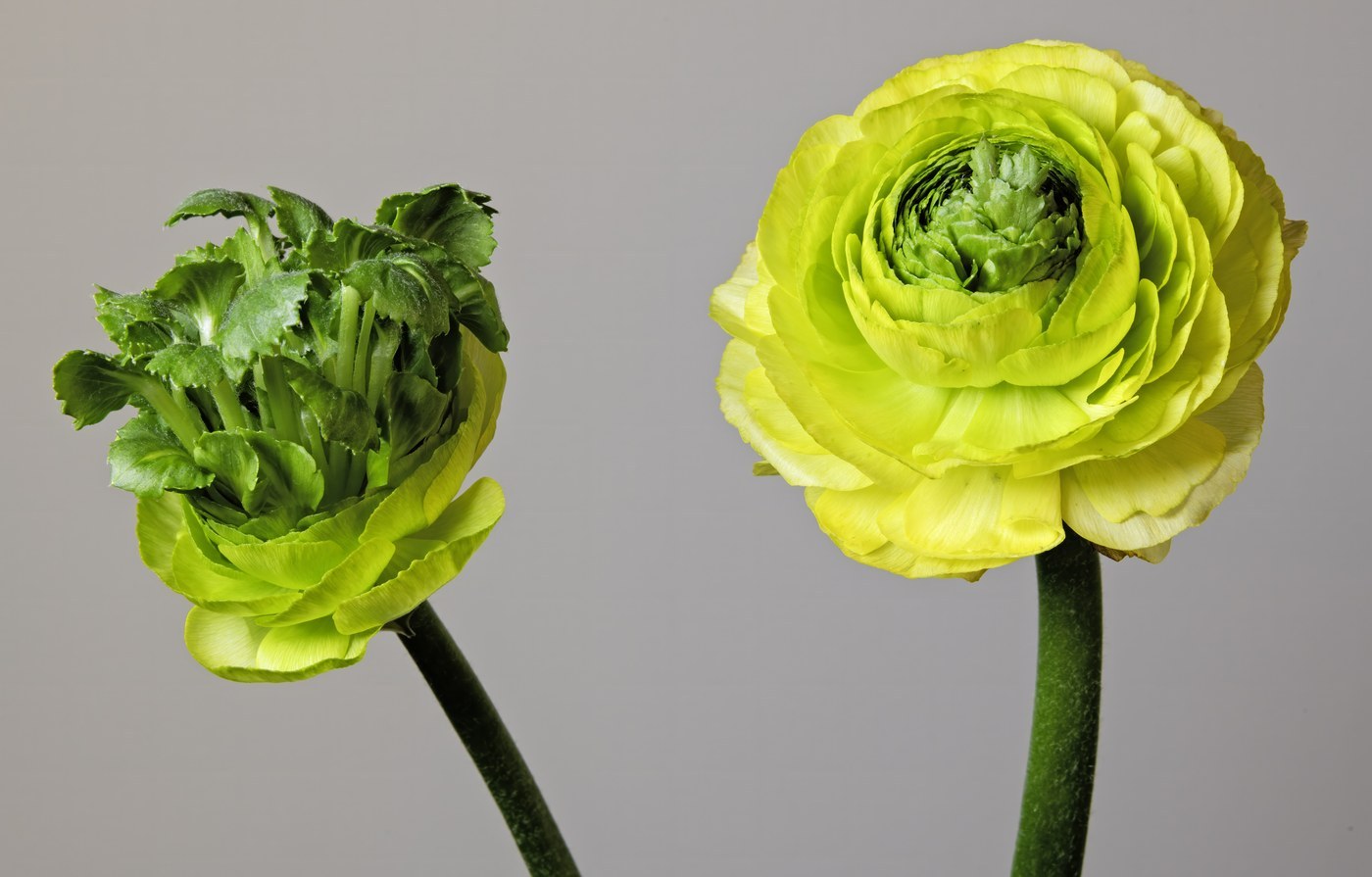
Key Identifying Features
Ranunculus (especially the florist's Ranunculus asiaticus, Persian buttercup) is a tuberous plant in the buttercup family (Ranunculaceae). The garden favorite is recognized by its densely double, rose-like flowers built from dozens of thin, tissue-paper petals stacked in concentric layers, often with a small green or dark button center, above finely divided, parsley- or celery-like leaves.
- Tightly packed, multi-layered, papery petals forming a rounded bloom
- Smooth-edged, satiny petals in saturated colors
- Deeply cut, fern- or celery-like foliage
- Distinctive claw- or octopus-shaped tuberous roots
Leaves & Stems
Leaves are deeply lobed and divided into toothed segments, looking much like flat-leaf parsley or celery foliage, and are bright to mid green. They cluster at the base and along the lower stems. Stems are erect, slender, and slightly hairy, each typically carrying one to a few flowers and rising 8-18 inches. The plant grows from small, finger-like or claw-shaped tubers (planted points-down) that are a useful off-season ID clue.
Flowers & Fruit
The florist ranunculus flower is the highlight: a rounded, fully double bloom 2-5 inches across with many overlapping, thin, smooth-edged petals arranged in tidy concentric rings, giving a look between a rose and a peony. Colors are vivid and clear: white, cream, yellow, orange, pink, red, purple, and picotee-edged forms; the center often shows a small green or blackish eye. Wild buttercup relatives, by contrast, have simple five-petaled glossy yellow flowers. After bloom, ranunculus forms a rounded head of small dry seeds (achenes).
How to Tell It Apart from Look-Alikes
- Wild buttercup (other Ranunculus): single, glossy, five-petaled yellow flowers, far simpler than the double florist type, but the divided leaves and seed head are shared genus traits.
- Rose: woody thorny stems and compound leaves with stipules, not a tuberous herb with parsley-like foliage.
- Peony: much larger plant with broad compound leaves and big woody/herbaceous crowns.
- Anemone: a frequent companion bulb with daisy-like single flowers and a dark central boss, fern-like leaves, but not densely double.
The combination of many thin papery petals in a rose-like double bloom over celery-like leaves from claw tubers confirms florist ranunculus.
Where You'll Find It
Ranunculus asiaticus is native to the eastern Mediterranean and is grown worldwide as a cut flower and spring garden plant, from tubers planted in autumn (mild climates) or late winter. It likes full sun, cool weather, and well-drained soil. Other ranunculus (buttercups) grow wild in meadows, lawns, and damp ground across temperate regions.
Quick ID Checklist
- Rounded double flower of many thin, papery, smooth-edged petals
- Concentric petal layers, often with a small green/dark center
- Vivid clear colors, sometimes picotee-edged
- Finely divided, parsley/celery-like leaves
- Claw-shaped tuberous roots; rounded dry seed head after bloom
Frequently asked questions
Why does a florist ranunculus look like a rose?
It has dozens of thin, papery petals packed in tight concentric layers, creating a full, rounded, rose-like bloom, even though it is actually a buttercup relative grown from a tuber.
How is ranunculus related to common buttercups?
They are in the same genus, Ranunculus; wild buttercups have simple glossy five-petaled yellow flowers, while the florist type (R. asiaticus) has been bred for many-petaled double blooms, but both share divided leaves and dry seed heads.
What do ranunculus tubers look like?
They are small, brown, finger- or claw-like clusters that resemble tiny octopuses or bunches of bananas, and are planted with the claws pointing downward.
How do I tell ranunculus from anemones in a spring bed?
Ranunculus blooms are densely double with many papery petals, while companion anemones usually have single daisy-like flowers with a dark central boss and a ring of fewer petals.