
How to Care for Raven ZZ Plant
Grow the striking dark-foliage Raven ZZ with easy low-light care, dry-between-waterings rhythm, and rhizome propagation tips.
Read the full Raven ZZ Plant encyclopedia entry →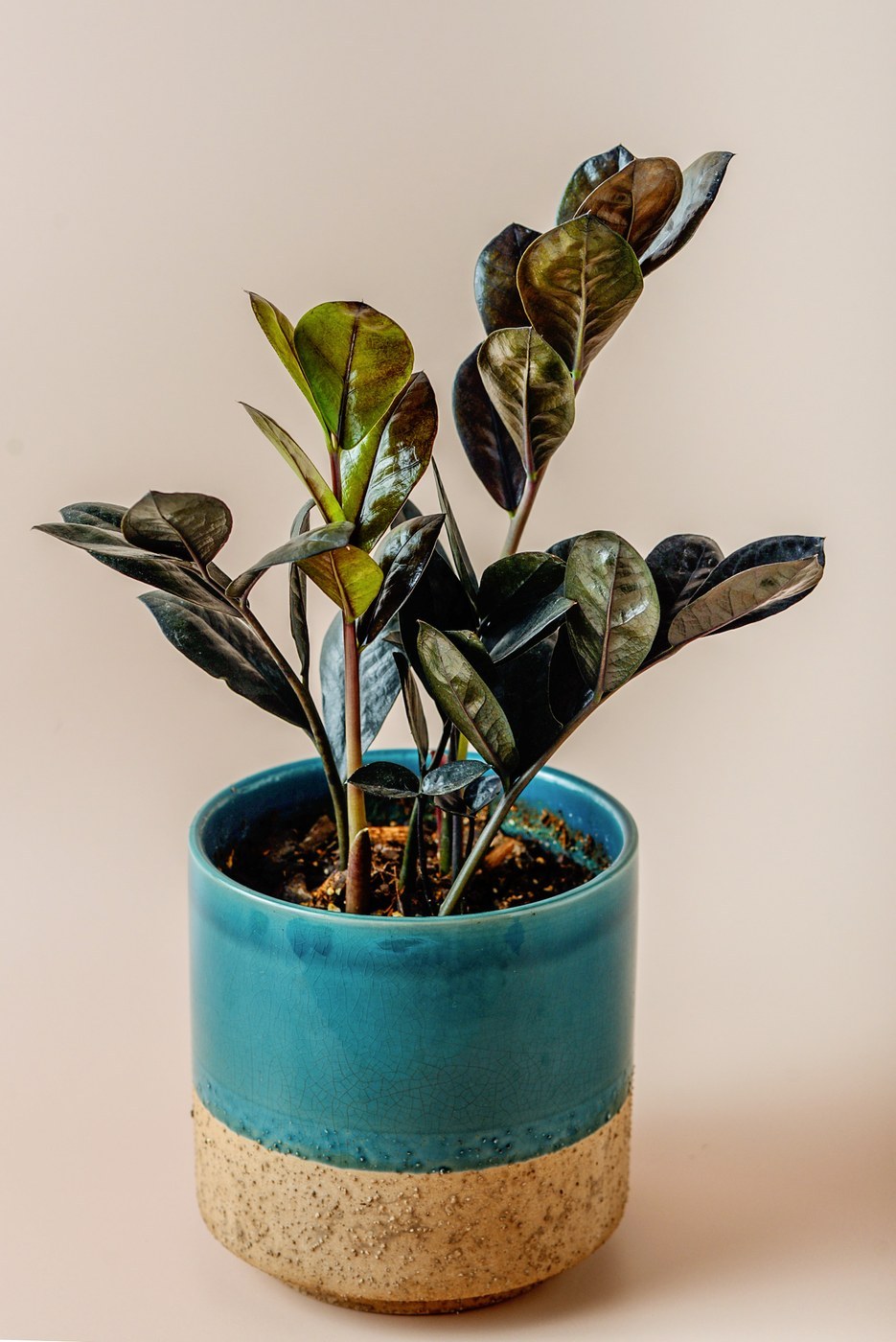
The Raven ZZ Plant is a dramatic cultivar of Zamioculcas zamiifolia whose new growth emerges bright green and matures to a glossy, near-black purple. It shares the parent species' famous resilience, making it one of the most forgiving foliage plants you can grow indoors.
Light
Raven ZZ tolerates a remarkable range, from low light to bright indirect light. It performs best in medium to bright indirect light, where the darkest, most saturated black foliage develops. In very dim corners it survives but stretches and produces fewer, greener leaves. Avoid harsh direct midday sun through glass, which can scorch the polished surfaces.
Water
This plant stores water in thick underground rhizomes, so let the soil dry out fully between waterings. Water thoroughly until it runs from the drainage holes, then wait until the mix is dry all the way through, roughly every two to three weeks depending on conditions. Overwatering is the single most common cause of failure; when in doubt, wait longer. In winter, watering may drop to once a month.
Soil & Potting
Use a fast-draining mix such as a standard potting soil amended with perlite, pumice, or coarse sand. A cactus-and-succulent blend works well. Always plant in a container with drainage holes; the rhizomes rot quickly in soggy conditions. Terracotta helps wick excess moisture for growers who tend to overwater.
Humidity & Temperature
Raven ZZ is unfussy about humidity and thrives in average household levels. It prefers temperatures between 65 and 80 F (18 to 27 C) and dislikes cold; keep it above 55 F (13 C) and away from drafty windows and cold air vents.
Feeding
Feed lightly. A balanced, diluted liquid fertilizer once a month during spring and summer is plenty. This slow grower needs no feeding in fall and winter, and it is easy to over-fertilize, which can burn leaf tips.
Propagation
Propagate by dividing the rhizomes at repotting time, separating clumps each with roots and a stem. You can also root individual leaflets: lay them on or partly in moist mix and wait patiently, as new rhizomes and roots can take several months to form. Division is faster and reliably preserves the dark coloration.
Repotting / Pruning
Repot every two to three years, or when swelling rhizomes crowd or crack the pot. Move up just one pot size. Pruning is minimal; simply trim damaged or yellowing stems at the base. Wipe the leaves occasionally to keep the signature glossy sheen.
Common Problems & Pests
Yellowing stems and mushy bases signal overwatering and rhizome rot, the main risk. Wrinkled stems and dropped leaflets indicate underwatering. Pests are uncommon but watch for occasional aphids or scale; wipe them off and treat with insecticidal soap if needed.
Seasonal Care Tips
Expect most new growth in spring and summer, when you can water and feed a little more. In fall and winter, reduce watering sharply and pause fertilizer while growth slows. Keep it out of cold windowsills during winter months.
Frequently asked questions
Why is my Raven ZZ growing green instead of black?
New growth always emerges green and darkens with age. If mature leaves stay green, the plant likely needs more light; move it to a brighter indirect spot to develop the deep black color.
How often should I water a Raven ZZ Plant?
Let the soil dry out completely, then water thoroughly. This usually means every two to three weeks, dropping to monthly in winter. It stores water in its rhizomes, so err on the side of underwatering.
Is the Raven ZZ slow growing?
Yes. Like all ZZ plants it grows slowly, pushing out new stems in flushes mainly during spring and summer. Patience is key, especially when propagating from leaves.
Why are the stems turning yellow?
Yellow, soft stems almost always mean overwatering and possible rhizome rot. Let the soil dry fully, check for mushy rhizomes, and repot into fresh fast-draining mix if rot is present.