
Red Aglaonema Identification Guide
Identify red-leaved Chinese evergreens by their pink-to-crimson variegation on broad oval leaves. Covers color patterns, growth habit, and distinguishing them from similar tropical foliage.
Read the full Red Aglaonema encyclopedia entry →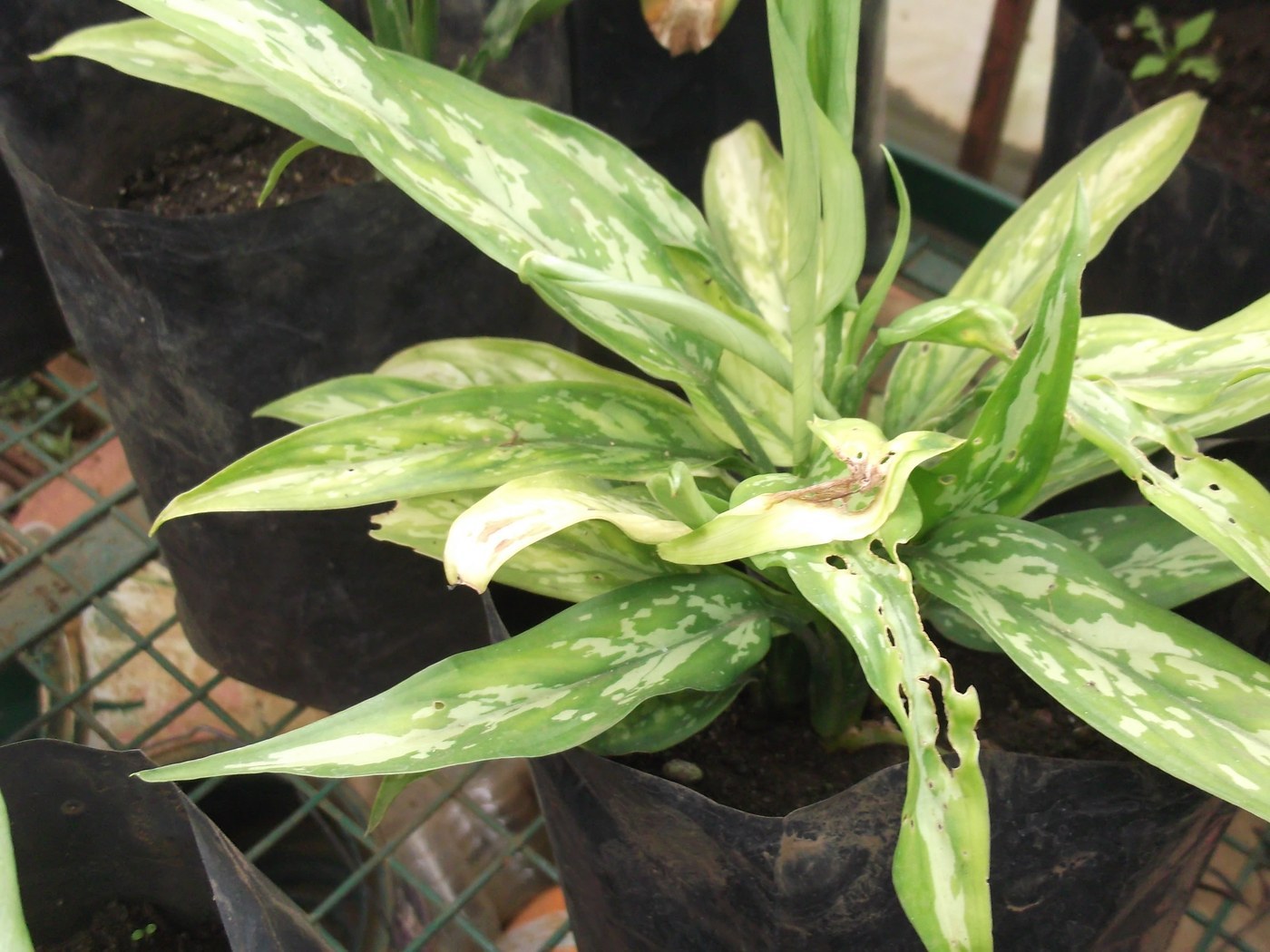
Key Identifying Features
'Red Aglaonema' refers to the colorful pink-and-red cultivars of Aglaonema (Chinese evergreen, family Araceae), such as 'Siam Aurora,' 'Red Valentine,' and 'Lipstick.' These are bred for vivid foliage. Identify them by:
- Broad lance-shaped to oval leaves marked with pink, red, or crimson along veins, margins, or across the blade
- A bushy, clumping habit with several upright to arching stems
- Often a green or dark-green base color overlaid with red/pink patterning
- Thick petioles that sheath short canes
Leaves & Stems
Leaves are the decisive feature. Each blade is 6-10 inches long, oval to lance-shaped with a pointed tip, semi-glossy, and carried on a stout petiole. The coloring varies by cultivar: some show bright pink to red midribs and veins against green ('Siam Aurora'), others are predominantly red or pink with green flecks ('Red Valentine'), and some have red margins framing a mottled green-and-cream center. New growth often emerges more intensely colored. Stems are short and upright when young, becoming cane-like with visible leaf scars as the plant matures; basal offsets create a dense clump.
Flowers & Fruit
As an aroid, it produces a modest spathe-and-spadix inflorescence a slender greenish-white hood around a central spike. Flowers are inconspicuous and usually removed to conserve energy. Pollinated plants may bear clusters of red berries. Neither flower nor fruit is needed for ID; the red foliage is unmistakable.
How to Tell It Apart from Look-Alikes
- Green/silver aglaonemas ('Silver Bay,' 'Maria'): same leaf shape and habit but no red or pink look for any warm coloring to confirm a red type.
- Cordyline / Ti plant: also red-leaved, but Cordyline has strappier, more sword-like leaves on a woody trunk and lacks the aroid spathe.
- Caladium: heart-shaped leaves on long stalks and a dormant tuber Aglaonema leaves are firmer, oval, and evergreen.
- Croton: leathery leaves in many colors but with distinct yellow/orange variegation and a very different, brittle stem.
The combination of broad oval evergreen leaves + pink/red variegation + bushy multi-stem clump confirms a red Aglaonema.
Where You'll Find It
Native to tropical Southeast Asia, red aglaonemas are grown almost exclusively as indoor houseplants in temperate climates and as landscape bedding in tropical regions. They prefer moderate to bright indirect light (brighter than green types, to maintain red color), warmth, and protection from frost. They are common in homes, offices, and shopping-center plantings.
Quick ID Checklist
- Broad oval leaves with pink, red, or crimson veins, margins, or blade
- Green base color usually visible beneath the red patterning
- Bushy, clumping multi-stem habit
- New leaves often more vividly colored
- Aroid spathe-and-spadix flower; red berries if fruiting
- Firmer, evergreen leaves (not the thin heart-shaped leaves of caladium)
Frequently asked questions
Are red aglaonemas natural or bred?
The intense pink and red coloring comes from cultivated hybrids and selections (like 'Siam Aurora' and 'Red Valentine'). Wild Aglaonema species are mostly green and silver; the red types are horticultural cultivars.
How can I tell a red Aglaonema from a Cordyline (Ti plant)?
Cordyline has strap-like, sword-shaped leaves on a woody stem and produces no arum spathe. Red Aglaonema has broad oval leaves in a bushy clump and, when flowering, the typical aroid spathe-and-spadix.
Why is my red Aglaonema turning greener?
Insufficient light. Red cultivars need brighter indirect light than green ones to keep their pink and red pigment; in dim conditions they revert toward green. This is a care issue, not a different plant.
Is it safe around pets?
No. Like all Aglaonema, it contains calcium oxalate crystals that irritate the mouth and gut if chewed, so keep it away from curious pets and children.