How to Care for Red Maple
Grow a fast, adaptable shade tree with fiery fall color. Full sun, moist soil, and minimal fuss make Red Maple an easy landscape anchor.
Read the full Red Maple encyclopedia entry →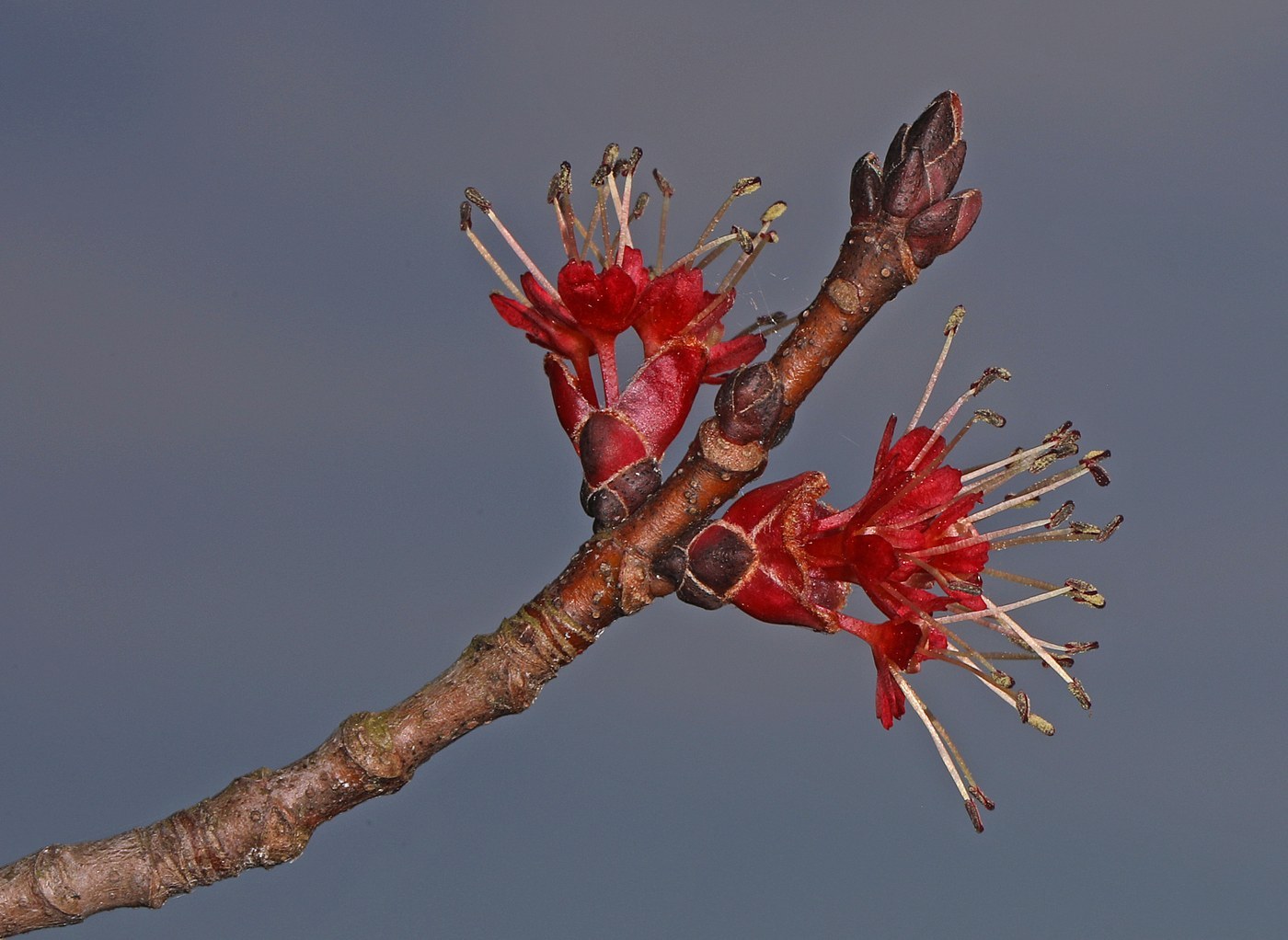
Red Maple (Acer rubrum) is one of the most adaptable and widely planted native shade trees in eastern North America, prized for its brilliant scarlet autumn foliage, early spring flowers, and rapid, dependable growth. It thrives with very little intervention once established, making it a forgiving choice for new tree gardeners.
Light
Red Maple performs best in full sun, where it develops the densest canopy and the most vivid fall color, but it tolerates part shade well thanks to its understory origins. In deep shade the crown thins and autumn color is muted, so give it at least six hours of direct sun where possible.
Water
This species has moderate to high water needs and famously tolerates wet, poorly drained sites better than most maples — it is a natural of swamp margins and floodplains. Keep young trees consistently moist for the first two to three years, watering deeply once a week during dry spells. Established trees handle occasional drought but grow fastest with steady moisture.
Soil & Potting
Red Maple prefers slightly acidic soil and can develop iron chlorosis (yellowing leaves with green veins) in high-pH or alkaline ground. It adapts to clay, loam, and sandy soils and to a wide range of drainage, from wet to average. Mulch the root zone with 2–3 inches of organic mulch, keeping it pulled back from the trunk flare.
Humidity & Temperature
A cold-hardy tree suited to USDA zones 3–9, Red Maple withstands harsh winters and hot, humid summers alike. It needs no special humidity considerations and establishes across most temperate climates.
Feeding
Established trees in reasonable soil rarely need feeding. For young trees or those showing pale foliage, apply a balanced slow-release tree fertilizer in early spring. On alkaline soils, a chelated-iron soil treatment helps correct chlorosis and restore green color.
Propagation
Red Maple is easily grown from its winged seeds (samaras), which ripen in late spring and germinate readily when sown fresh in moist soil — many need little or no cold stratification. Softwood cuttings taken in early summer can root under mist, and named cultivars are typically grafted to preserve their fall color and form.
Repotting / Pruning
Prune in summer or late fall to avoid the heavy "bleeding" of sap that occurs with late-winter or early-spring cuts — while not harmful, it is unsightly. Remove crossing, dead, or weak branches and establish a strong central leader while the tree is young, since Red Maple can form narrow, weak branch crotches if left untrained.
Common Problems & Pests
Generally trouble-free. Watch for iron chlorosis on alkaline soils, occasional aphids or scale, and leafhoppers. Verticillium wilt and various leaf spots can appear but are seldom serious. The wood is somewhat brittle, so prune out weak, tight branch angles to reduce storm breakage.
Seasonal Care Tips
Plant in spring or fall. Water deeply through the first summers and refresh mulch annually. Enjoy the red flower clusters in early spring, and expect the signature fiery foliage in autumn — color is strongest after sunny days and cool nights. Little winter protection is needed for this exceptionally hardy tree.
Frequently asked questions
How fast does a Red Maple grow?
It is a fast grower, often adding 1–2 feet of height per year when young in good conditions, reaching 40–60 feet at maturity.
Why are my Red Maple's leaves turning yellow between the veins?
That pattern is iron chlorosis, usually caused by alkaline or high-pH soil. Acidify the soil and apply a chelated-iron treatment to restore green color.
Can Red Maple handle wet soil?
Yes. It is one of the most flood- and wet-soil-tolerant maples, naturally growing in swamp edges and floodplains, though it also adapts to average drainage.
When should I prune a Red Maple?
Prune in summer or late fall. Cuts made in late winter or early spring cause heavy sap flow that, while harmless, is messy and unsightly.
Red Maple identified by the community
Recent Red Maple specimens identified with Plant Identifier.