Red Maple Identification Guide
Identify red maple (Acer rubrum) by its three-lobed, sharply toothed leaves with whitish undersides, red twigs and buds, and brilliant red autumn color.
Read the full Red Maple encyclopedia entry →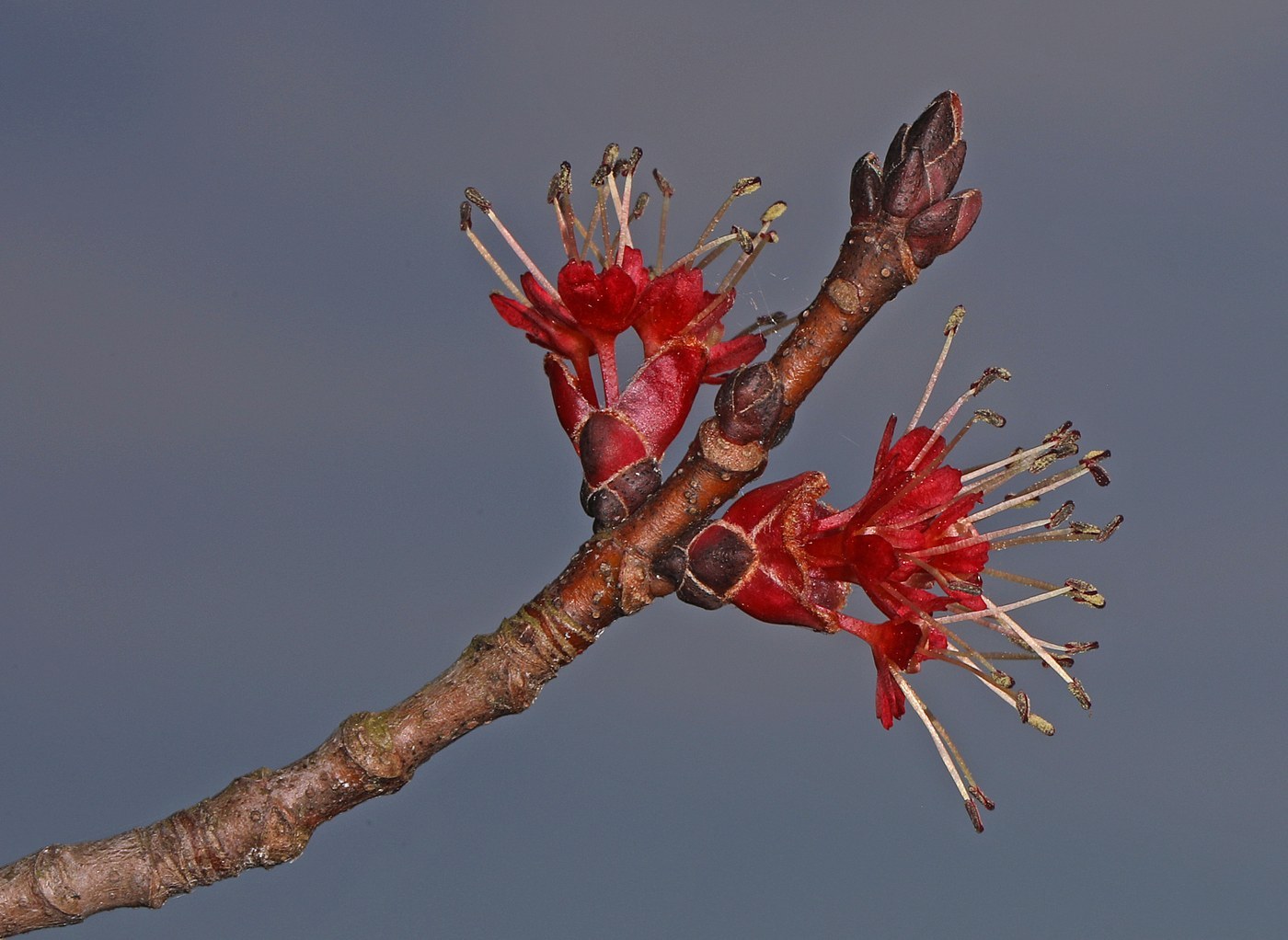
Key Identifying Features
Red maple (Acer rubrum) earns its name from red coloring in nearly every season - red flowers in early spring, reddish leaf stalks and twigs, and fiery red-to-orange fall foliage. It is a medium-to-large deciduous tree with opposite, lobed leaves and a generally oval, rounded crown.
- Mature height 40-70 ft (12-21 m)
- Opposite leaf and bud arrangement (all maples)
- Red accents on twigs, buds, flowers, and fall leaves
Leaves & Stems
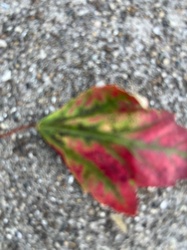
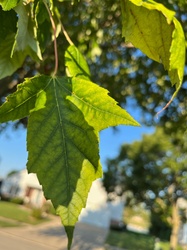
Leaves are 3 to 5 inches long with usually three main lobes (sometimes five), separated by relatively shallow, narrow notches (sinuses). The margins are irregularly and sharply toothed (serrated), and the leaf tips are pointed. The underside is distinctly pale, whitish, or gray-green, contrasting with the medium-green top. Leaf stalks are often red. Twigs are slender, reddish, and dotted with small lenticels; the buds are small, rounded, and red, clustered at twig tips.
Flowers & Fruit
Red maple is one of the earliest trees to flower, blooming in late winter to early spring before the leaves. The tiny red (sometimes yellowish) flowers cluster densely along the twigs, giving a reddish haze to the whole tree. The fruit is a paired, winged samara ('helicopter') about 1/2-1 in long, often reddish when young, maturing in late spring - much earlier than most maples. The two wings spread at a narrow angle.
How to Tell It Apart from Look-Alikes
- Sugar maple (Acer saccharum): Has leaves with smooth-edged (untoothed) lobe margins and rounded U-shaped sinuses; red maple's margins are toothed and undersides whitish.
- Silver maple (Acer saccharinum): Has deeply cut, 5-lobed leaves with a silvery underside; red maple lobes are shallower and usually three.
- Norway maple: Has milky sap in the leaf stalk and broader leaves.
- Key red maple cues: toothed three-lobed leaves, whitish undersides, red twigs/buds, and early red flowers and samaras.
Where You'll Find It
Red maple is one of the most widespread and adaptable trees of eastern North America, growing in wet swamps and bottomlands as well as dry upland forests, fields, and urban plantings. Its tolerance of varied soils and moisture makes it extremely common.
Quick ID Checklist
- Opposite leaves and buds
- 3 (rarely 5) lobes, shallow sinuses, toothed margins
- Whitish/pale leaf undersides, often red leaf stalks
- Red twigs and small red buds
- Early-spring red flowers; reddish samaras maturing in late spring
- Brilliant red-orange fall color
Frequently asked questions
How do I tell red maple from sugar maple?
Red maple leaves have toothed (serrated) lobe edges and pale whitish undersides, while sugar maple leaves have smooth, untoothed lobe margins with rounded notches and green undersides.
Why is it called red maple?
Because it shows red in multiple seasons - red flowers in early spring, red twigs, buds, and leaf stalks, and brilliant red foliage in autumn.
When does red maple produce its seeds?
Unusually early - its winged samaras ripen in late spring, well ahead of most other maples that drop seeds in fall.
What kind of leaf arrangement does red maple have?
Opposite, meaning leaves and buds grow in pairs directly across from each other - a trait shared by all true maples.
Red Maple identified by the community
Recent Red Maple specimens identified with Plant Identifier.