
How to Care for Red Pagoda
Red Pagoda is an easy stacked-leaf succulent that flushes brilliant red in bright sun with sparse water and gritty, fast-draining soil.
Read the full Red Pagoda encyclopedia entry →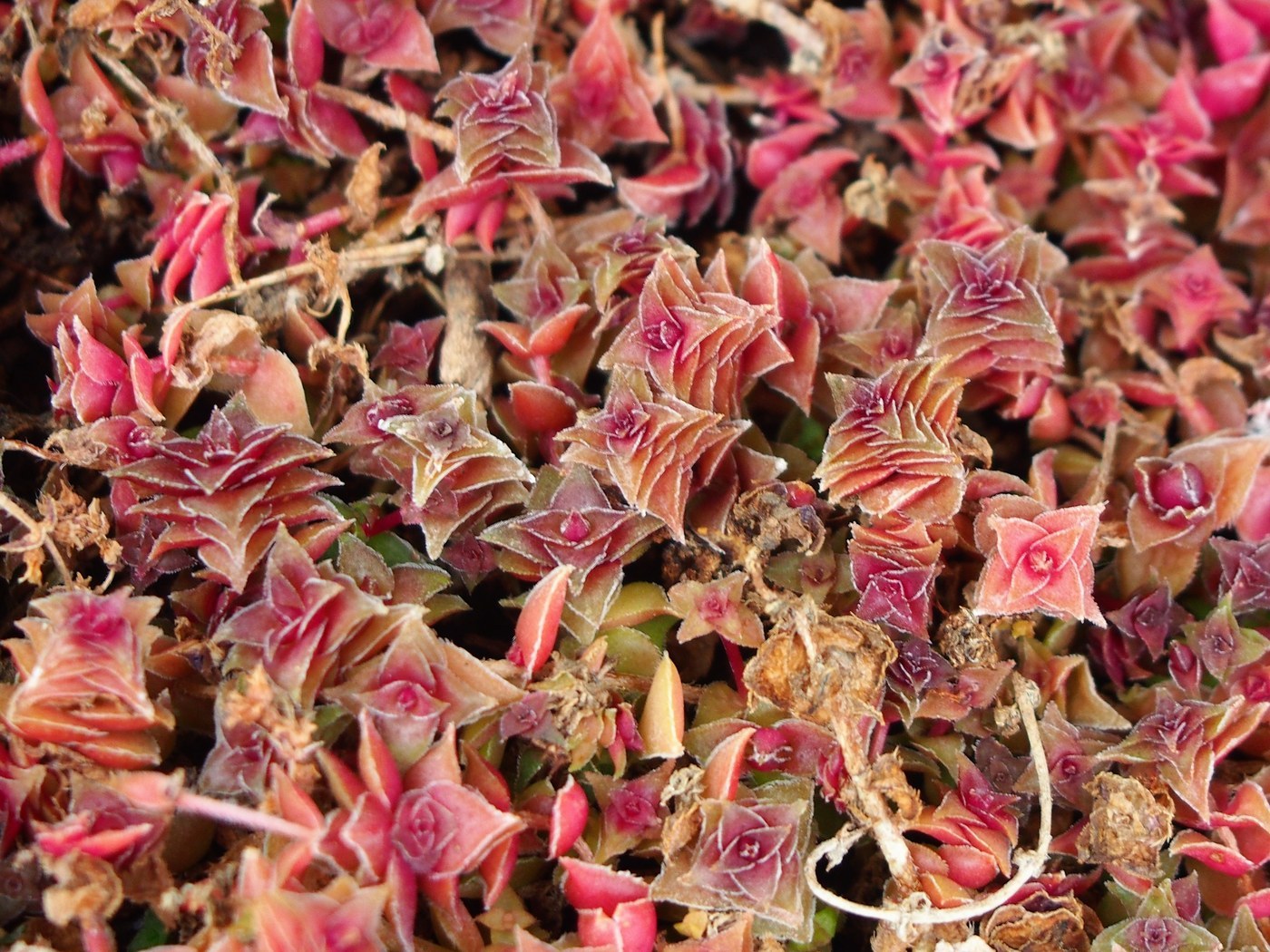
Red Pagoda (Crassula capitella subsp. thyrsiflora) is a striking, easy-care succulent whose triangular leaves stack in tight, geometric spires that flush fiery crimson under bright light and cool stress. Its cascading, pagoda-like columns make it a standout in dish gardens, rockeries, and mixed succulent pots.
Light
Give Red Pagoda full sun to very bright light for the best color and compact form. Strong light is what triggers the signature red pigmentation; in low light the plant stays green and stretches, with spires opening loosely and stems flopping. Indoors, place it at the brightest south- or west-facing window, and acclimate gradually to intense outdoor sun to avoid scorch.
Water
Water only when the soil has dried out, following the soak-and-dry method, then water thoroughly and let it drain completely. Water sparingly during summer heat, when the plant may rest, and reduce further in winter. Overwatering is the quickest way to lose it; the fleshy stems rot easily in soggy conditions.
Soil & Potting
Use a gritty, fast-draining cactus and succulent mix, ideally amended with extra pumice, perlite, or coarse sand so water runs straight through. Always plant in a container with drainage holes; unglazed terracotta helps wick excess moisture. Avoid dense, water-retentive potting soil.
Humidity & Temperature
Red Pagoda prefers warm, dry air and good airflow. It thrives in typical warm-season temperatures and is frost-tender, so protect it from freezing. Bring it indoors or under cover before the first frost; cool (but above-freezing) nights combined with bright light intensify the red coloration.
Feeding
Feed lightly at most. A diluted, low-nitrogen succulent fertilizer once or twice during the active growing season is plenty. Excess feeding produces soft, green, elongated growth that loses the tight architecture and vivid color. Skip fertilizer entirely in winter.
Propagation
Propagation is very easy. Take stem cuttings or offsets, let the cut ends callus for a few days, then set them in dry, gritty mix and water sparingly once roots form. Individual leaves can also root. Spring and early summer give the fastest, most reliable results.
Repotting / Pruning
Repot only every couple of years or when the plant outgrows its pot, using fresh dry mix and working during the growing season. Trim leggy or spent stems to keep clumps tidy and encourage branching; the cuttings can be replanted. After the plant flowers, individual rosettes may decline, so remove faded growth and rely on surrounding offsets to fill in.
Common Problems & Pests
Root and stem rot from overwatering or poor drainage is the main risk, signaled by mushy, translucent, or blackening stems. Etiolation (stretching and loss of red color) indicates too little light. Watch for mealybugs in leaf crevices and the occasional aphid on flower stalks; treat promptly and improve airflow.
Seasonal Care Tips
In spring and fall, growth is active, so water on the dry-down cycle and enjoy the deepest color from cool nights plus bright sun. Ease off water sharply in peak summer heat and in winter dormancy. Protect from frost year-round and rotate the pot for even, symmetrical spires.
Frequently asked questions
How do I make Red Pagoda turn red?
Bright light plus mild stress is the key. Give it full sun and the cool nights of autumn and winter, and keep water and fertilizer lean. Rich soil, heavy feeding, and low light all keep it green and stretched.
Why is my Red Pagoda stretching and losing color?
It is not getting enough light. In dim conditions the stacked spires open up, stems flop, and the red fades to plain green. Move it to your brightest spot or provide strong grow lights, acclimating gradually.
How often should I water Red Pagoda?
Only when the soil is fully dry, then water thoroughly. That may mean every week or two in active growth and much less in summer heat and winter. When in doubt, wait; it tolerates drought far better than soggy soil.
Can Red Pagoda grow indoors?
Yes, if you give it the brightest window available, ideally south- or west-facing, plus a fast-draining gritty mix and sparse watering. Without strong light it will etiolate and lose its compact, colorful form.