
How to Care for Red Tip Photinia
Grow Red Tip Photinia for its brilliant red new growth. An easy, fast hedge shrub that thrives in sun and well-drained soil.
Read the full Red Tip Photinia encyclopedia entry →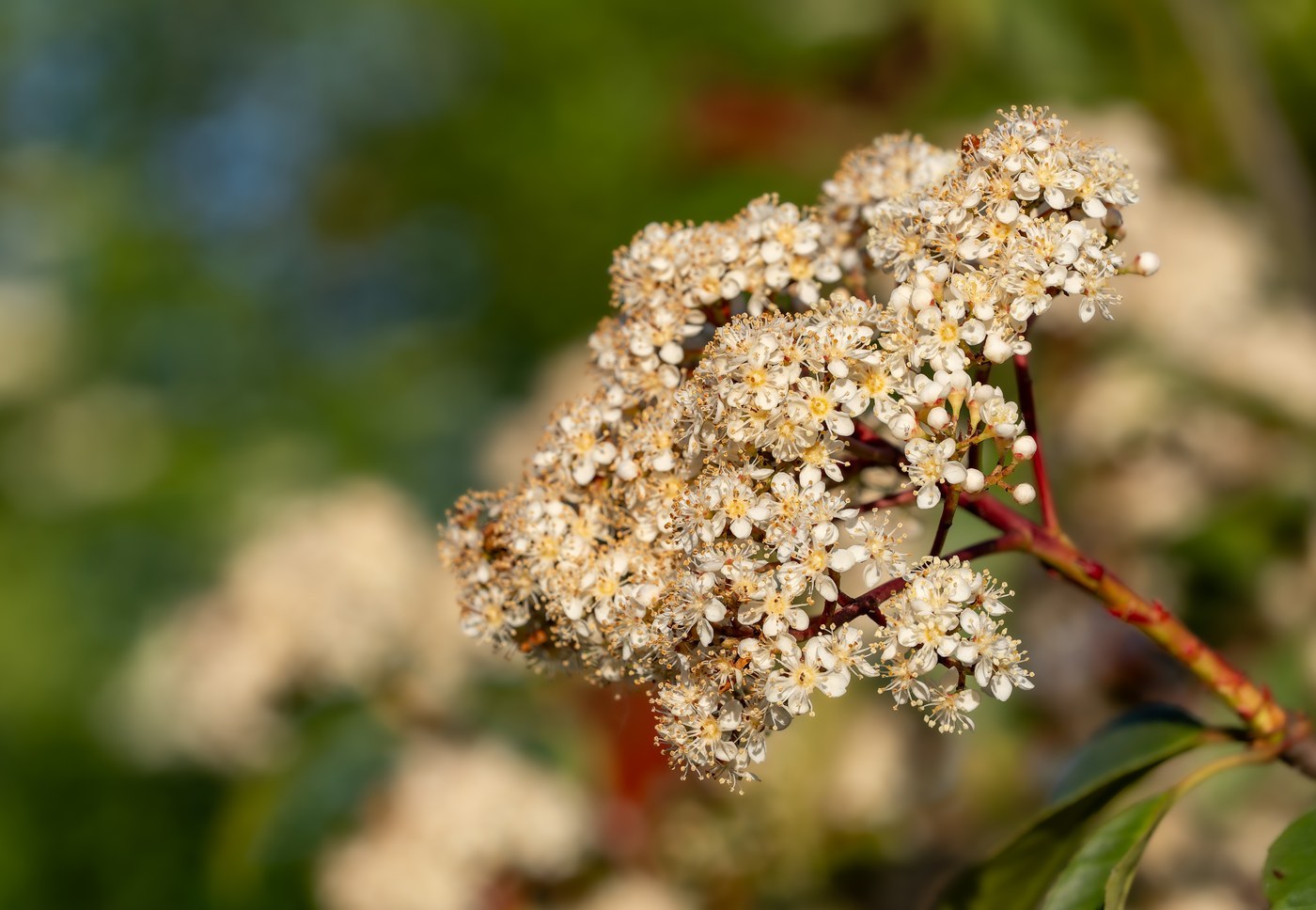
Red Tip Photinia (Photinia x fraseri) is a vigorous evergreen shrub prized for the glossy scarlet flush of its new leaves, which mature to deep green. It is a classic screening and hedge plant that rewards full sun with the most intense red coloring.
Light
Give Red Tip Photinia full sun for the boldest red new growth and densest branching. It tolerates part shade, but plants grown in too much shade produce more muted color, sparser foliage, and are noticeably more prone to leaf-spot disease. Choose the sunniest, most open spot you can for the healthiest hedge.
Water
Water regularly and deeply while the shrub is establishing during its first one to two seasons, keeping the root zone evenly moist but never waterlogged. Once established it is moderately drought tolerant and needs only supplemental watering during extended dry spells. Water at the base rather than overhead to keep foliage dry and discourage fungal leaf spot.
Soil & Potting
Photinia thrives in well-drained, slightly acidic to neutral soil enriched with organic matter. It dislikes heavy, soggy clay; if drainage is poor, plant on a slight mound or amend generously with compost. Space plants about 3 to 5 feet apart for a solid hedge. In containers, use a free-draining loam-based mix and a pot with ample drainage holes.
Humidity & Temperature
An adaptable shrub for temperate climates, hardy in roughly USDA zones 7 to 9. It handles heat well and shrugs off light frost once established. In regions with humid, wet springs, prioritize good air circulation, since still, damp air fuels leaf-spot problems.
Feeding
Feed in early spring with a balanced slow-release shrub fertilizer to fuel the flush of red new growth. A second light feeding after the first hard pruning encourages another wave of colorful foliage. Avoid heavy late-season nitrogen, which pushes tender growth vulnerable to frost.
Propagation
Propagate from semi-hardwood cuttings taken in summer. Take 4 to 6 inch cuttings, strip the lower leaves, dip in rooting hormone, and insert into a gritty, moist propagation mix. Keep humid and warm; roots typically form within several weeks.
Repotting / Pruning
Pruning is the key to great color, since red new leaves appear on fresh growth. Trim in late winter or early spring and again after each growth flush to keep the hedge dense and to trigger repeated red flushes. Sterilize pruners between plants to avoid spreading disease. Container specimens can be root-pruned and refreshed every couple of years.
Common Problems & Pests
The most serious issue is Entomosporium leaf spot, a fungal disease causing red-bordered spots that can lead to heavy defoliation, especially on crowded, shaded, or overhead-watered plants. Combat it with good spacing, dry foliage, prompt removal of fallen leaves, and thinning for air flow. Watch also for aphids on tender new shoots and occasional scale.
Seasonal Care Tips
In spring, prune and feed to launch the red flush. Through summer, water establishing plants and take cuttings. In fall, clean up fallen leaves to reduce overwintering fungal spores. In winter, do major shaping while the plant is semi-dormant and avoid feeding.
Frequently asked questions
Why isn't my Red Tip Photinia turning red?
Red color comes from fresh new growth, so prune regularly to trigger new flushes, and make sure the shrub gets plenty of full sun. Shade and lack of pruning both mute the color.
How often should I prune Red Tip Photinia?
Prune in late winter and again after each growth flush through the season. Frequent light pruning keeps the hedge dense and produces repeated waves of red new leaves.
What causes spots on Photinia leaves?
Reddish spots that spread and cause leaf drop are usually Entomosporium leaf spot, a fungal disease. Improve air circulation, avoid overhead watering, and rake up fallen leaves to reduce it.
How far apart should I plant Photinia for a hedge?
Space plants about 3 to 5 feet apart. This gives a solid screen while still allowing the air circulation that helps prevent leaf-spot disease.