
How to Care for Sausage Tree
Grow the exotic Kigelia africana: a broad shade tree with hanging sausage-like fruits, velvety maroon flowers, and a love of full tropical sun.
Read the full Sausage Tree encyclopedia entry →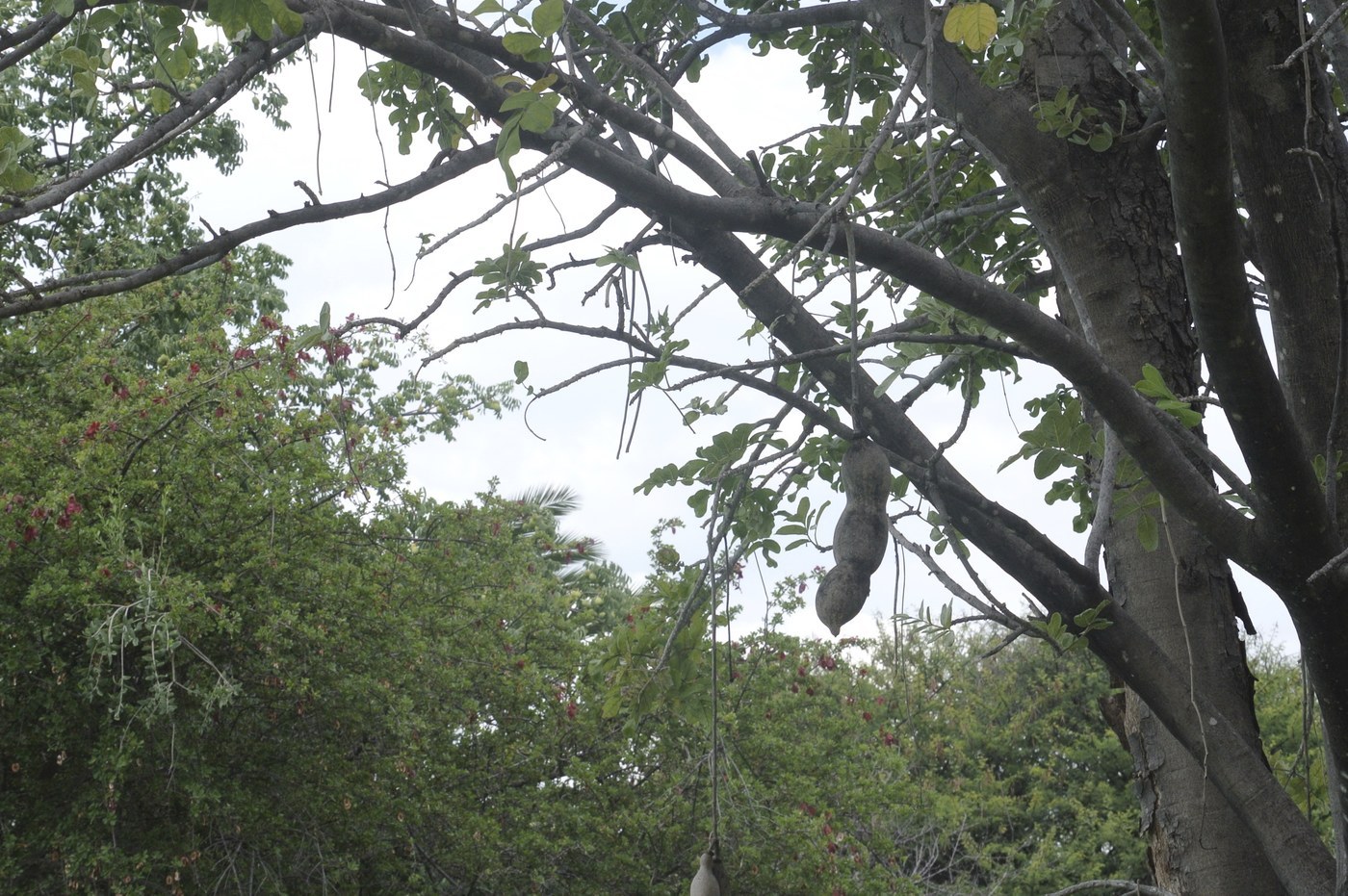
The sausage tree (Kigelia africana) is a striking African shade tree named for the enormous, heavy, sausage-shaped fruits that dangle on long stalks. It is grown as an ornamental curiosity and shade specimen in tropical and subtropical gardens, prizing full sun, warmth, and deep, well-draining soil.
Light
Plant in full sun. The sausage tree develops its dense, spreading canopy and best flowering only with abundant direct light. In shade it grows thin and leggy and rarely fruits. Give it an open site with plenty of overhead room.
Water
Water moderately. Young trees need regular deep watering to establish, especially through dry spells. Once mature the tree becomes quite drought-tolerant, drawing on deep roots, though it grows lushest and flowers most freely with reliable moisture. Avoid permanently waterlogged ground.
Soil & Potting
Use deep, fertile, well-draining soil. It tolerates a range of soils including sandy and loamy types but resents standing water. Ample soil depth matters because the tree develops a substantial root system to anchor its large fruits. Young container plants need a deep pot and a free-draining mix.
Humidity & Temperature
This is a tropical to subtropical tree that thrives in heat and humidity and is frost-sensitive, especially when young. It suits roughly USDA zone 10 and warmer. Prolonged cold or frost damages foliage and can kill young trees, so grow marginal specimens in containers moved under cover in cool weather.
Feeding
Feed young trees a balanced fertilizer in spring and early summer to support fast establishment and canopy growth. Mature landscape trees in decent soil need little supplemental feeding. A spring mulch of compost helps retain moisture and slowly enriches the soil.
Propagation
Propagate primarily from seed, extracted from the mature fruit, cleaned, and sown fresh in warm, moist conditions; germination is reliable given heat. Semi-hardwood cuttings can also be rooted with bottom heat. Seedlings grow steadily and take several years to reach flowering and fruiting size.
Repotting / Pruning
Step up container-grown young trees each spring until planting out. Prune in the dry or dormant season to shape the crown, remove dead or crossing wood, and raise the canopy for clearance beneath the heavy fruits. Site mature trees away from paths and parking, as the large fruits fall.
Common Problems & Pests
The sausage tree is generally robust with few serious pests. Watch for scale insects or aphids on young growth, treatable with horticultural oil or a water spray. Root rot follows poor drainage or overwatering. Leaf drop in cool weather is a normal frost or dry-season response rather than disease.
Seasonal Care Tips
Spring and early summer are for feeding, planting, and vigorous growth. The velvety dark-maroon flowers open on long stalks, often at night, followed by the slow-developing fruits. In the dry or cool season growth slows and some leaf drop is normal; reduce watering and protect young trees from cold.
Frequently asked questions
How big does a sausage tree get?
In the ground in a suitable tropical climate it becomes a large, broad-canopied shade tree. Give it plenty of open space, well away from structures, paths, and parking, because the heavy fruits fall.
Why isn't my sausage tree flowering or fruiting?
It is usually a matter of age and light. Seed-grown trees take several years to mature, and they need full sun and warmth to flower and set their characteristic hanging fruits.
Can I grow a sausage tree in a container?
Yes while young. Use a deep, free-draining pot in full sun and move it under cover in cold weather. It will need planting out in warm ground to reach full size and fruit.
Is the sausage tree cold-hardy?
No. It is a tropical, frost-sensitive tree suited to zone 10 and warmer. Young trees especially can be killed by frost, so protect or containerize them in marginal climates.