
Shallot Identification Guide
Identify shallots by their slender hollow blue-green leaves and clustered bulbs that split into multiple offsets with coppery-brown to rosy papery skins.
Read the full Shallot encyclopedia entry →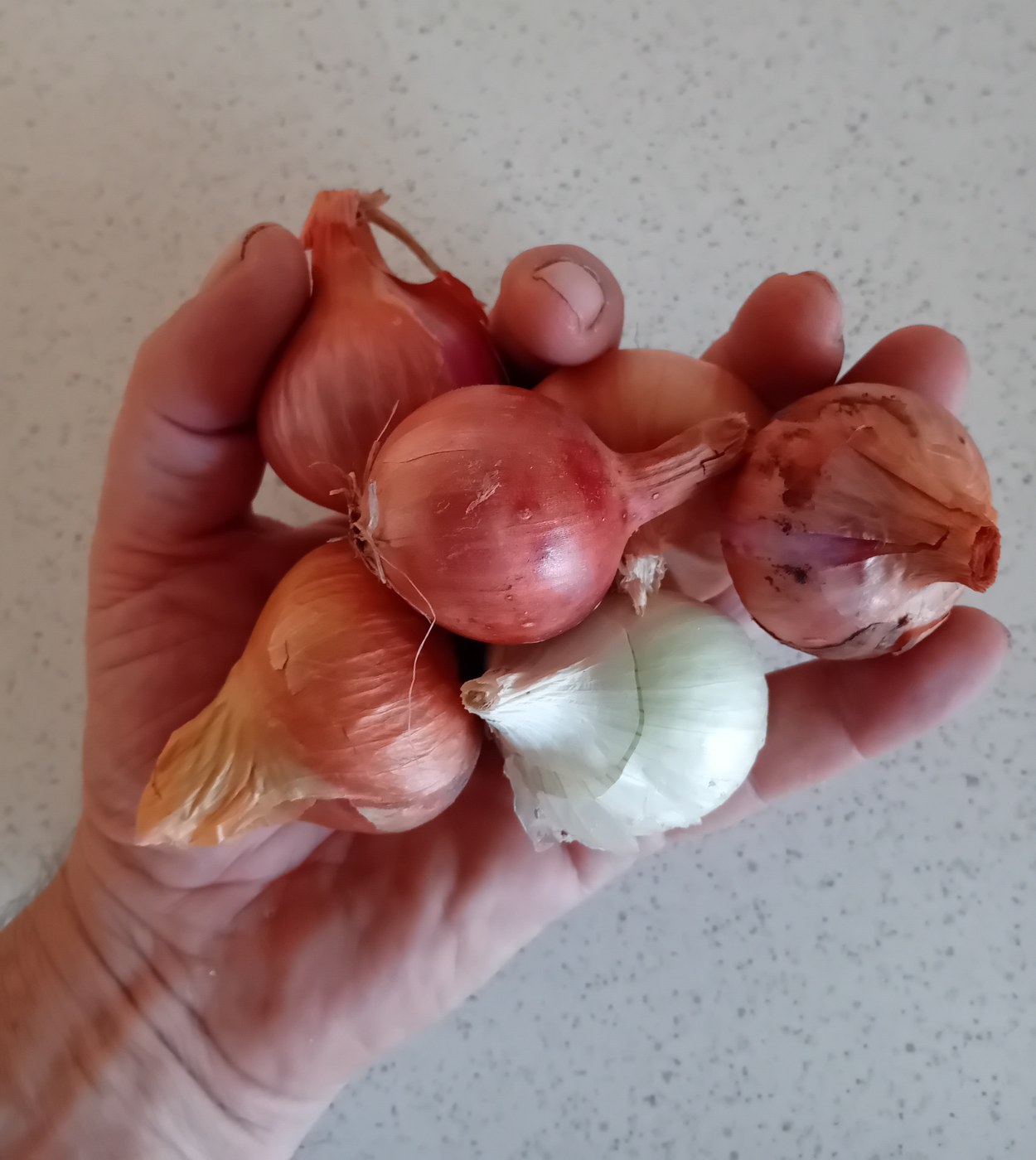
Key Identifying Features
The shallot (Allium cepa Aggregatum group, sometimes Allium ascalonicum) is a clumping perennial onion relative in the amaryllis family (Amaryllidaceae), grown as an annual. It is identified by its clusters of small, elongated bulbs that divide into multiple offsets (like garlic does), wrapped in coppery-brown, gray, or rosy-pink papery skins, topped by slender, hollow, blue-green tubular leaves. A clear onion/garlic smell when cut confirms it.
- Growth habit: a tight clump of several bulbs from a single planting
- Key trait: the bulb splits into a cluster, unlike a single onion
Leaves & Stems
Leaves are narrow, round, hollow, blue-green tubes (like fine onion or chive leaves), 8–18 inches tall, rising in a fan from each bulb. They are smaller and more slender than common onion leaves. The plant forms a grassy clump. There is no true above-ground woody stem — the "stem" is a soft neck of leaf sheaths above the bulb.
Flowers & Fruit
Many shallots are grown vegetatively and rarely flower, but when they do they send up a leafless hollow flower stalk (scape) topped with a rounded umbel of small star-shaped flowers, typically pale purple, pink, or whitish, like a small onion bloom. Seeds form in tiny capsules. Most identification, though, relies on the bulbs and foliage rather than flowers.
The bulbs are diagnostic: small, often teardrop- or oval-shaped, growing in a clustered cluster of cloves/offsets, each covered in thin, papery, coppery-brown to rose-tinted skin, with white-to-purplish flesh in concentric layers (onion-like, not solid like garlic cloves).
How to Tell It Apart from Look-Alikes
- Onion (Allium cepa): forms a single large bulb, not a divided cluster; leaves are larger and stouter.
- Garlic (Allium sativum): also clusters, but flat strappy leaves (not hollow tubes) and cloves arranged around a central stalk inside one papery head.
- Chives / scallions: stay slender with no enlarged clustered bulb.
- Multiplier/potato onions: very close relatives; shallots tend to have finer necks and milder, more refined flavor and shape.
The hollow blue-green tubular leaves + clustered coppery teardrop bulbs combo identifies shallot.
Where You'll Find It
Shallots are grown in vegetable gardens and farms worldwide, prized in French and Asian cooking. They prefer full sun and well-drained soil and are typically planted from offset bulbs in spring or autumn. Look for them in kitchen gardens and produce markets sold as small clustered bulbs.
Quick ID Checklist
- Clump of slender, hollow, blue-green tubular leaves
- Bulbs that split into a cluster of offsets (not a single onion)
- Coppery-brown, gray, or rosy papery skins
- Onion/garlic aroma when cut
- Occasional umbel of small pinkish-purple flowers on a hollow scape
Frequently asked questions
How do shallots differ from regular onions?
A shallot grows as a cluster of several small bulbs from one planting and has finer, milder flesh, while a common onion typically forms a single large bulb. Shallot leaves are also more slender.
Are shallots more like onions or garlic?
They're in between. Like garlic, shallots multiply into a cluster of offsets, but like onions each offset has concentric layered flesh rather than solid garlic-style cloves, and the leaves are hollow tubes, not flat straps.
What color is a shallot's skin?
The papery outer skin ranges from coppery-brown to gray or rosy-pink depending on variety, while the flesh inside is white, sometimes tinged purple, in onion-like rings.
Do shallots flower?
They can, producing a rounded umbel of small star-shaped pale purple to pinkish flowers on a hollow stalk, but many are grown from offset bulbs and harvested before flowering.