How to Care for Showy Lady's Slipper
Growing guide for Cypripedium reginae, a demanding native orchid prized for its pink-and-white pouched blooms in cool, moist woodland gardens.
Read the full Showy Lady's Slipper encyclopedia entry →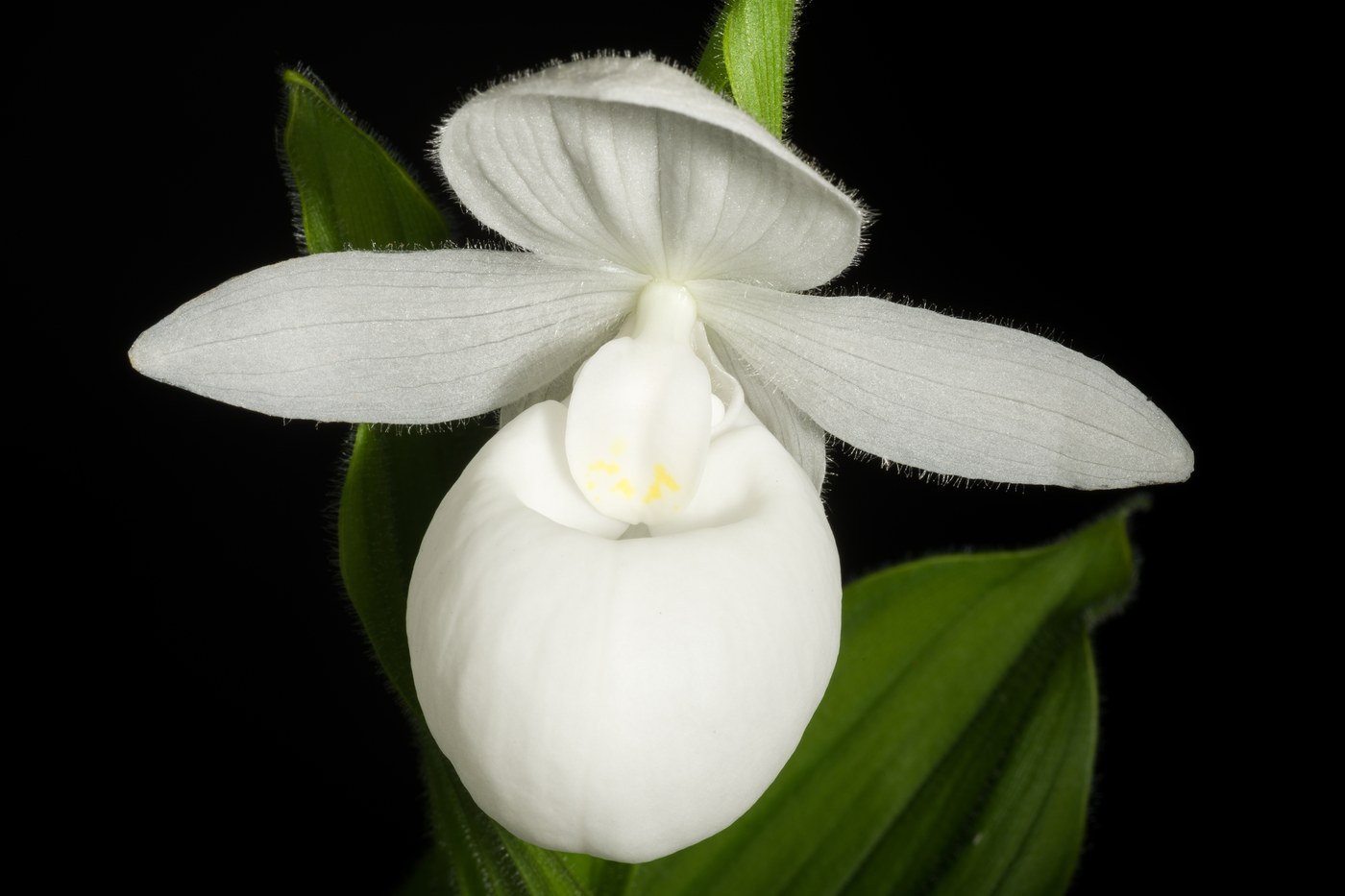
The showy lady's slipper (Cypripedium reginae) is a stately terrestrial orchid whose inflated white pouch, flushed with rose-pink, is one of the crown jewels of the temperate garden. It is a genuinely difficult plant that rewards patience with an environment that mimics its native cool, wet, humus-rich woodland margins.
Light
Give it partial shade to gently dappled sun. Morning sun with afternoon shade is ideal, or the filtered light beneath high, open-canopy trees. Full midday sun scorches the foliage and dries the crown, while dense shade weakens flowering. Bright, indirect light for most of the day produces the strongest growth.
Water
Keep the root zone consistently moist but never waterlogged in stagnant conditions. This orchid grows naturally in seeps, fens, and streamside soils, so it wants steady moisture combined with oxygen at the roots. Water deeply whenever the top of the soil begins to feel less than damp, and mulch lightly with leaf litter to hold moisture. It will not tolerate drying out during the growing season.
Soil & Potting
Use a cool, humus-rich, calcareous medium with sharp drainage. A blend of loam, coarse grit or perlite, chopped sphagnum or peat, and a little crushed limestone or oyster shell suits it, since it favors near-neutral to slightly alkaline conditions. The mix must hold moisture yet drain freely so roots never sit in airless muck. Plant the dormant bud just below the soil surface.
Humidity & Temperature
This is a cold-hardy, cool-climate orchid that needs a genuine winter chill to break dormancy and set buds. It thrives where summers are mild and moist; hot, dry heat is its greatest enemy. High ambient humidity and cool soil temperatures keep it vigorous. Site it where the ground stays cool, and avoid reflected heat from walls or pavement.
Feeding
Feed very lightly. Established clumps benefit from a topdressing of leaf mold or well-rotted compost in spring, plus an occasional dilute, balanced fertilizer at quarter strength during active growth. Heavy or concentrated feeding damages the fine roots and their fungal partners, so err firmly on the side of restraint.
Propagation
Propagate by careful division of established, multi-crown clumps in late summer or early autumn as the plant enters dormancy. Lift gently, tease apart sections that each carry a growth bud and healthy roots, and replant immediately at the same depth. Seed propagation is possible but extremely slow and requires symbiotic fungi or sterile lab flasking, so division is the practical home method.
Repotting / Pruning
Disturb it as little as possible; it resents root disruption and may sulk for a season after moving. Only lift and divide when a clump is crowded or declining. No pruning is needed beyond removing spent flower stems and clearing away dead foliage after it yellows in autumn.
Common Problems & Pests
Slugs and snails chew emerging shoots and buds in spring and are the most common nuisance. Crown rot appears where drainage is poor or mulch is piled against the crown. Failure to bloom usually traces to too much heat, too much shade, or insufficient winter chill. Watch for scorched leaf margins as a sign of excess sun or dryness.
Seasonal Care Tips
In spring, protect tender new shoots from slugs and late frosts. Through summer, maintain steady moisture and cool roots with light mulch. In autumn, let the foliage die back naturally and refresh the leaf-litter layer. In winter, leave the crown undisturbed and mulched so it receives the cold dormancy it requires.
Frequently asked questions
Why won't my showy lady's slipper flower?
The most common causes are too much summer heat, too much shade, or not enough winter cold to trigger bud set. Give it a cool root run, bright dappled light, and a genuine winter chill.
Can I grow it in a warm climate?
It is very difficult in hot regions. This orchid needs cool, moist summers and a cold dormant period, so gardeners in warm climates rarely succeed without a specially shaded, cooled bed.
How often should I divide it?
Only when clumps become crowded or start to decline, roughly every several years. Divide in late summer or early autumn during dormancy and replant immediately.
Why is it considered a hard plant to grow?
It demands a narrow set of conditions at once: cool moist humus-rich alkaline soil, dappled light, steady moisture, winter chill, and minimal root disturbance. Missing any one of these usually causes a slow decline.
Showy Lady's Slipper identified by the community
Recent Showy Lady's Slipper specimens identified with Plant Identifier.