
Siberian Fir Identification Guide
How to identify Siberian fir (Abies sibirica) by its soft, narrow, fragrant needles, smooth resin-blistered bark, and upright cones. Covers needles, bark, cones, and look-alikes.
Read the full Siberian Fir encyclopedia entry →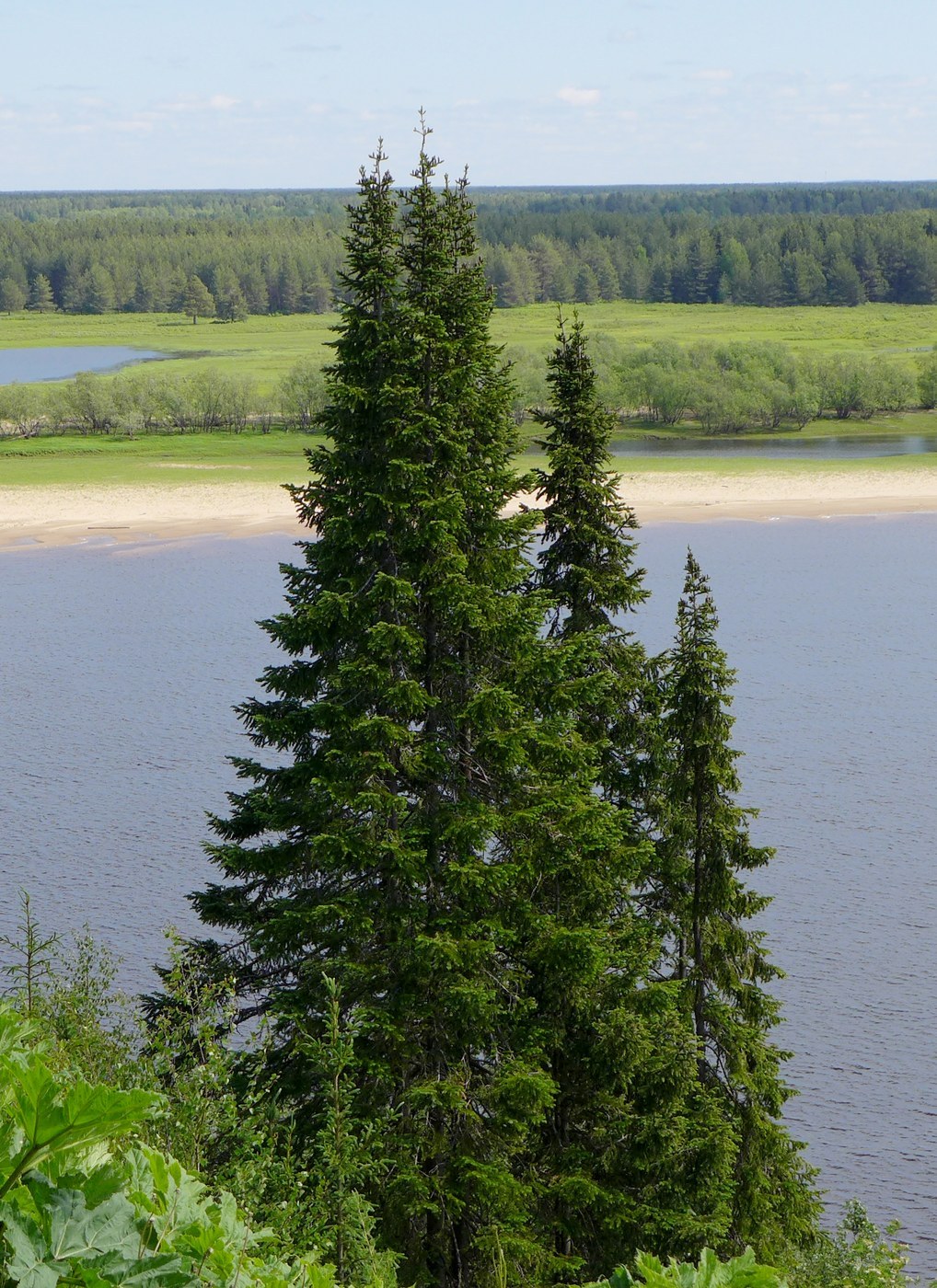
Key Identifying Features
Siberian fir (Abies sibirica) is a cold-hardy boreal fir with soft, slender, sweetly aromatic needles and a narrow spire-like crown. It is the source of 'Siberian fir needle oil' and its crushed foliage has a strong, fresh balsamic scent.
- Soft, narrow needles 2–3 cm long, blunt-tipped
- Strongly fragrant when crushed
- Smooth grey bark with prominent resin blisters
- Narrow, conical to spire-shaped crown
Leaves & Stems
Needles are flexible, flattened, light to mid-green, with two pale stomatal bands beneath, and they spread more or less all around the shoot but with a tendency to point upward and forward. Tips are rounded or slightly notched, never sharp. The needles are notably thin and soft, and the foliage is among the most fragrant of firs. Shoots are slender, pale grey, finely downy, with smooth round leaf scars. Buds are small, globular and resinous. The bark stays smooth and grey for a long time, dotted with raised resin blisters typical of firs.
Flowers & Fruit
Cones are upright, cylindrical, relatively small (5–9 cm long), bluish then brown, with bracts hidden inside (not exserted). They sit erect on the upper crown and disintegrate on the tree. Male cones are small and yellow-brown, clustered beneath shoots in spring.
How to Tell It Apart from Look-Alikes
- Spruce (Picea, incl. Siberian spruce): Sharp four-sided needles on woody pegs; hanging cones. Siberian fir has soft flat needles, smooth scars, upright cones.
- Larch (Larix sibirica): Deciduous, needles in tufts on spurs; Siberian fir is evergreen with single needles.
- Other firs: Siberian fir has notably slender, very soft, strongly scented needles and small cones, and tolerates the harshest cold.
Where You'll Find It
The most widely distributed fir in Russia, ranging across Siberia from the Urals to the Far East, plus Mongolia, Kazakhstan and northern China, in cold boreal (taiga) forests. Planted occasionally as an ornamental in cold climates. Look for a slim, pointed boreal conifer with soft fragrant foliage and smooth blistered bark.
Quick ID Checklist
- Soft, slender needles, blunt-tipped
- Strong fresh balsamic fragrance when crushed
- Two pale bands on needle underside
- Smooth grey bark with resin blisters
- Small upright cones that shatter on the tree
- Narrow spire-like crown; extreme cold-hardiness
A narrow, fragrant boreal fir with soft slender needles and smooth blistered bark is Siberian fir.
Frequently asked questions
Why does Siberian fir smell so strongly?
Its needles are rich in fragrant essential oils and are commercially harvested for Siberian fir needle oil; crushing the soft foliage releases a fresh balsamic scent that aids identification.
How is Siberian fir different from Siberian spruce?
The fir has soft, flat, blunt needles on smooth round scars and upright cones that break apart on the tree, while the spruce has sharp four-sided needles on woody pegs and hanging cones that fall whole.
Is Siberian fir evergreen or deciduous?
It is evergreen with single needles. Don't confuse it with Siberian larch, which is deciduous and bears needles in tufts on short spurs.
Where does Siberian fir grow?
It is the most widespread fir in Russia, ranging across Siberian taiga forests and into Mongolia, Kazakhstan, and northern China, thriving in extreme cold.