
How to Care for Snowball Cactus
Care for Mammillaria bocasana with bright direct sun, sparing watering, gritty soil, and a cool dry winter rest to encourage its ring of flowers.
Read the full Snowball Cactus encyclopedia entry →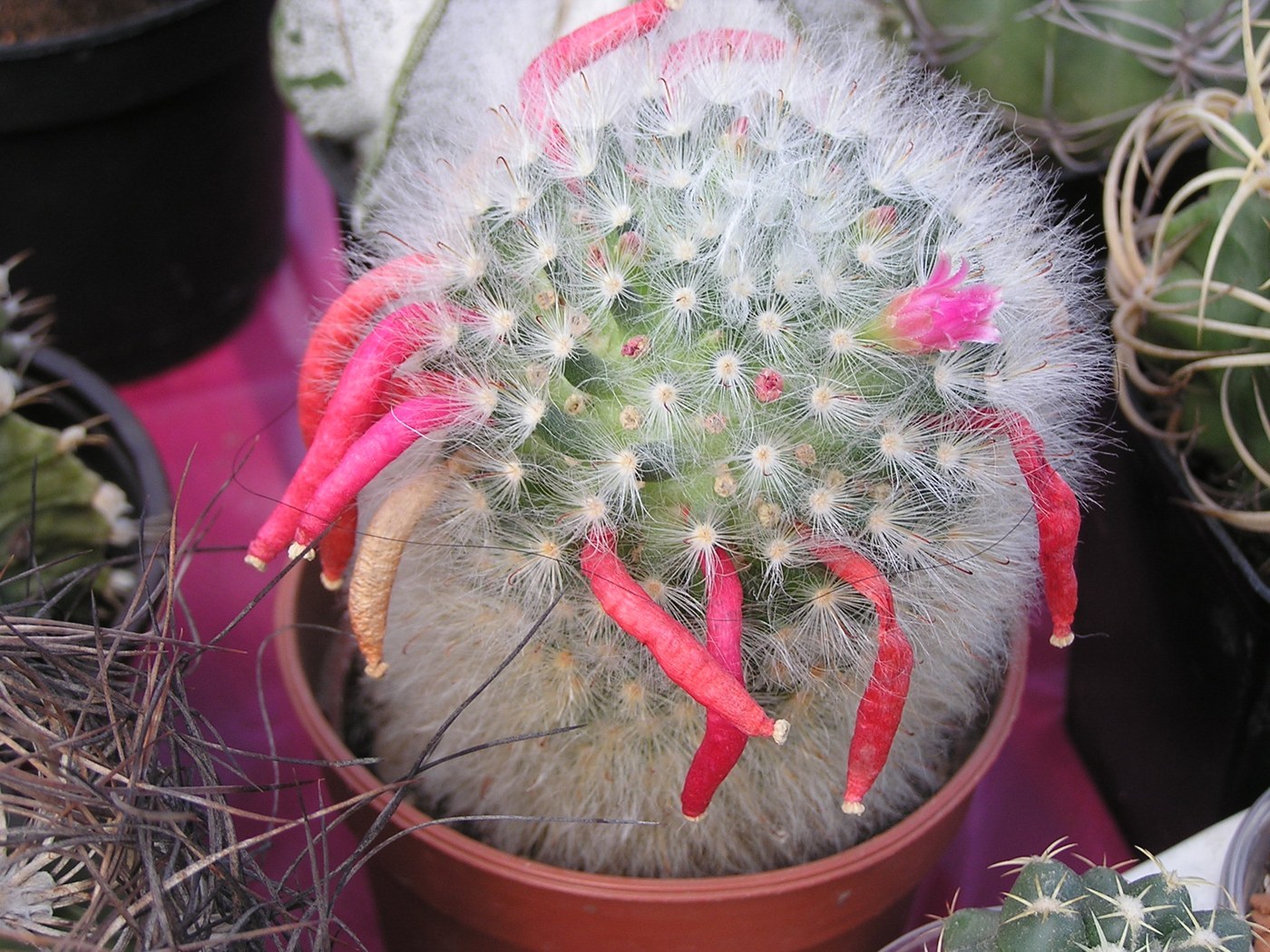
The snowball cactus (Mammillaria bocasana) is a clustering pincushion cactus wrapped in silky white hairs and fine hooked spines, often producing a ring of small creamy to pink flowers. It is an easy, forgiving succulent that rewards a bright spot and a restrained watering hand.
Light
Give the snowball cactus bright light with several hours of direct sun each day to keep its dense white hair and tight globular form. A south- or west-facing window is ideal indoors. If the plant grows pale, elongated, or leans, it needs more light. When moving a cactus from indoors into full outdoor sun, acclimate it gradually over a week or two to avoid scorching the skin beneath the hairs.
Water
Water sparingly and always let the soil dry out completely between waterings. During the spring and summer growing season, a thorough soak every couple of weeks is usually plenty; let excess drain away fully and never leave the pot sitting in water. The dense hairs can trap moisture against the body, so water the soil rather than overhead and keep the crown dry. In winter, withhold water almost entirely to give the plant a dry rest. Overwatering is by far the greatest risk to this cactus.
Soil & Potting
Plant in a very gritty, fast-draining mix. A commercial cactus and succulent soil boosted with extra pumice, perlite, or coarse sand gives the sharp drainage the roots need. Use a shallow pot with ample drainage holes, ideally unglazed terracotta, which wicks moisture away and helps the soil dry quickly. Avoid dense, moisture-retentive mixes at all costs.
Humidity & Temperature
This cactus prefers warm, dry air and does not tolerate cold, damp conditions. Normal room humidity is fine. Keep it comfortably warm from spring through fall, ideally between about 65 and 85 F. In winter, a cool dry rest around 45 to 55 F helps trigger the spring flush of flowers, but protect it from frost. Good ventilation is important to prevent fungal issues around the hairy crown.
Feeding
Feed lightly during the growing season only. A diluted low-nitrogen cactus fertilizer applied once a month from spring through summer is sufficient. Too much nitrogen produces soft, weak growth that spoils the compact form and can encourage rot. Do not feed at all during the winter rest.
Propagation
Mammillaria bocasana readily forms offsets, or pups, around its base, making division the easiest method. Gently twist or cut away an offset, let the cut surface callus over for a few days in a dry, shaded spot, then set it on barely moist gritty mix to root. Seed propagation is also possible but much slower, requiring warmth and patience to reach flowering size.
Repotting / Pruning
Repot only every 2 to 3 years, or when the cluster outgrows its pot, doing so in spring when the plant is entering active growth. Let the soil dry before repotting and hold off watering for several days afterward so any disturbed roots can heal. Cacti need no routine pruning; simply remove any shriveled, damaged, or rotted offsets with a clean tool. Handle carefully, as the fine hooked spines catch skin easily; use folded paper or gloves.
Common Problems & Pests
Root rot from overwatering or poor drainage is the primary threat, showing as a soft, browning, or collapsing base. Mealybugs can hide among the hairs and spines, and root mealybugs may lurk in the soil; treat with dabs of insecticidal soap or by repotting into fresh mix. Spider mites occasionally appear in hot, dry, stagnant air. A stretched, faded body signals insufficient light.
Seasonal Care Tips
In spring, resume watering gradually as growth restarts, repot if needed, and begin light monthly feeding. Through summer, water when the soil is fully dry and give as much bright light as the plant can handle. In fall, taper watering and stop feeding as growth slows. In winter, keep the plant cool, bright, and nearly dry to encourage a strong spring bloom and preserve its tidy globular shape.
Frequently asked questions
How often should I water my snowball cactus?
Water only when the soil has dried out completely, roughly every couple of weeks in spring and summer, and let all excess drain away. In winter, withhold water almost entirely to give the plant a dry rest. Overwatering is the most common cause of decline.
Why won't my Mammillaria bocasana flower?
This cactus typically needs a cool, dry winter rest at around 45 to 55 F to set flower buds. Without that seasonal dip, and with plenty of direct sun during the growing season, blooms may not form. Provide the cool dry winter and bright spring light to encourage the ring of flowers.
The base of my cactus has gone soft and brown. What happened?
A soft, browning base is usually root or stem rot caused by overwatering or poorly draining soil. Remove the plant, cut away any firm healthy offsets, let them callus, and replant in a very gritty, fast-draining mix, watering only when the soil is fully dry.
How do I propagate a snowball cactus?
The easiest way is by removing the offsets that cluster around the base. Twist or cut a pup off, let the cut surface callus for a few days, then place it on barely moist gritty mix to root.