Soursop Identification Guide
Identifying the soursop tree and its large spiny green fruit, plus how to distinguish it from related custard apples.
Read the full Soursop encyclopedia entry →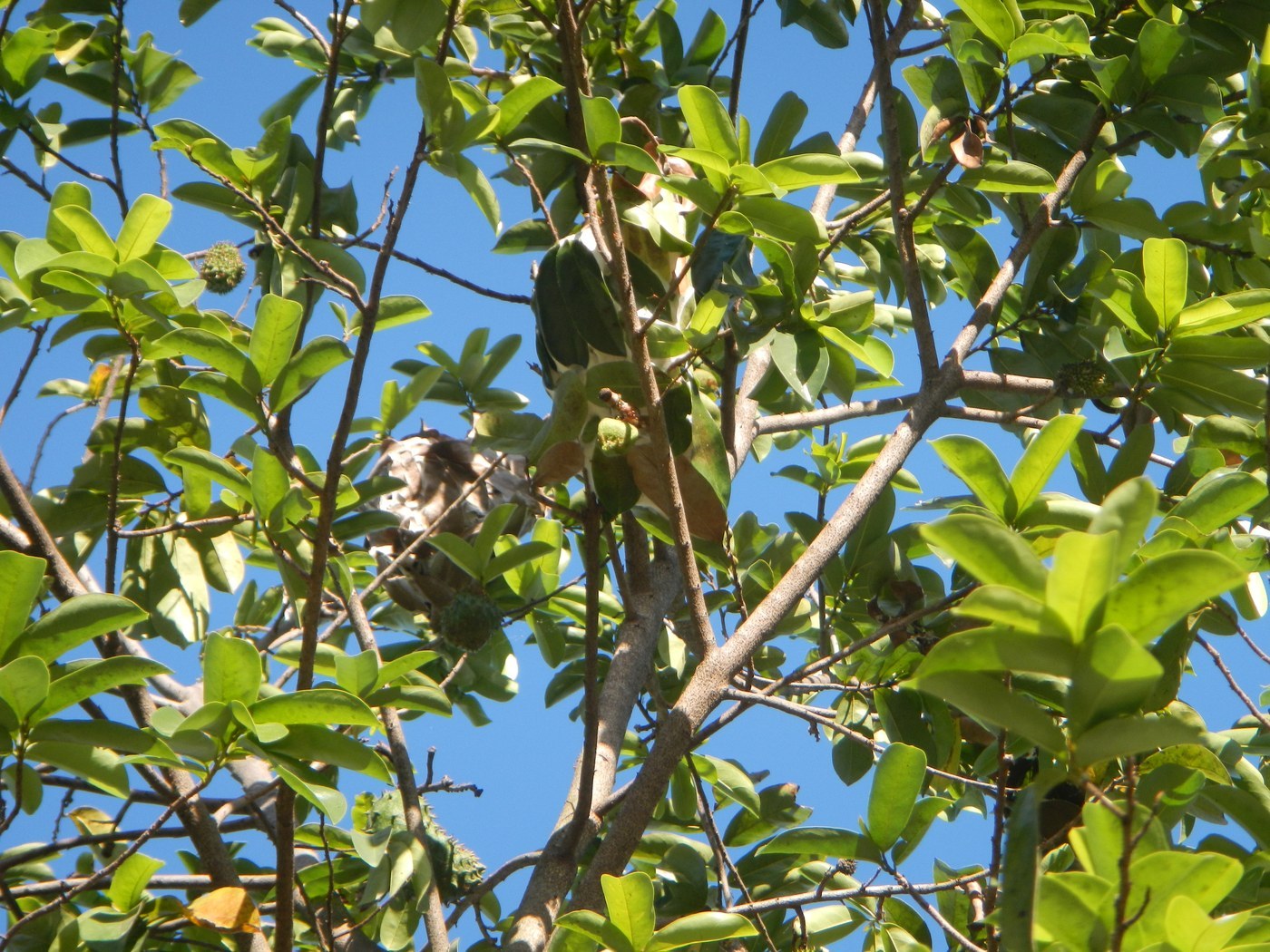
Key Identifying Features
Soursop (Annona muricata), also called guanabana or graviola, is a small tropical evergreen tree known for its large, heart-shaped, spiny green fruit with soft white flesh. The fruit's fleshy, curved spines and irregular oval shape make it one of the easier tropical fruits to recognize.
- Small evergreen tree, 4–8 m tall, with a low, open crown
- Fruit large (15–35 cm, up to several kilograms), dark green, covered in soft hooked spines
- White, fibrous flesh enclosing glossy black seeds
Leaves & Stems
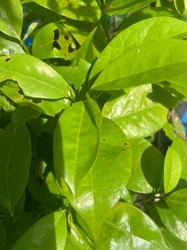
Leaves are alternate, oblong to elliptical, 8–20 cm long, glossy dark green above, leathery, with a pointed tip and a smooth margin. Crushed leaves give off a strong, slightly pungent aroma. Young twigs are smooth; bark on the trunk is gray and fairly smooth. The tree branches low and irregularly.
Flowers & Fruit
Flowers are unusual and distinctive: solitary, fleshy, yellow-green, with three thick outer petals and three smaller inner ones forming a roughly triangular, waxy bloom that can emerge directly from the trunk or branches. The fruit is technically a syncarp (fused from many ovaries), green even when ripe, softening slightly to the touch. The spines are soft and bend easily — they are not sharp. Inside, white segments enclose glossy black seeds.
How to Tell It Apart from Look-Alikes
- Sugar apple / sweetsop (Annona squamosa): fruit is round and lumpy/segmented like overlapping scales, not spiny; smaller.
- Custard apple (Annona reticulata): heart-shaped but smooth or faintly netted skin, reddish-brown when ripe, no spines.
- Cherimoya (Annona cherimola): fingerprint-like scaled skin, no spines; cooler-climate tree.
- Durian: also large and spiny but has hard, woody, very sharp spines and a notorious smell; soursop spines are soft and bend.
- Soursop's soft, hooked spines on a green, kidney/heart-shaped fruit are diagnostic.
Where You'll Find It
Native to the tropical Americas and Caribbean, now grown throughout Southeast Asia, Africa, and tropical lowlands worldwide. It is strictly tropical, intolerant of frost and prolonged cold, and is found in home gardens, small orchards, and along roadsides in warm, humid regions.
Quick ID Checklist
- Small evergreen tree with glossy, aromatic oblong leaves
- Fleshy yellow-green flowers, sometimes on the trunk
- Large green heart-shaped fruit with soft, bendable spines
- White fibrous flesh with black seeds
- Strictly tropical, frost-sensitive
Frequently asked questions
Are the spines on a soursop sharp?
No. Unlike durian's hard woody spines, soursop's spines are soft and flexible, bending easily under your fingers — a quick way to tell the two apart.
How do I distinguish soursop from sugar apple?
Soursop fruit is large, green, and covered in soft curved spines; sugar apple is smaller, round, and covered in rounded bumpy segments rather than spines.
Does soursop fruit turn yellow when ripe?
It generally stays green even when ripe, softening slightly and giving off a fragrant aroma rather than changing color dramatically.
Soursop identified by the community
Recent Soursop specimens identified with Plant Identifier.