
Spinach Identification Guide
Identify spinach (Spinacia oleracea) by its smooth or savoyed dark-green leaves, basal rosette, and inconspicuous green flowers when it bolts.
Read the full Spinach encyclopedia entry →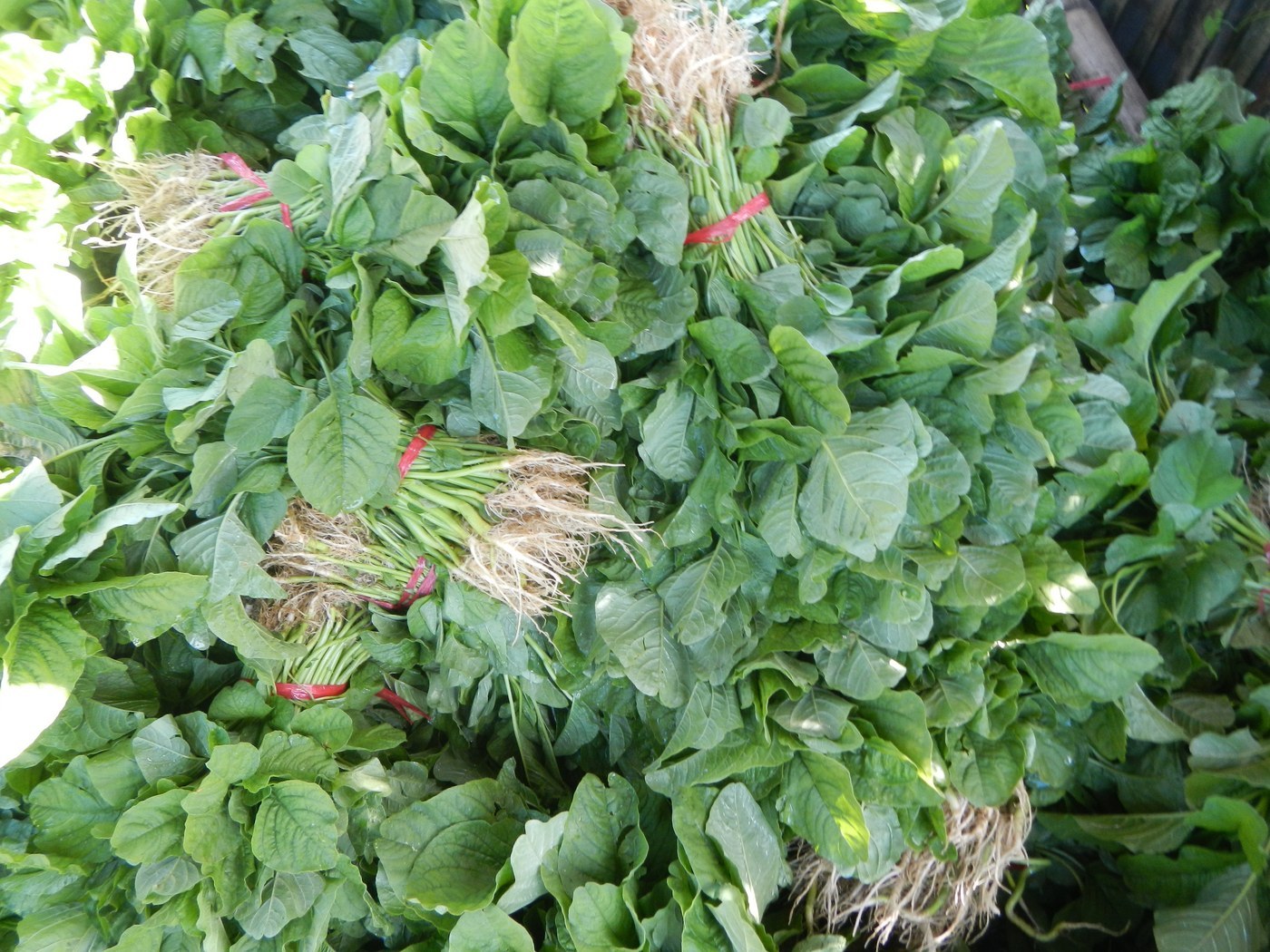
Key Identifying Features
Spinach (Spinacia oleracea) is a fast-growing cool-season annual in the amaranth family (Amaranthaceae). Recognize it by a low rosette of smooth or crinkled dark-green leaves, tender pinkish-tinged stalks, and (when bolting) inconspicuous greenish flowers on a tall spike. Crucially, the juice is clear, not milky.
Leaves & Stems
- Leaves form a basal rosette close to the ground in the leafy stage.
- Leaf shape varies from oval to triangular/arrowhead with a broad base; lower leaves often have small basal lobes.
- Texture is either smooth (flat-leaf) or deeply puckered (savoy/crinkled).
- Color is a deep, slightly glossy green; stalks and young leaves may show a pink-red blush at the base.
- Leaves are succulent and snap cleanly, releasing clear (not milky) sap.
Flowers & Fruit
- Spinach is usually dioecious (separate male and female plants).
- When bolting, it sends up a branched flowering stalk up to 60 cm (2 ft) with smaller, narrower leaves.
- Flowers are small, green, and petal-less — male flowers in loose clusters, female flowers tight in the leaf axils.
- Seeds may be smooth or prickly/spiny depending on variety.
How to Tell It Apart from Look-Alikes
- Lettuce: exudes milky sap; spinach sap is clear. Spinach leaves are darker and often arrow-shaped.
- Swiss chard / beet greens (same family): larger, with thick, often colorful midribs and stalks; spinach leaves are thinner and softer.
- New Zealand spinach (Tetragonia): thick, triangular, slightly fuzzy leaves on sprawling stems — a different plant used similarly.
- Malabar spinach (Basella): a fleshy vining plant with thick rounded leaves, not a rosette.
- Lamb's quarters (Chenopodium): related weed with mealy-white coated, diamond-shaped leaves.
Where You'll Find It
Spinach is a cool-weather garden green grown in spring and fall beds, rows, and containers. It germinates in cool soil, tolerates frost, and bolts rapidly in heat and long days. Look for dense low rosettes of dark green leaves in vegetable plots and market bunches.
Quick ID Checklist
- Basal rosette of dark-green leaves
- Smooth or savoyed (crinkled) leaf texture
- Oval to arrowhead leaf shape, often pink-tinged base
- Clear sap, not milky
- Tall branched stalk with tiny green flowers when bolted
Frequently asked questions
How do I distinguish spinach from lettuce?
Snap a leaf: lettuce releases milky white sap while spinach sap is clear. Spinach leaves are also darker green, more arrow-shaped, and frequently show a pink blush at the stalk base.
Is the pink-red color on spinach stems normal?
Yes. Many spinach varieties show a natural pink to reddish tint at the base of stalks and young leaves. It is a normal pigment and a helpful identifying clue, not a disease.
Why did my spinach suddenly grow tall and stop making leaves?
It has bolted — triggered by heat and lengthening days, the plant sends up a flowering stalk with small green petal-less flowers. The leaves turn bitter and tougher once this begins.
What is the difference between flat-leaf and savoy spinach?
Flat-leaf spinach has smooth, easy-to-clean leaves, while savoy types have deeply crinkled, puckered leaves. Both are the same species and share the dark color and clear sap.