
How to Care for Spotted Spurge
Spotted Spurge is a low, mat-forming warm-season annual that thrives in full sun and dry soil; it grows easily but self-seeds prolifically.
Read the full Spotted Spurge encyclopedia entry →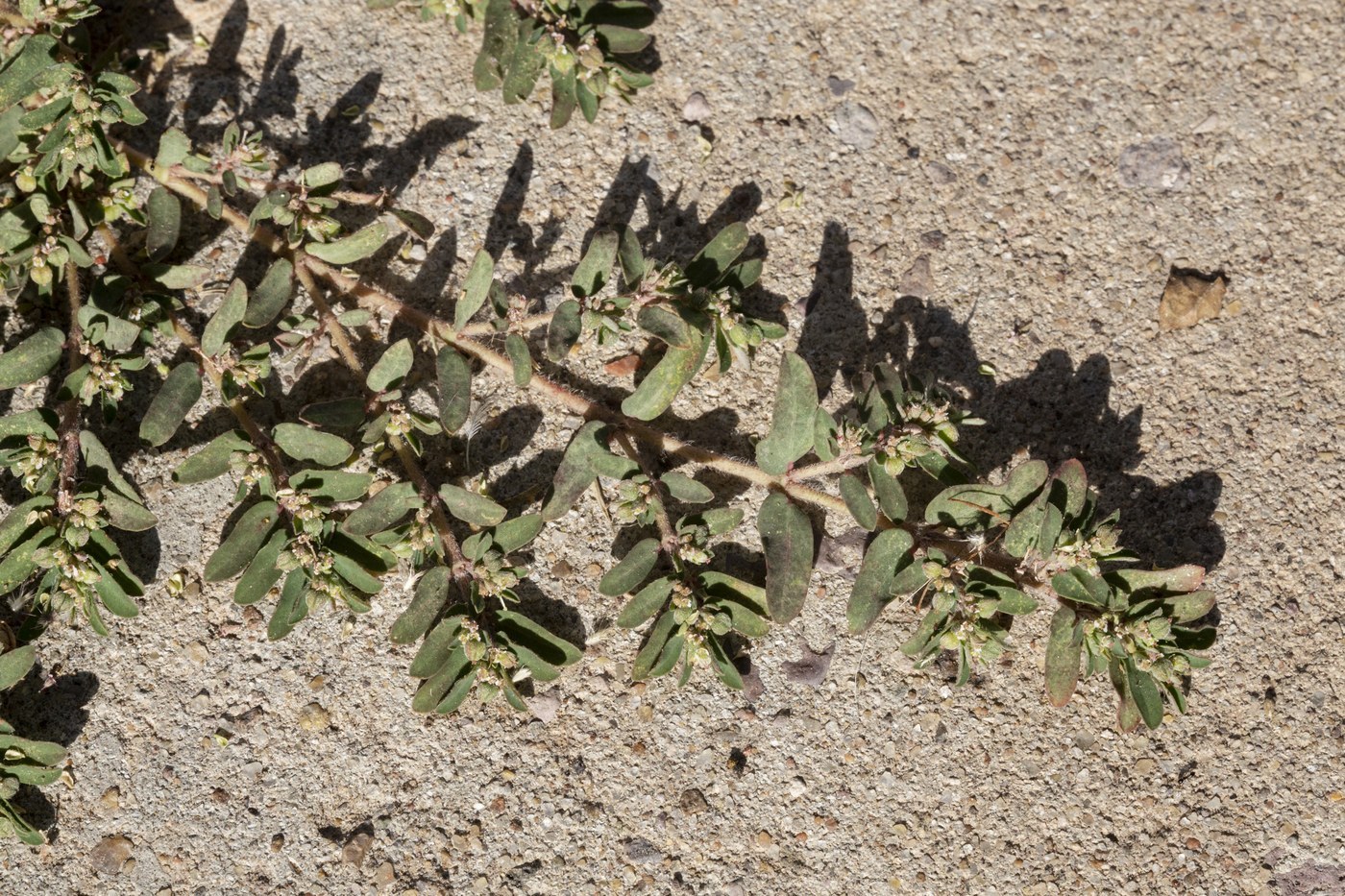
Spotted Spurge (Euphorbia maculata) is a low, prostrate, mat-forming warm-season annual with small oval leaves, often marked with a reddish spot, and tiny inconspicuous flowers. It is extremely tough and drought-hardy, thriving in poor, sunny, dry ground where little else grows. It self-seeds heavily and is widely regarded as a weed, so grow it only where you can contain its spread.
Light
Full sun is strongly preferred. Spotted Spurge revels in hot, bright, open sites and forms densest mats in maximum light. It tolerates a little light shade but grows more sparsely and stretches when shaded.
Water
Water needs are very low; this is a highly drought-tolerant plant. Its taproot lets it survive extended dry spells, and it colonizes baked, neglected ground with ease. Overwatering or heavy, wet soils are far more likely to harm it than drought. Water sparingly, if at all, once established.
Soil & Potting
Highly adaptable, it grows in poor, compacted, sandy, gravelly, or nutrient-thin soils, including cracks in pavement. Sharp drainage is the main requirement. It has no need for rich or amended soil. In containers a gritty, free-draining mix suits it, though it is rarely grown as a pot subject.
Humidity & Temperature
A heat-loving annual, Spotted Spurge germinates in warm soil and grows fastest through the hot months. It is not frost-hardy and is killed by cold, completing its life cycle within a single warm season. Low humidity and heat suit it perfectly.
Feeding
No feeding is required. This plant thrives in lean, infertile ground and needs no supplemental fertilizer. Added nutrients simply encourage lusher, more vigorous, and more prolific growth.
Propagation
Propagation is by seed, which the plant produces in enormous quantities. Seeds germinate readily on warm, bare soil throughout the growing season, often producing multiple generations in one year. Because it self-sows so freely, deliberate propagation is unnecessary; the challenge is usually limiting seed production rather than encouraging it. When handling the plant, note that broken stems release a milky sap.
Repotting / Pruning
As a short-lived annual it needs no repotting or formal pruning. To manage it, remove whole plants before they set seed, ideally while young and before the mats spread widely. Pulling is easiest when soil is moist so the taproot lifts cleanly.
Common Problems & Pests
Spotted Spurge is exceptionally pest- and disease-free, which contributes to its weedy success. Its main drawback is aggressive self-seeding and its ability to form dense mats that crowd out other low plantings. Control relies on removing plants before seed set and eliminating the seedlings that appear on open ground. It regenerates quickly from any missed seed.
Seasonal Care Tips
In spring and early summer, seeds germinate on warm bare soil; this is the time to remove seedlings if you want to limit spread. Through the hot summer months it grows and flowers rapidly, setting seed continuously, so stay ahead of it. In autumn, cooler weather slows growth, and the first frost kills the plants outright, though the season's seeds remain to sprout the following year.
Frequently asked questions
Why does Spotted Spurge grow so well in poor soil?
It is adapted to lean, dry, sunny conditions and has a taproot that reaches moisture deep down. Poor, compacted, or gravelly ground with sharp drainage and full sun is exactly where it flourishes.
How do I stop Spotted Spurge from spreading?
Remove plants while young and before they set seed, since a single plant produces vast numbers of seeds. Pull when the soil is moist to lift the taproot, and clear new seedlings promptly to break the cycle.
Does Spotted Spurge come back every year?
The individual plants are annuals killed by frost, but they self-seed so heavily that new plants reliably reappear each warm season from the previous year's seed.
What is the milky sap in the stems?
Like other Euphorbia species, Spotted Spurge releases a milky latex sap when stems are broken. Wear gloves when handling it, as the sap can be irritating to skin, and wash your hands afterward.