
How to Care for Star Fruit Tree
Grow Averrhoa carambola as an ornamental tropical evergreen with delicate foliage, lilac blossoms, and star-ridged fruit in full sun.
Read the full Star Fruit Tree encyclopedia entry →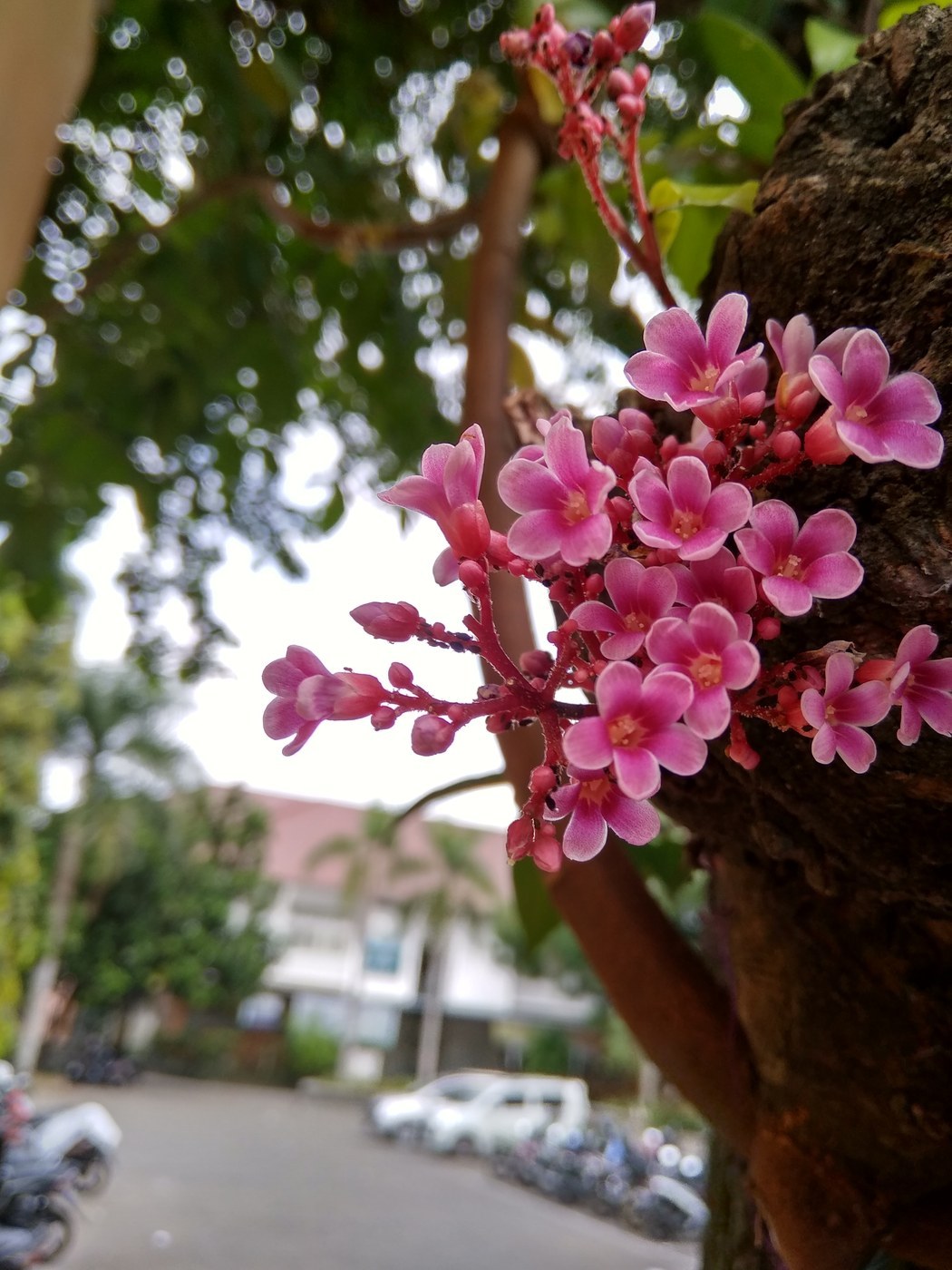
The Star Fruit Tree (Averrhoa carambola) is a compact, slow-to-moderate tropical evergreen valued ornamentally for its fine, fern-like foliage, clusters of small lilac to pink blossoms, and distinctive five-ridged fruit. A moderate-difficulty tree, it needs warmth, sun, and steady moisture, and adapts well to large containers in cooler regions where it must be protected from cold.
Light
Star fruit performs best in full sun, needing at least six hours of direct light for dense growth and heavy flowering. In hot, arid climates a little afternoon shade prevents leaf scorch, but in general more sun means a fuller canopy. Indoors or in a greenhouse, give it the brightest location available and rotate the pot for even growth.
Water
Keep the soil consistently moist, as this tree dislikes drying out and may drop leaves or flowers under drought stress. Water deeply and regularly, letting only the top inch of soil begin to dry between waterings. Avoid waterlogging, which harms the roots. Container specimens dry faster and need close attention through warm weather; mulch helps conserve moisture.
Soil & Potting
Plant in rich, well-draining loam with abundant organic matter. Star fruit tolerates a range of soils but resents soggy, poorly drained ground. For pots, use a fertile, free-draining mix amended with compost, and choose a large container with generous drainage holes. Slightly acidic to neutral soil suits it best.
Humidity & Temperature
This is a warmth-loving tropical that prefers temperatures between roughly 70 and 90 F (21 to 32 C) and moderate to high humidity. It is frost-tender; young trees can be damaged by even a light freeze, though established trees tolerate brief, mild cold. In cool climates, grow it in a container and move it into a warm, bright indoor space before autumn frosts arrive.
Feeding
Feed several times through the growing season with a balanced fertilizer, favoring formulas that supply steady nitrogen for foliage plus potassium and phosphorus to support flowering. Star fruit responds to regular light feeding and to micronutrients; yellowing between leaf veins can indicate a minor deficiency correctable with a micronutrient supplement. Reduce feeding in winter.
Propagation
Star fruit is usually propagated by grafting selected cultivars onto seedling rootstock to keep desirable traits and encourage earlier flowering. Seeds germinate readily when fresh but produce variable trees and take longer to mature. Air layering is another option for producing sizable plants. Keep young propagules warm, moist, and shaded until they establish.
Repotting / Pruning
Repot container trees every one to two years in spring, moving up a size as roots fill the pot. Prune to shape the canopy, remove dead or crossing branches, and keep container specimens compact; the tree flowers on both old and new wood, so light, regular pruning maintains form without sacrificing bloom. Remove suckers below any graft union.
Common Problems & Pests
Leaf and flower drop typically follow drought, cold drafts, or sudden environmental change. Yellowing foliage can mean overwatering, poor drainage, or nutrient deficiency. Common pests include fruit flies, scale, mealybugs, aphids, and spider mites; monitor regularly and treat with horticultural oil or insecticidal soap. Ensure good drainage and airflow to avoid fungal issues.
Seasonal Care Tips
In spring and summer, water and feed consistently to support flushes of growth and flowering, and repot if needed. In fall, reduce feeding and prepare potted trees to overwinter in a warm, bright spot. Through winter, water more sparingly, keep the tree above frost, and shelter it from cold drafts and heating vents that dry the foliage.
Frequently asked questions
Can a star fruit tree be grown in a container?
Yes. It adapts well to a large pot with rich, well-draining mix, making it easy to move indoors and protect from frost in cooler climates.
Why is my star fruit tree dropping its leaves?
Leaf drop usually results from drought stress, cold exposure, or sudden changes in conditions. Keep the soil evenly moist and protect it from cold drafts.
How much sun does a star fruit tree need?
Give it full sun, at least six hours daily, for a dense canopy and good flowering. In very hot regions, a little afternoon shade prevents leaf scorch.
Why are the leaves yellowing between the veins?
Interveinal yellowing often signals a minor micronutrient deficiency. A micronutrient supplement and steady, balanced feeding usually correct it.