
Star Fruit Tree Identification Guide
Identify the star fruit (carambola) tree, Averrhoa carambola, by its compound leaves, lilac flowers, and ribbed yellow fruit that forms a star when sliced.
Read the full Star Fruit Tree encyclopedia entry →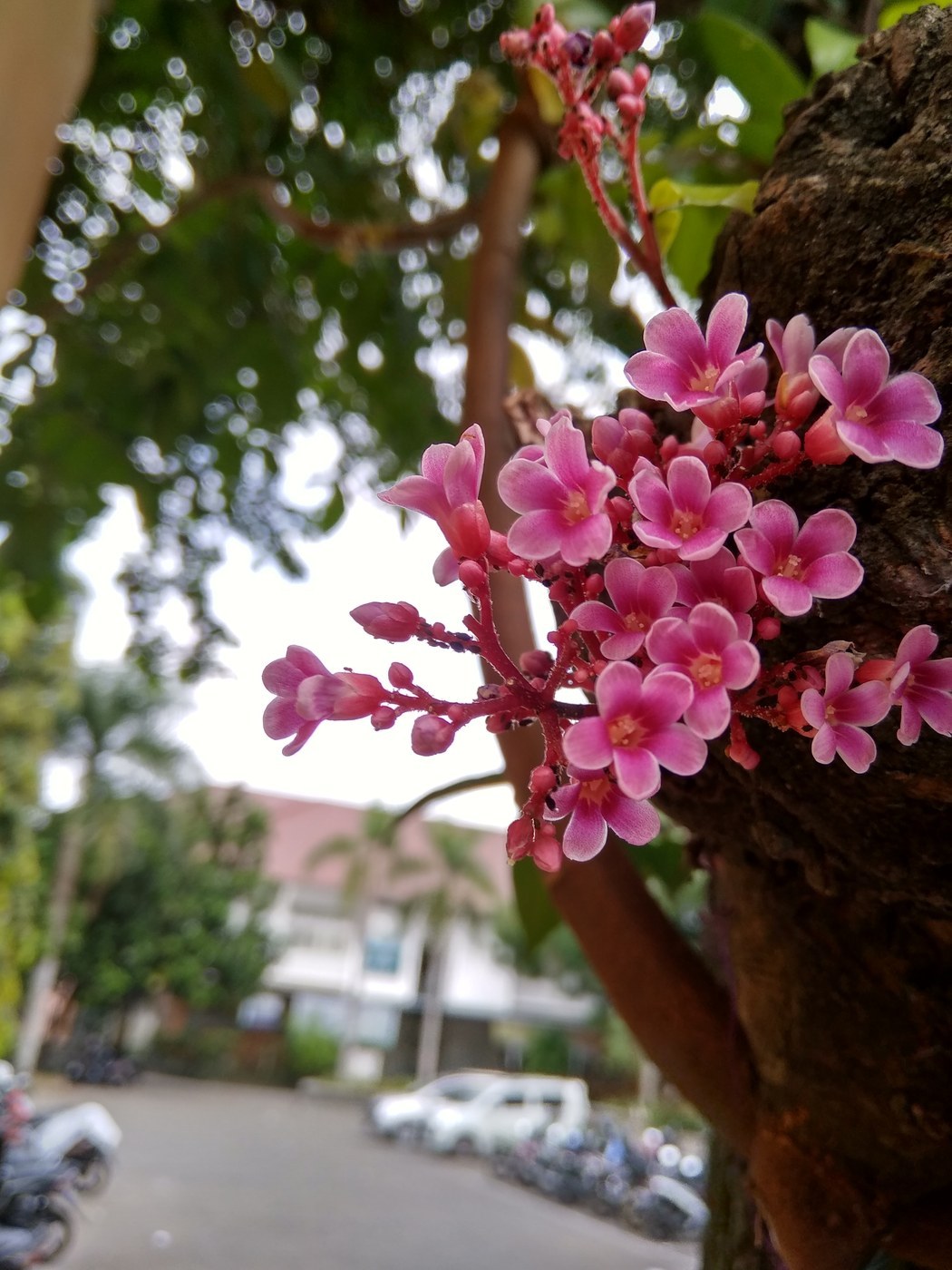
Key Identifying Features
Star fruit, or carambola (Averrhoa carambola), is a small bushy evergreen tree, 15-30 ft tall, of tropical and subtropical regions. It is most easily identified by its distinctive ribbed, waxy yellow fruit that produces a five-pointed star shape when cut crosswise, along with soft pinnately compound leaves that fold at night.
- Ribbed, oval-oblong yellow fruit that slices into a star
- Pinnately compound leaves with several oval leaflets
- Leaflets are sensitive, folding/drooping at night or when touched
- Small lilac-purple to pink flowers in clusters
Leaves & Stems
Leaves are alternate and pinnately compound, 6-10 in. long, with 5-11 leaflets that are oval, soft, smooth-edged, light to medium green, and slightly hairy when young. A notable behavior is that the leaflets are nyctinastic — they fold together and droop at night or in response to shock, a memorable live ID trait. The tree has a short trunk, dense low branching, and a bushy, rounded form. Bark is light brown and finely fissured.
Flowers & Fruit
Flowers are small, bell-shaped, lilac to purple-pink with white edges, borne in clusters along the branches and twigs (often on older wood) much of the year in the tropics. The fruit is unmistakable: 3-6 in. long, oblong with 5 (sometimes 4-6) prominent longitudinal ribs, ripening from green to glossy waxy yellow, with thin skin and translucent, crisp flesh. Sliced across, it forms a classic five-pointed star.
How to Tell It Apart from Look-Alikes
- Bilimbi (Averrhoa bilimbi): Close relative with similar compound leaves, but its fruit is small, gherkin-like, and only faintly ribbed — not a star shape.
- Citrus trees: Have simple (single) leaves with winged petioles and round fruit; star fruit has compound leaves and ribbed fruit.
- Tamarind / other legumes: Compound leaves too, but produce pods, not ribbed fleshy fruit.
- Carambola vs ornamental tropicals: The ribbed star-sectioned fruit is unique enough to be diagnostic on its own.
Where You'll Find It
Star fruit is native to Southeast Asia and cultivated throughout the tropics and warm subtropics — including India, Southeast Asia, the Caribbean, Florida, Hawaii, and Central/South America. It grows in home gardens, orchards, and as a dooryard tree in frost-free, humid areas with rich, well-drained soil. It cannot tolerate frost.
Quick ID Checklist
- Small bushy evergreen tree, 15-30 ft
- Pinnately compound leaves, 5-11 soft leaflets
- Leaflets fold/droop at night
- Lilac-purple flowers clustered on branches
- Ribbed waxy-yellow fruit that cuts into a 5-pointed star
- Frost-free tropical/subtropical setting
Frequently asked questions
Why is it called star fruit?
The ribbed, oblong yellow fruit forms a distinctive five-pointed star shape when sliced crosswise, which is the easiest identification feature.
Do the leaves really move?
Yes. The compound leaflets are nyctinastic, folding together and drooping at night or when disturbed, a memorable trait of the tree.
What color are the flowers?
Small bell-shaped flowers that are lilac to purple-pink with white margins, clustered along the branches and often on older wood.
How is it different from bilimbi?
Both are Averrhoa species with similar compound leaves, but bilimbi fruit is small, cucumber-like, and only faintly ribbed, lacking the star cross-section.