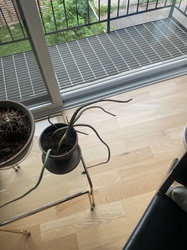
How to Care for String of Dolphins
Care for string of dolphins (Curio x peregrinus), a trailing succulent with leaves shaped like leaping dolphins that needs bright light and lean watering.
Read the full String of Dolphins encyclopedia entry →String of dolphins is a charming trailing succulent named for its curved leaves, which are shaped like tiny leaping dolphins. A hybrid succulent, it cascades beautifully from hanging pots and shelves but needs bright light and careful, restrained watering to look its best.
Light
Provide bright indirect light with some gentle direct light for well-formed, dolphin-shaped leaves. A spot near an east or south window with a few hours of soft morning sun is ideal. Too little light causes leggy, sparse growth and the leaves lose their distinctive dolphin shape, while intense midday sun can scorch them.
Water
Water only when the soil has dried out fully, then water thoroughly and let excess drain away. Like most succulents, string of dolphins stores water in its leaves and is far more tolerant of drought than of excess moisture. Plump leaves signal good hydration, while shriveling means it is thirsty. Reduce watering further in winter. Overwatering causes soft, mushy stems and rot.
Soil & Potting
Use a fast-draining succulent or cactus mix, ideally amended with extra perlite or pumice for maximum aeration. Plant in a container with drainage holes; unglazed terracotta helps wick away excess moisture. Avoid heavy, water-retentive potting soil, which holds too much moisture around the delicate roots.
Humidity & Temperature
String of dolphins prefers average household humidity and warm temperatures between about 18 and 24 C. It is not cold-hardy and should be protected from temperatures below roughly 10 C. Keep it away from cold drafts and provide good air circulation to prevent moisture from lingering around the stems.
Feeding
Feed sparingly with a diluted succulent fertilizer once or twice during the spring and summer growing season. This plant needs little supplemental nutrition, and over-feeding produces weak, elongated growth and can cause the leaves to lose their characteristic shape. Do not feed in autumn and winter.
Propagation
Propagate easily from stem cuttings. Snip a healthy trailing strand a few centimetres long, remove the lower leaves, and let the cut end callus for a day or two. Lay the cutting on top of, or lightly press it into, dry succulent mix; roots form from the nodes over a few weeks. Keeping the mix barely moist during rooting encourages establishment. Placing several cuttings in one pot creates a fuller display.
Repotting / Pruning
Repot only when the plant becomes root-bound, roughly every two years, choosing a slightly larger pot and refreshing the gritty mix in spring. The trailing stems are delicate, so handle them gently. Trim leggy or bare strands to encourage bushier growth, and use the trimmings as cuttings to fill in thin areas.
Common Problems & Pests
The most common problem is overwatering, which causes translucent, mushy leaves and stem rot; grow the plant lean and dry to avoid it. Shriveled, deflated leaves indicate underwatering. Loss of the dolphin shape usually points to insufficient light. Watch for mealybugs nestled among the leaves and stems, along with aphids and occasional spider mites, and treat promptly with insecticidal soap or dabs of alcohol.
Seasonal Care Tips
In spring and summer, provide bright light, occasional thorough watering, and light feeding to support active trailing growth. In autumn and winter, cut watering back sharply, stop feeding, and keep the plant warm and away from cold windows. A cooler, drier winter rest helps maintain its compact, dolphin-shaped form.
Frequently asked questions
Why do my dolphin leaves lose their shape?
When the leaves flatten out or stop resembling dolphins, the plant usually needs more light. Move it to brighter indirect light with a little gentle direct sun to restore the characteristic curved shape.
How often should I water string of dolphins?
Only when the soil has dried out completely, then water thoroughly and let it drain. This is usually every couple of weeks in summer and much less in winter. Overwatering is the most common cause of failure.
Why are the leaves shriveling?
Shriveled, deflated leaves signal underwatering. Give the plant a thorough soak and the leaves should plump back up within a day or two. If they stay mushy and translucent instead, that points to overwatering.
How do I make my string of dolphins fuller?
Trim leggy strands and use the cuttings to fill gaps, planting several in the same pot. Bright light and restrained watering also keep growth compact and dense rather than sparse and stretched.
String of Dolphins identified by the community
Recent String of Dolphins specimens identified with Plant Identifier.