
How to Care for String Of Hearts
A trailing succulent vine with heart-shaped, marbled leaves that thrives in bright indirect light and sparse watering; ideal for hanging displays.
Read the full String Of Hearts encyclopedia entry →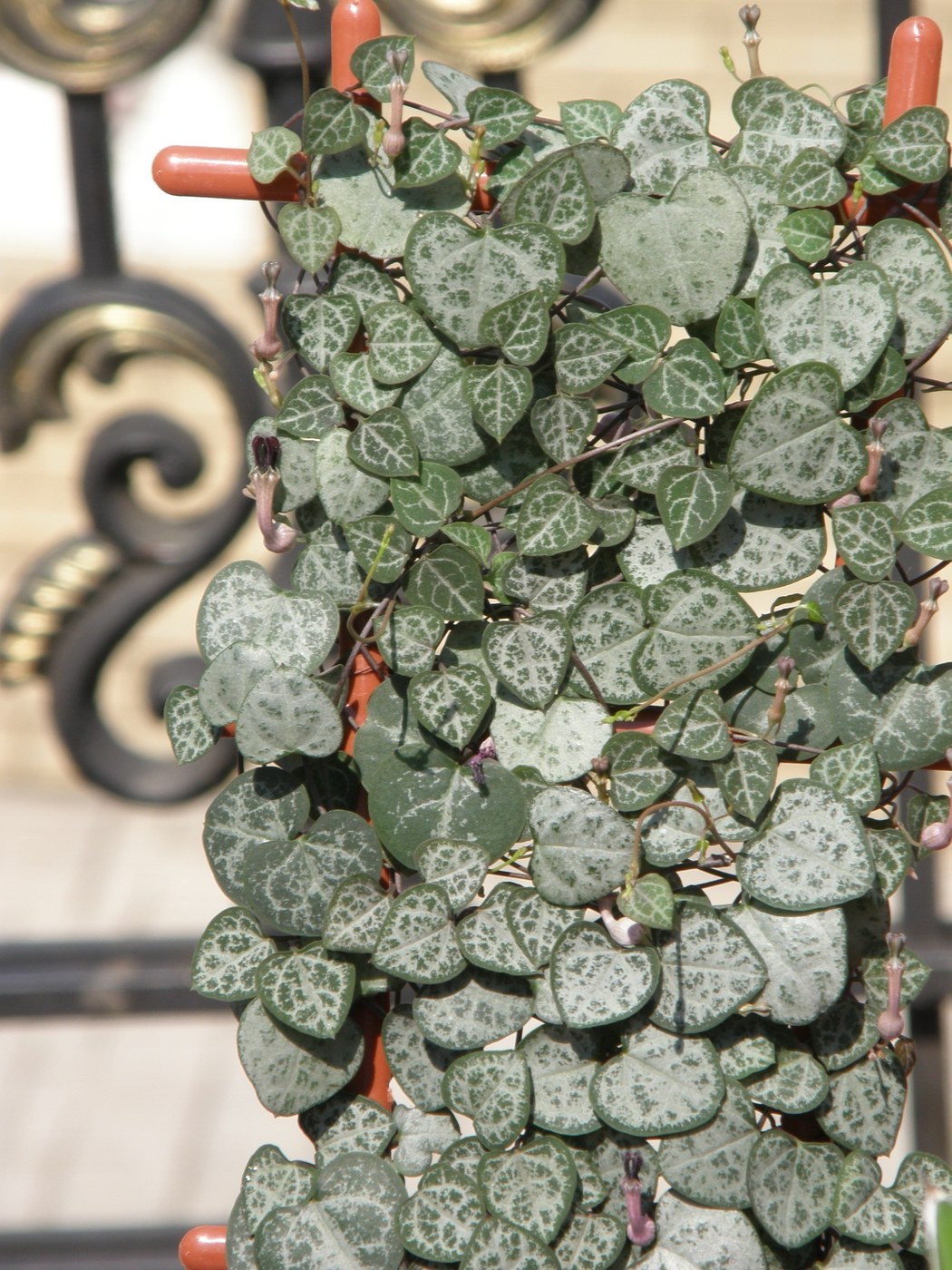
String of Hearts (Ceropegia woodii) is a delicate trailing succulent vine famous for its long, wiry stems strung with pairs of small, heart-shaped leaves marbled in silver and green, often flushed purple underneath. Easy and drought-tolerant, it cascades beautifully from hanging pots and shelves.
Light
Give String of Hearts bright indirect light for the best color and compact, well-spaced leaves. A bright window with filtered sun, or a spot just out of direct beams, is ideal; some gentle morning sun deepens the marbling and purple tones. In low light the stems stretch, the gaps between leaf pairs widen, and the silvery pattern fades. Protect it from harsh midday sun, which can scorch the thin leaves.
Water
Water sparingly and let the soil dry out fully between waterings. As a succulent, String of Hearts stores water in its leaves and the small tubers along its stems, making it very drought-tolerant and highly sensitive to overwatering. Soak thoroughly, let all excess drain, and then wait until the mix is completely dry before watering again. Water even less in the cooler, darker months, when the plant rests.
Soil & Potting
Use a gritty, fast-draining succulent or cactus mix, or lighten standard potting soil with plenty of perlite, pumice, and coarse sand. Sharp drainage is essential to prevent the roots and tubers from rotting. Choose a pot with drainage holes; the plant likes to be somewhat snug and does not need a large container. Hanging pots or elevated shelves show off the trailing stems and improve airflow around them.
Humidity & Temperature
String of Hearts is easy-going about humidity and does well in ordinary room air. It prefers comfortable warm temperatures and must be protected from frost and cold drafts, as it is not cold-hardy. Keep it away from freezing windows in winter, and it will happily tolerate the drier air of most homes.
Feeding
Feed lightly during the active growing season with a diluted balanced or succulent fertilizer, roughly once a month at most. This is a modest feeder that stores its own reserves, so heavy or frequent feeding is unnecessary and can cause soft, weak growth. Stop feeding in autumn and winter while the plant is resting.
Propagation
String of Hearts propagates very easily. Take stem cuttings and either lay them on or lightly press them into moist mix, root them in water, or use the small aerial tubers that form along the stems by pressing them onto soil until they root. Cuttings root quickly in warmth and bright indirect light. Planting several cuttings back into the pot fills out a fuller, denser display.
Repotting / Pruning
Repot infrequently, only every couple of years or when the plant is clearly pot-bound, moving up just one size into fresh gritty mix. Handle the fine stems gently, as they tangle and snap easily. Prune or pinch leggy strands to encourage branching and a bushier top, and replant the trimmings to thicken the plant. Untangle and drape the vines periodically for the best look.
Common Problems & Pests
Overwatering is by far the biggest danger, causing yellowing, mushy stems, and tuber and root rot; always let the soil dry fully and improve drainage if this occurs. Sparse, stretched growth with wide leaf gaps signals too little light. Mealybugs are the most common pest, hiding among the leaves and stems; remove them by hand or with insecticidal soap. Sudden leaf drop usually points to cold or waterlogging.
Seasonal Care Tips
In spring and summer, give bright light, water only when the soil is fully dry, and feed lightly during active growth. In autumn and winter, cut watering back sharply and stop feeding while the plant rests, keeping it warm and away from cold glass. Rotate the pot occasionally and refresh the light exposure as seasons change to keep growth even and richly colored.
Frequently asked questions
Why are the leaves on my String of Hearts far apart with long bare stems?
Wide gaps between leaf pairs and leggy, pale stems mean the plant is not getting enough light. Move it to a brighter spot with bright indirect light to restore compact growth and its silvery marbling.
How often should I water String of Hearts?
Water only when the soil has dried out completely, then soak thoroughly and let it drain. As a succulent it stores water in its leaves and tubers, so it tolerates drought far better than soggy soil. Water even less in winter.
What is the easiest way to propagate it?
Take stem cuttings and root them in water or press them onto moist gritty mix, or use the small aerial tubers that form along the stems. Cuttings root quickly in warmth and bright indirect light; replant several to fill out the pot.
The stems are turning yellow and mushy. What is wrong?
That is overwatering leading to rot. Let the soil dry fully, remove any mushy sections, and repot into a gritty, fast-draining succulent mix with good drainage, watering only when the soil is completely dry.