
How to Care for String of Turtles
Grow String of Turtles (Peperomia prostrata), a trailing semi-succulent prized for its tiny patterned leaves that resemble turtle shells.
Read the full String of Turtles encyclopedia entry →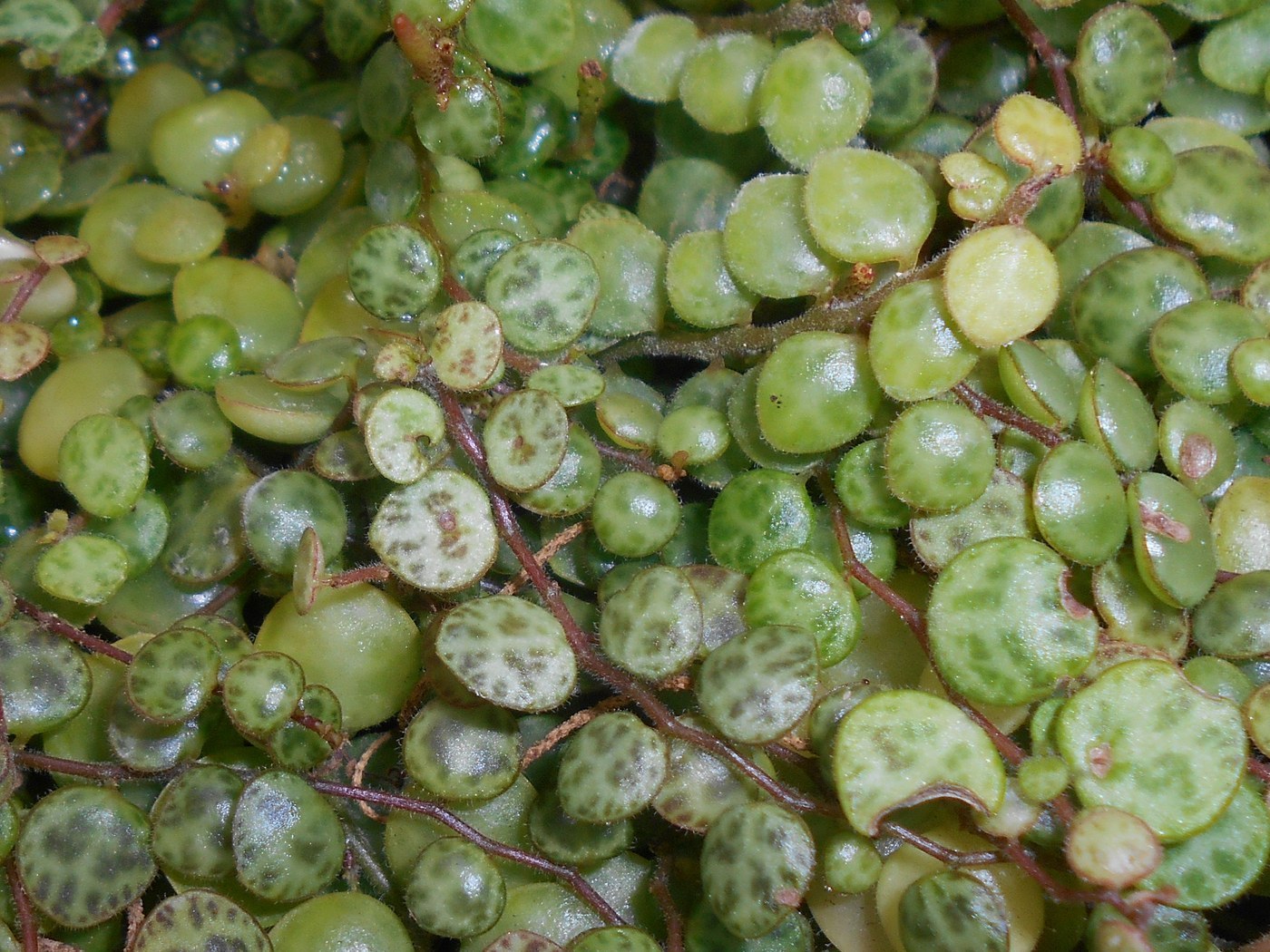
String of Turtles (Peperomia prostrata) is a slow-growing, trailing semi-succulent whose small round leaves carry a marbled pattern reminiscent of a tortoise shell. It stays compact, making it a favorite for small hanging pots and shelf edges where its delicate vines can cascade.
Light
Give this plant medium to bright indirect light. An east-facing window or a spot a few feet back from a brighter southern or western exposure keeps the leaf pattern vivid. Too little light stretches the vines and fades the markings, while harsh direct midday sun can scorch the thin leaves. Under grow lights it does well at moderate intensity.
Water
Water when the top half of the soil has dried. The fleshy leaves store moisture, so it tolerates a little neglect far better than constant wetness. Water thoroughly until it drains, then let the mix dry down before repeating. In lower light or cool months, stretch the interval considerably. Chronic overwatering causes soft, translucent leaves and stem collapse.
Soil & Potting
Use a light, airy, fast-draining mix. A blend of standard potting soil cut with perlite, orchid bark, and a little coarse sand works well; many growers use a chunky aroid or succulent-leaning mix. Always plant in a pot with drainage holes. Because the root system is shallow and fine, a small pot suits it and helps the mix dry evenly.
Humidity & Temperature
Average household humidity is fine, though it appreciates moderately humid air (around 40 to 60 percent) for its best leaf plumpness. Keep temperatures between roughly 65 and 80 F. Protect it from cold drafts, sudden chills, and hot dry air from heating vents, which can shrivel the small leaves.
Feeding
Feed sparingly during the active growing season, spring through early fall, with a balanced houseplant fertilizer diluted to half strength about once a month. This is a light feeder; over-fertilizing can burn the delicate roots and foliage. Pause feeding in winter when growth slows.
Propagation
Propagation is easy from stem cuttings. Snip a few inches of healthy vine, let the cut end callus briefly, and lay or pin the stem onto moist propagation mix so the leaf nodes contact the surface; roots form at the nodes. Individual leaf-and-petiole cuttings can also root. Keep the medium lightly moist and warm, and expect slow but steady rooting over several weeks.
Repotting / Pruning
Repot only every couple of years or when clearly rootbound, since it prefers snug quarters and slow-drying soil. Refresh the mix and move up just one pot size. Prune leggy or bare vines back to encourage fuller, bushier growth, and use the trimmings as cuttings.
Common Problems & Pests
The most common issue is overwatering, which leads to mushy stems, yellowing, and root rot; correct by drying out and improving drainage. Shriveled leaves signal underwatering or very dry air. Watch for mealybugs tucked in leaf joints, along with the occasional fungus gnat in soggy soil and rare spider mites in dry conditions. Treat pests promptly by wiping and with insecticidal soap.
Seasonal Care Tips
In spring and summer, provide steady bright indirect light, resume light feeding, and take cuttings to fill out pots. In fall and winter, reduce watering, hold off on fertilizer, and keep the plant away from cold windows and heater drafts. Growth naturally slows in the darker months, so ease back and let it rest.
Frequently asked questions
Why are my String of Turtles leaves losing their pattern?
Faded or washed-out markings usually mean the plant needs more light. Move it to a brighter spot with plenty of indirect light, and the turtle-shell patterning should return on new growth.
How often should I water String of Turtles?
Water when the top half of the soil is dry. This is often every one to two weeks in bright conditions, but always check the soil first rather than following a fixed schedule, and water less in winter.
Why is my String of Turtles growing so slowly?
Slow growth is normal for this species, especially in lower light or cooler seasons. Bright indirect light, warmth, and light feeding during spring and summer will give you the fastest results.
How do I make my String of Turtles fuller?
Prune leggy vines to encourage branching, and lay cuttings back on top of the soil so they root at the nodes and thicken the pot. Adequate light also keeps growth compact rather than stringy.