Sweet Pea Identification Guide
Recognize sweet pea by its winged climbing stems, paired leaflets ending in branched tendrils, and intensely fragrant ruffled pea-shaped flowers.
Read the full Sweet Pea encyclopedia entry →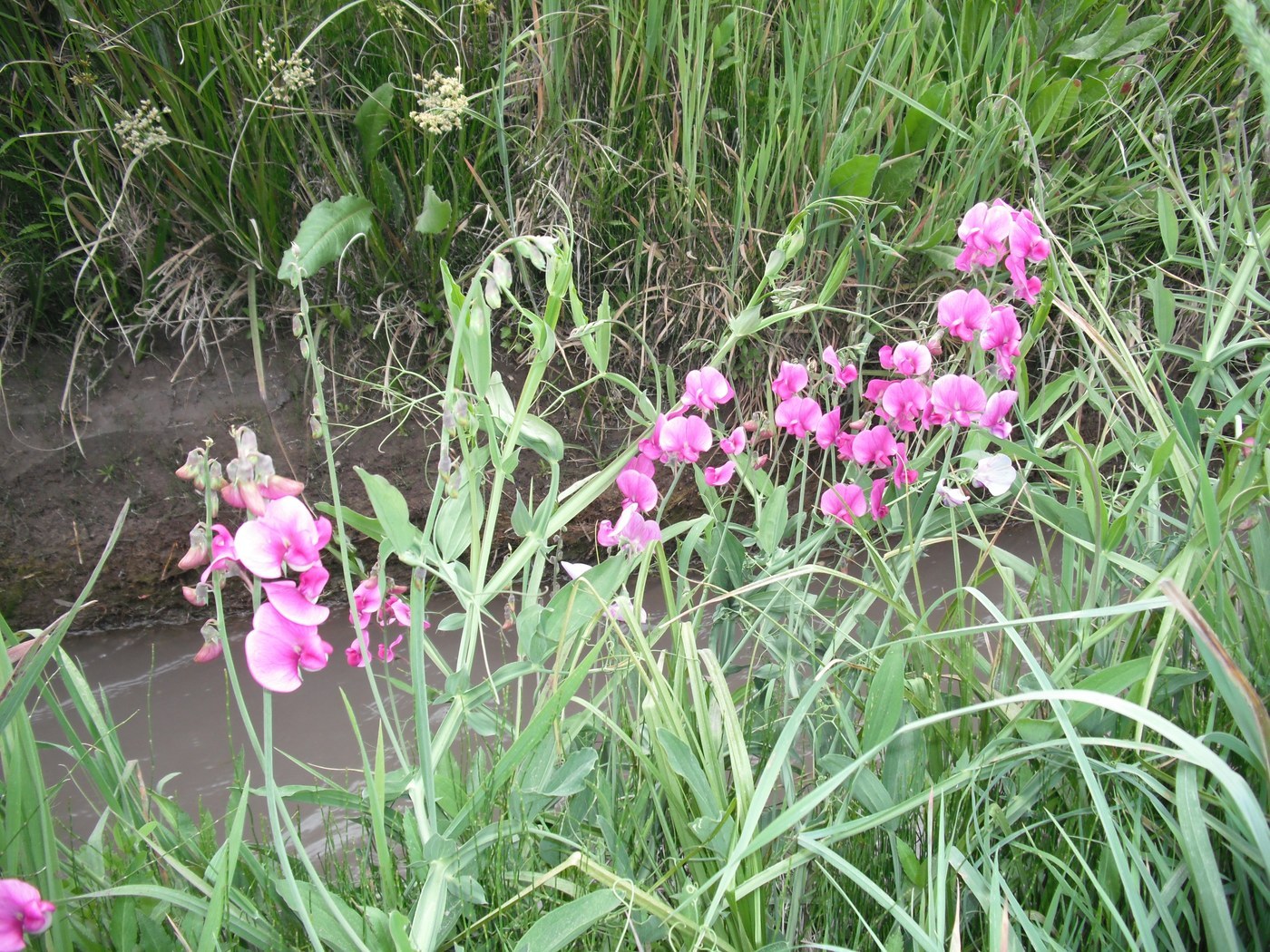
Key Identifying Features
Sweet pea (Lathyrus odoratus) is a climbing annual in the legume family (Fabaceae). The clearest clues are its strongly fragrant, ruffled pea-type flowers, its leaves that end in curling tendrils, and its winged (flanged) stems. Unlike the garden pea, it is grown purely for ornament and scent.
- Sweetly perfumed flowers in pastel and jewel tones
- Pea-flower shape: an upright banner, two side wings, and a fused keel
- Leaves with one pair of leaflets and a terminal branching tendril
- Stems with thin papery wings (ridges) running along them
Leaves & Stems
Each leaf typically has just one pair of oval-to-oblong leaflets, after which the midrib continues as a branched, coiling tendril that grabs supports. Leaflets are soft, gray-green to medium green. The stems are distinctly winged, with flat ridges of tissue running down their length, a useful field mark. The plant climbs by tendrils and can reach 4-6 feet on a trellis; bush types stay more compact.
Flowers & Fruit
Flowers are borne several to a long stalk and have the classic "pea" (papilionaceous) structure: a large erect upper petal called the banner or standard, two wing petals at the sides, and a boat-shaped keel enclosing the stamens. Blooms are 1-2 inches, often wavy or ruffled at the edges, in white, pink, lavender, blue, maroon, red, and bicolors. The defining trait is the rich, sweet fragrance. After flowering they form flat, hairy green pea pods that ripen brown and split, holding round seeds inside.
How to Tell It Apart from Look-Alikes
- Garden pea (Pisum sativum): similar tendril leaves and pea flowers, but flowers are usually white and unscented.
- Everlasting pea (Lathyrus latifolius): a perennial relative with broader winged stems and bright pink flowers but little or no fragrance.
- Vetch (Vicia): has many small paired leaflets per leaf and smaller flowers in one-sided clusters.
- Nasturtium: round shield-shaped leaves and spurred flowers, quite different.
The blend of strong perfume, ruffled pea flowers, single leaflet pairs with tendrils, and winged stems points to sweet pea.
Where You'll Find It
Native to the Mediterranean (Sicily and southern Italy), sweet pea is grown worldwide as a cottage-garden and cut-flower favorite, trained up trellises, fences, obelisks, and netting. It prefers cool weather, full sun, and rich moist soil, blooming in spring and early summer before heat ends the season.
Quick ID Checklist
- Strongly fragrant, ruffled pea-shaped flowers in pastels and jewel tones
- Leaves with one pair of leaflets ending in a branched tendril
- Stems with thin papery wings
- Climbs by curling tendrils
- Flat hairy pods with round seeds
Frequently asked questions
How do I tell sweet pea from the everlasting pea?
Both are Lathyrus climbers, but sweet pea is a fragrant annual, while the everlasting pea is a tougher perennial with broader winged stems and flowers that have little or no scent.
How does sweet pea climb?
Its leaves end in branched, coiling tendrils that wrap around strings, netting, and twigs, so it needs a support to scramble up.
What is the single best identifying feature?
The intense sweet fragrance combined with ruffled pea-shaped flowers and winged stems is the most reliable combination for confirming a sweet pea.
Sweet Pea identified by the community
Recent Sweet Pea specimens identified with Plant Identifier.