
How to Care for Syngonium Albo
Grow the white-variegated arrowhead vine for striking marbled leaves. Bright indirect light and even moisture keep this collector's plant thriving.
Read the full Syngonium Albo encyclopedia entry →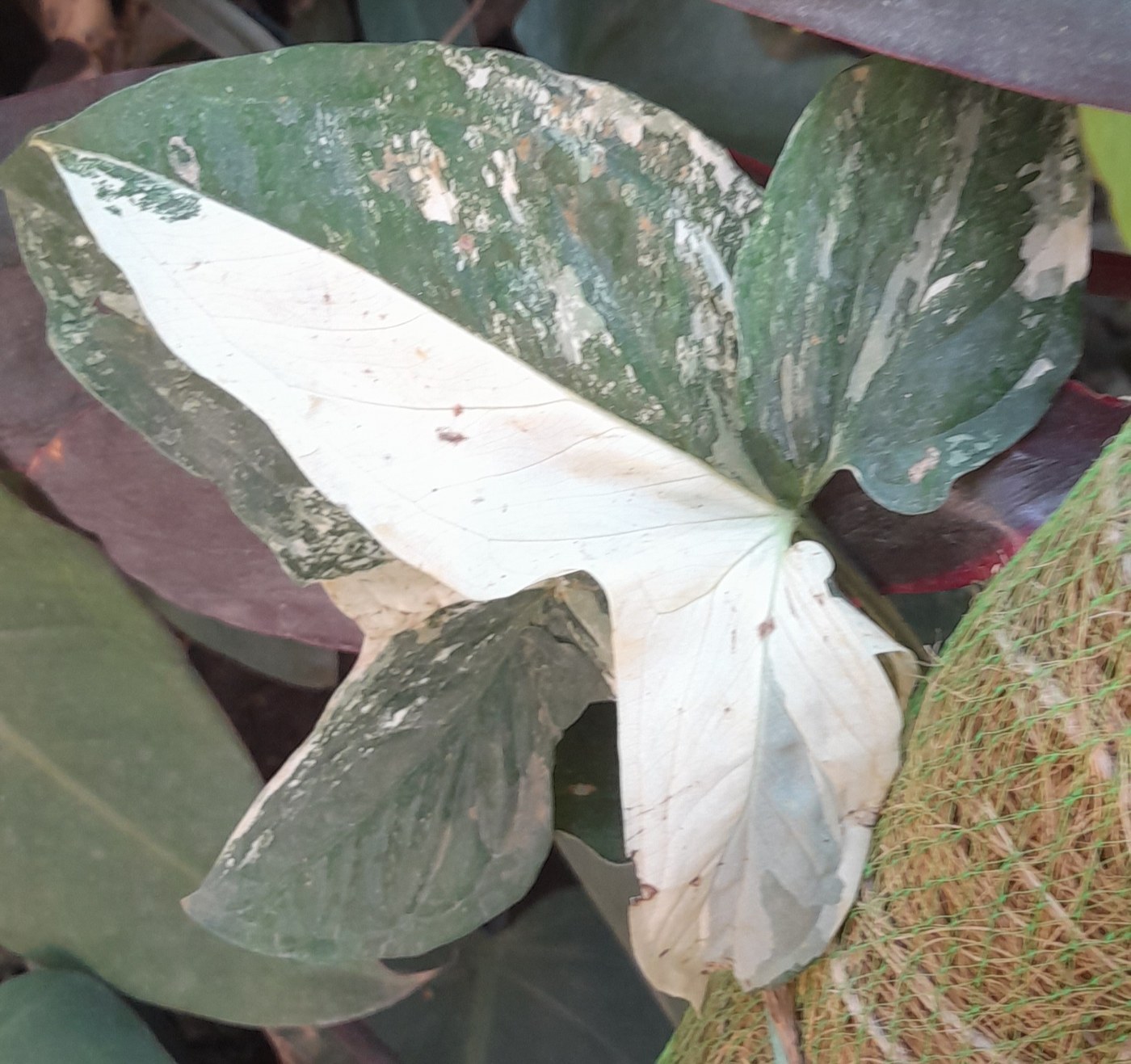
Syngonium Albo (Syngonium podophyllum 'Albo Variegatum') is a prized variegated arrowhead vine with arrow-shaped leaves splashed and marbled in creamy white. It is a moderately demanding houseplant that rewards steady warmth, bright indirect light, and balanced moisture with fast, lush growth.
Light
Give Syngonium Albo bright indirect light. Variegated foliage has less chlorophyll than all-green plants, so it needs good light to keep the white sections crisp and to fuel growth, but direct midday sun will scorch the pale areas. An east window, or a few feet back from a brighter exposure, is ideal. Too little light causes reversion to greener leaves and leggy stems.
Water
Water when the top inch of soil dries out. Aim for evenly moist but never soggy soil during active growth, watering thoroughly until it drains and emptying the saucer. Let the surface dry slightly between waterings to prevent rot, and reduce frequency in winter when growth slows. The white-variegated tissue is a bit more sensitive, so avoid both drought stress and standing water.
Soil & Potting
Use a light, airy, well-draining aroid mix. A blend of quality potting soil with plenty of orchid bark, perlite, and a little coco coir gives the roots the oxygen and drainage they like while holding gentle moisture. Choose a pot with drainage holes and avoid oversized containers, which stay wet too long.
Humidity & Temperature
This plant loves warmth and humidity. Keep it between roughly 65 and 85 F and away from cold drafts and windows in winter. Humidity of 60 percent or higher keeps the variegated leaves from browning at the edges; a pebble tray, grouping plants, or a humidifier all help. Growth slows and leaves may suffer below about 60 F.
Feeding
Feed during spring and summer with a balanced, diluted liquid fertilizer roughly every two to four weeks, or use a gentle slow-release aroid fertilizer. Do not over-fertilize, as salt buildup can burn the delicate white tissue; flush the soil occasionally. Pause feeding in the low-light winter months when the plant is barely growing.
Propagation
Syngonium Albo propagates readily from stem cuttings. Cut just below a node, making sure each cutting has at least one node and ideally an aerial root, and root in water, sphagnum moss, or straight into a moist airy mix. Because the variegation is unstable, choose cuttings with a balance of white and green so the new plant retains both color and enough chlorophyll to grow.
Repotting / Pruning
Repot every one to two years or when roots fill the pot, moving up just one size. Spring is the best time. Prune to control the vining habit and encourage bushiness; cutting above a node triggers branching, and the trimmings can be propagated. Provide a moss pole or trellis if you want the plant to climb and produce larger, more mature leaves.
Common Problems & Pests
Browning leaf edges usually mean low humidity or inconsistent watering. Fully white leaves often revert or die back because they lack chlorophyll, so prune to keep a healthy balance of green. Yellowing lower leaves can signal overwatering. Watch for spider mites, mealybugs, and thrips; treat promptly with insecticidal soap or horticultural oil and wipe the foliage regularly.
Seasonal Care Tips
In spring and summer, the plant grows fast: keep it watered, fed, and well lit, and repot or propagate now. In autumn, taper feeding as light declines. In winter, reduce watering, hold off on fertilizer, and boost humidity to offset dry indoor heating; keep it warm and out of cold drafts to prevent stress on the variegated foliage.
Frequently asked questions
Why are the white parts of my Syngonium Albo turning brown?
The pure-white tissue lacks chlorophyll and is fragile, so it browns easily from low humidity, direct sun, dry soil, or fertilizer salts. Raise humidity, keep moisture even, and avoid harsh light.
My new leaves are all green. Why did the variegation disappear?
Variegation is unstable and can revert, especially in low light. Give it brighter indirect light and prune back to a section with white marbling to encourage variegated growth to return.
Can I root a fully white cutting?
It may root but cannot sustain itself long-term because it has no chlorophyll to produce energy. Always propagate cuttings that include both green and white for a plant that will actually grow.
Should I give my Syngonium Albo a moss pole?
Yes if you want larger, more mature leaves and an upright habit. Climbing on a moss pole encourages bigger foliage, while left trailing it stays smaller and more juvenile in leaf shape.