
Tatsoi Identification Guide
Identify tatsoi by its flat, ground-hugging rosette of small, glossy, dark-green spoon-shaped leaves on slender pale stalks, an Asian mustard green grown in cool weather.
Read the full Tatsoi encyclopedia entry →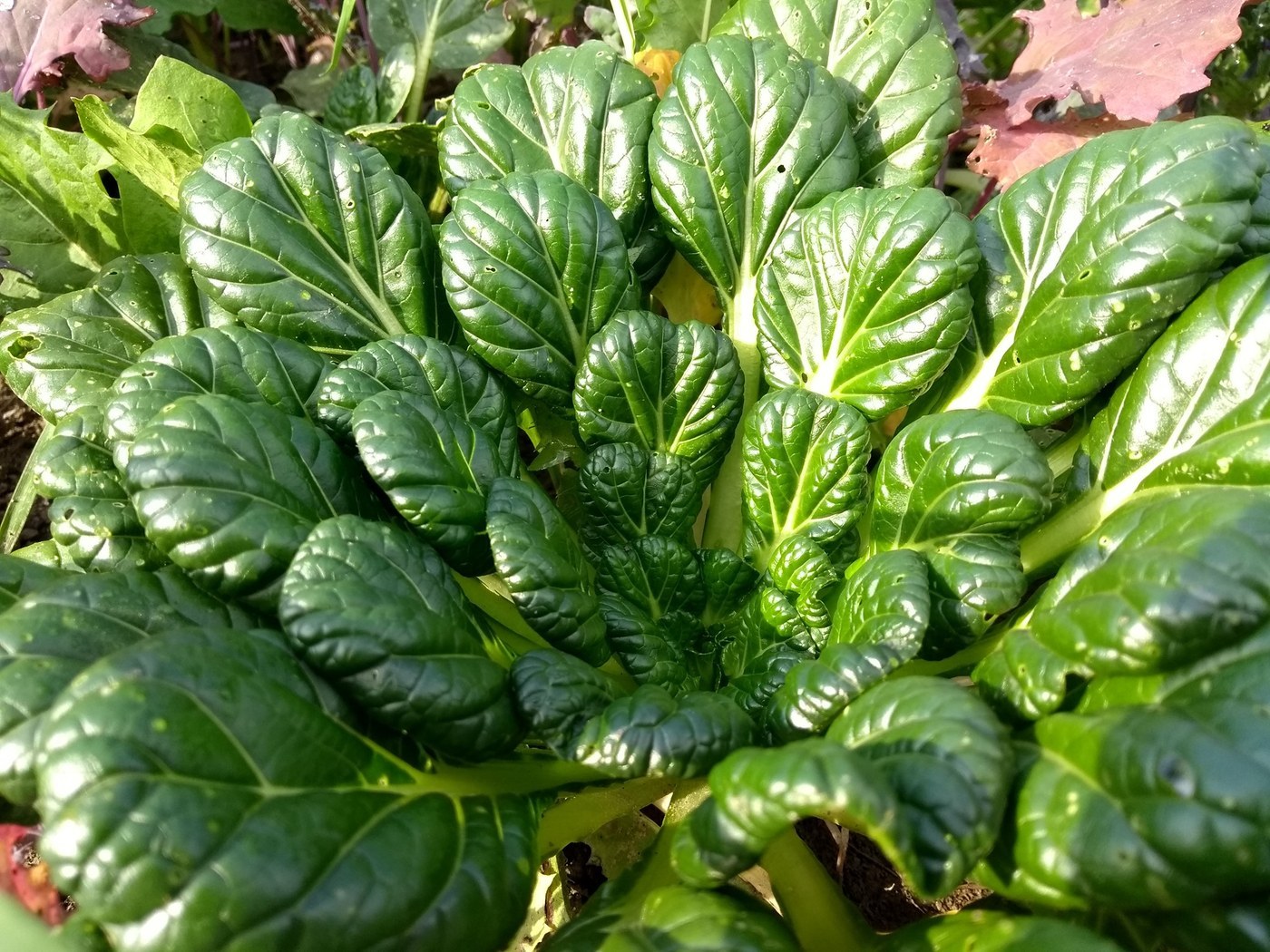
Key Identifying Features
Tatsoi (Brassica rapa subsp. narinosa, also called tat soi or spoon mustard) is a cool-season Asian leafy green in the cabbage family (Brassicaceae). It is recognized by its low, flat, symmetrical rosette of many small, rounded, dark-green spoon-shaped leaves that press close to the ground in a rose-like pattern, each leaf on a slim, pale-green stalk.
- Growth habit: flattened ground-hugging rosette, often 6–10 inches wide, lying nearly flat in cold weather
- Signature: dense whorl of glossy dark, almost black-green spoon leaves
Leaves & Stems
Leaves are small, rounded to spoon-shaped (spatulate), 2–4 inches across, smooth and glossy, very dark green (sometimes nearly blue-black), with smooth or slightly wavy margins and pale veins. They sit on thin, flat, light-green to white petioles that are far more slender than bok choy's thick stalks. In cold weather the rosette flattens dramatically against the soil; in warmer weather it can grow more upright. The leaves have a soft, tender texture with a mild mustardy flavor.
Flowers & Fruit
When it bolts in heat or maturity, tatsoi produces a branched stalk with small bright-yellow four-petaled flowers, the classic mustard-family cross, followed by slender upright seed pods (siliques) with tiny round seeds. It's typically harvested as a rosette long before flowering.
How to Tell It Apart from Look-Alikes
- Bok choy: related, but grows upright in a loose vase with much thicker, fleshy white/jade stalks and larger leaves, not a flat ground rosette.
- Spinach: smooth dark leaves too, but arrowhead/oval shaped on red-tinged stalks, and not a tight crucifer rosette; different family.
- Mizuna: same species group but has deeply serrated, feathery jagged leaves, not smooth spoons.
- Komatsuna: taller, larger oval leaves on a more upright plant.
The flat, symmetrical rosette of small glossy dark spoon-shaped leaves on thin pale stalks is the tatsoi hallmark.
Where You'll Find It
Tatsoi is grown in cool-season vegetable gardens, salad-mix farms, and as a baby-leaf green. It is very cold-tolerant — often surviving light frosts and snow — making it a fall, winter, and early-spring crop. Look for it in raised beds, cold frames, and in baby-leaf salad blends.
Quick ID Checklist
- Flat, ground-hugging, symmetrical rosette
- Small, glossy, dark green (near-black) spoon-shaped leaves
- Thin, pale-green/white slender stalks (not thick like bok choy)
- Yellow 4-petaled flowers and slim pods if bolting
- Very cold-hardy, mild mustard flavor
Frequently asked questions
How do I tell tatsoi from bok choy?
Tatsoi grows as a flat, ground-hugging rosette of small, glossy, dark spoon-shaped leaves on thin stalks, while bok choy grows upright in a loose vase with much larger leaves on thick, fleshy white or jade stalks.
Why does my tatsoi lie flat against the ground?
That flattened, rose-like rosette is the plant's natural cold-weather form — it presses against the soil to resist frost. In warmer conditions it may grow somewhat more upright.
Is tatsoi a type of mustard?
Yes, it's an Asian mustard green in the cabbage family (Brassica rapa), which is why it has a mild mustardy flavor and produces the characteristic yellow four-petaled flowers when it bolts.
How can I recognize tatsoi in a salad mix?
Look for the small, rounded, very dark-green glossy spoon-shaped baby leaves on slim pale stems — darker and more spoon-like than most other greens in the blend.