
Threadleaf False Cypress Identification Guide
Identify threadleaf false cypress (Chamaecyparis pisifera 'Filifera') by its long, drooping, thread-like cord foliage and mounding golden or green habit.
Read the full Threadleaf False Cypress encyclopedia entry →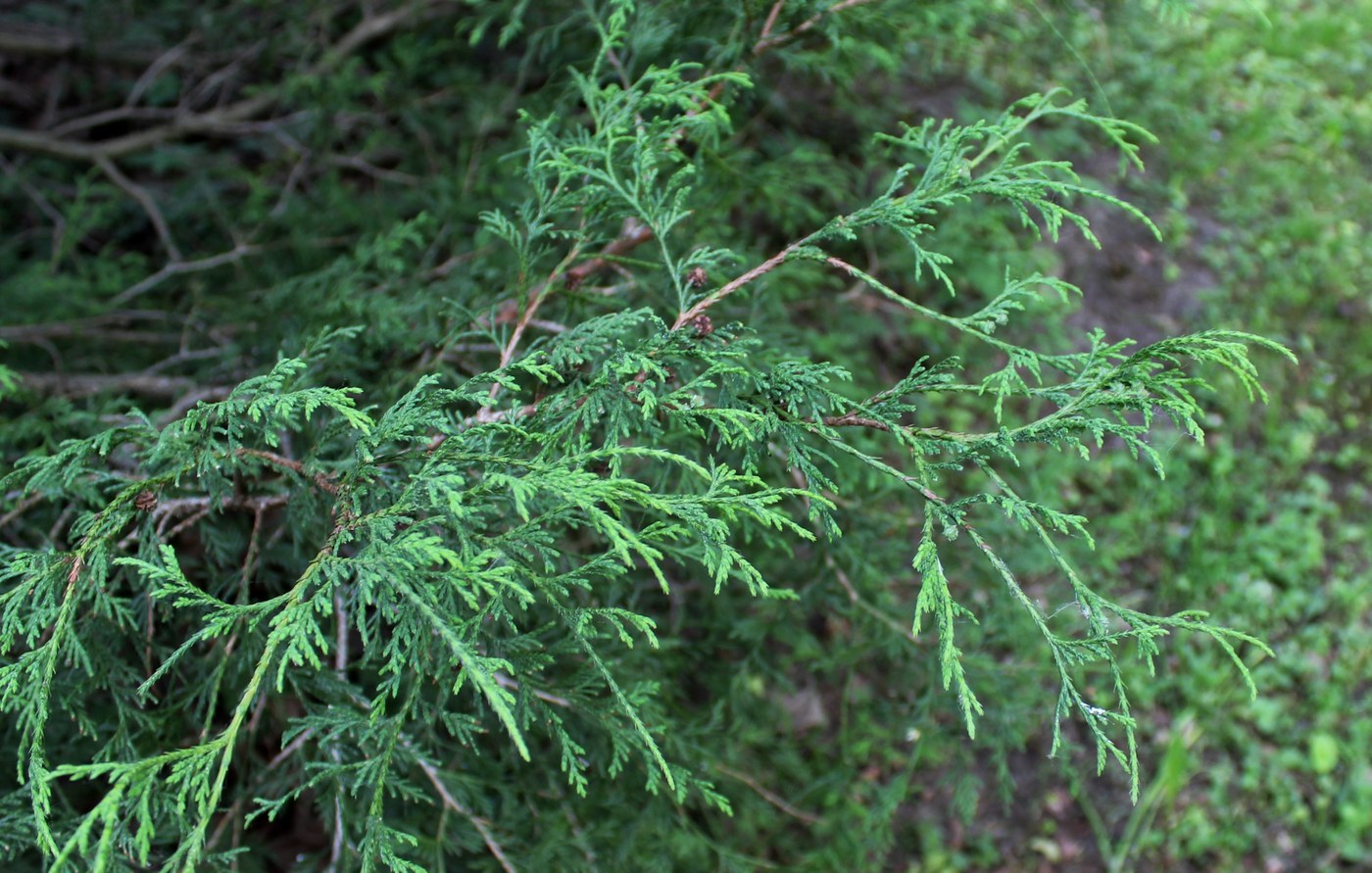
Key Identifying Features
Threadleaf false cypress (Chamaecyparis pisifera 'Filifera' and similar) is an evergreen conifer prized for its long, thread-like, pendulous foliage that hangs in slender whip-like strands, giving the whole plant a soft, mop-headed, weeping appearance. The stringy cord foliage is its single most diagnostic trait.
- Mounding to broadly pyramidal conifer, 3–10+ ft
- Foliage in long, slender, drooping thread-like strands
- Color rich green or bright golden-yellow ('Filifera Aurea')
- Soft, whippy, weeping texture unlike typical conifers
Leaves & Stems
The "leaves" are tiny scale-like leaves pressed tightly along long, cord-like branchlets. Instead of the flat fern-like sprays of typical false cypress, this cultivar's branchlets are reduced to long, thin, whip-like threads that drape and dangle. Crushed foliage releases a resinous, slightly sweet conifer scent. Golden forms ('Filifera Aurea') have bright yellow thread tips that age to greener tones inside the plant. The threads are soft and flexible, not prickly.
Flowers & Fruit
As a conifer it produces no flowers. It bears small, round, pea-sized cones (about ¼ in) — the species name pisifera means "pea-bearing" — that ripen from green to brown. Cones are often sparse on cultivated specimens. Tiny pollen cones may appear at branch tips.
How to Tell It Apart from Look-Alikes
- Standard false cypress / arborvitae (Thuja): have flat, fanned sprays of scale foliage, not hanging threads.
- Weeping junipers: have either needle or scale foliage but not the distinct fine cord-thread look; junipers bear berry-like cones.
- Sawara cypress 'Boulevard' or 'Squarrosa': same species but soft feathery or fluffy juvenile needle foliage, not thread cords.
- Weeping conifers (cedar, spruce): have true needles, not scale-covered threads.
The long, drooping, thread-like scale-covered branchlets + soft mounding weeping form + tiny pea cones combination identifies threadleaf false cypress.
Where You'll Find It
A popular specimen and accent conifer in temperate gardens worldwide, used for its texture and (in gold forms) year-round color. It prefers full sun to part shade and moist, well-drained, slightly acidic soil, and dislikes drought and extreme heat. Golden forms color best in sun.
Quick ID Checklist
- Mounding or weeping evergreen conifer
- Foliage in long, slender, drooping thread-like strands
- Tiny scale leaves pressed along the cord branchlets
- Green or bright golden-yellow color
- Soft, flexible, non-prickly texture
- Tiny round pea-sized cones
If you find a soft, mop-like conifer whose foliage hangs in long stringy green or gold threads, it's threadleaf false cypress.
Frequently asked questions
What makes the foliage look like threads?
In this cultivar the branchlets are reduced to long, thin, whip-like cords covered in tiny pressed scale leaves, instead of the flat fanned sprays of a normal false cypress. These threads droop and dangle, giving the plant its distinctive stringy, mop-headed look.
Why is the species called pisifera?
Pisifera means 'pea-bearing,' referring to the tiny round, pea-sized cones the species produces. Spotting those small spherical cones helps confirm the identification, though cultivated threadleaf forms often cone sparsely.
Why is my golden threadleaf false cypress greener inside?
Golden forms like 'Filifera Aurea' show their brightest yellow on the new, sun-exposed outer threads, while older, shaded interior foliage ages to green. Growing it in full sun maximizes the golden color.
Is it a true cypress?
No — it's a 'false cypress' in the genus Chamaecyparis, related to but distinct from true cypress (Cupressus). The 'false' in the name reflects this close-but-separate relationship within the cypress family.