
Toadshade Identification Guide
Recognize toadshade (Trillium sessile), a sessile-flowered trillium, by its mottled three-leaf whorl and upright stalkless maroon flower.
Read the full Toadshade encyclopedia entry →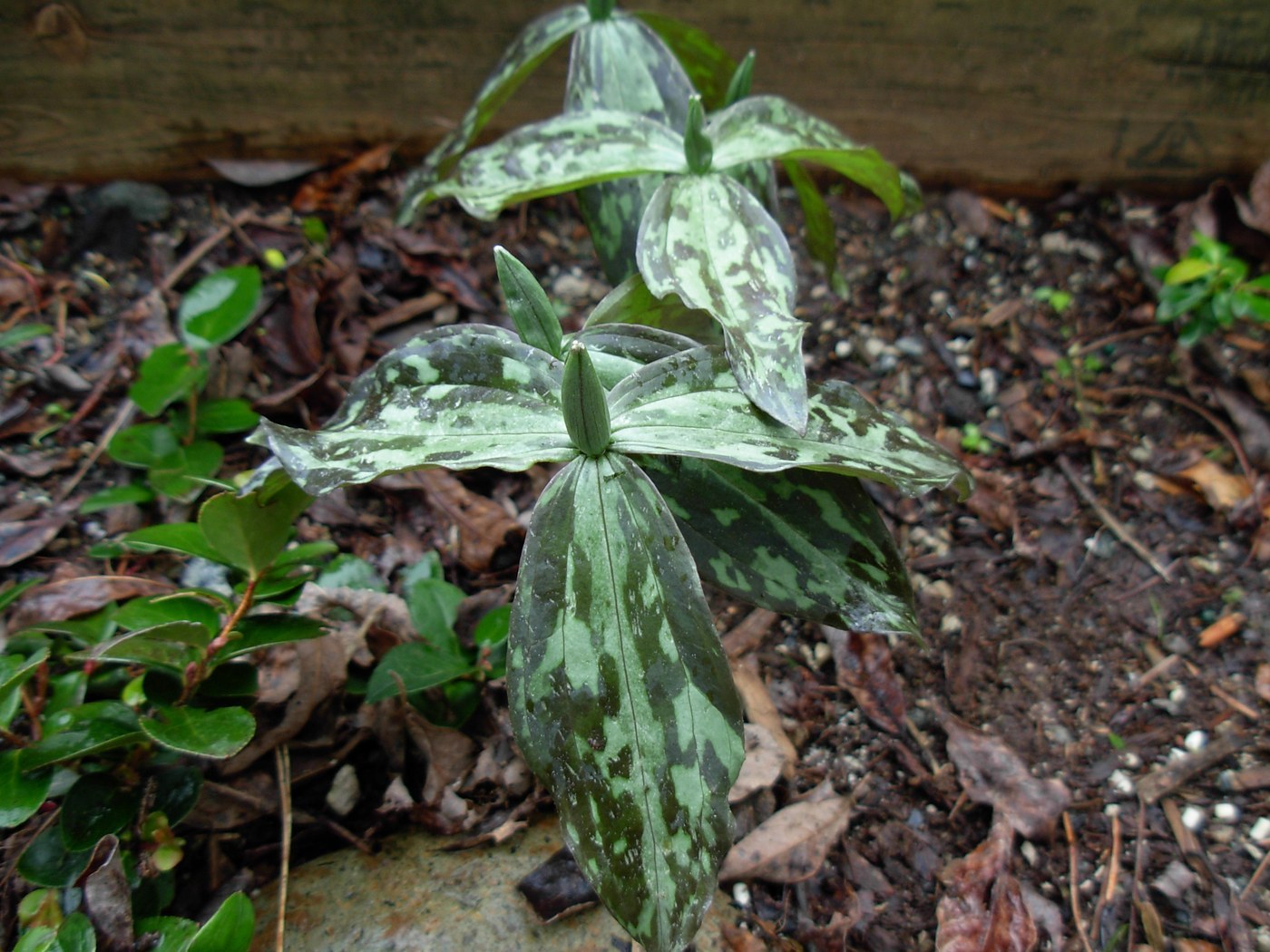
Key Identifying Features
Toadshade (Trillium sessile), also called sessile trillium or toad trillium, is a spring woodland wildflower of eastern North America. Identify it by:
- A single whorl of three broad leaves, usually mottled silvery-green and dark green
- An erect, stalkless (sessile) maroon flower sitting directly in the center of the leaves
- Upright, narrow petals that never fully open
- Low stature, typically 6-12 inches tall
The combination of a stalkless dark-red flower nestled on mottled three-part leaves is diagnostic.
Leaves & Stems
Like all trilliums, everything comes in threes. A single unbranched stem rises from a rhizome and ends in a whorl of three leaves. The leaves are broadly oval to elliptical, 2-4 inches long, and usually patterned with light and dark green or bronze blotches (though some plants are plain green). There are no true stem leaves below the whorl. The stalk is smooth and reddish-tinged at the base.
Flowers & Fruit
Blooming in early-to-mid spring, the flower sits directly on the leaves with no flower stalk (sessile) — a key trait. It has:
- Three erect, narrow, dark maroon-to-brownish-purple petals (occasionally greenish or yellowish) that stay nearly closed and upright
- Three green-to-purplish sepals spreading below
- A faint, somewhat musty or spicy scent
The fruit is a fleshy, berry-like reddish capsule that ripens in summer; ants disperse the seeds.
How to Tell It Apart from Look-Alikes
- Yellow trillium (Trillium luteum) is very similar but has yellow petals and a lemony scent.
- Prairie/red trillium (Trillium recurvatum) has petals that narrow to a stalk-like base and recurved sepals.
- Wakerobin / red trillium (Trillium erectum) has a flower on a distinct stalk above the leaves, not sessile.
The surest separators: the flower is stalkless, the petals stay upright and maroon, and the leaves are mottled.
Where You'll Find It
Toadshade grows in rich, moist deciduous woods, on floodplains, wooded slopes, and shaded ravines with leaf-litter soil, across the central and eastern United States. It blooms before the canopy fully leafs out and goes dormant by summer.
Quick ID Checklist
- Single whorl of three leaves
- Leaves usually mottled light/dark green
- Stalkless flower sitting on the leaves
- Three upright, narrow maroon petals that stay closed
- Plant 6-12 in tall in rich shady woods
- Spring bloom, dormant by summer
Match these and you have toadshade. As a slow-growing spring ephemeral, it should be left undisturbed — picking the single leaf whorl can kill the plant.
Frequently asked questions
Why is toadshade's flower stalkless?
It is a sessile trillium, meaning the flower sits directly on the center of the leaf whorl with no flower stalk — a defining trait of Trillium sessile.
Are the leaves always mottled?
Usually they show silvery or bronze mottling against green, but some plants have plain green leaves, so use the stalkless maroon flower as the clincher.
How is it different from yellow trillium?
Yellow trillium (T. luteum) looks nearly identical in form but has yellow petals and a citrus scent, whereas toadshade has dark maroon, faintly musty flowers.
When and where does it bloom?
It blooms in early-to-mid spring in rich, moist deciduous woodlands across the central and eastern United States, then goes dormant by summer.
Is it harmful to pick trilliums?
Yes — removing the single leaf whorl strips the plant of its only food-making tissue and can kill it, so trilliums should be left in place.