
How to Care for Totem Pole Cactus
Grow the sculptural, knobby Totem Pole Cactus with full sun, gritty soil, and a strict dry-between-waterings routine.
Read the full Totem Pole Cactus encyclopedia entry →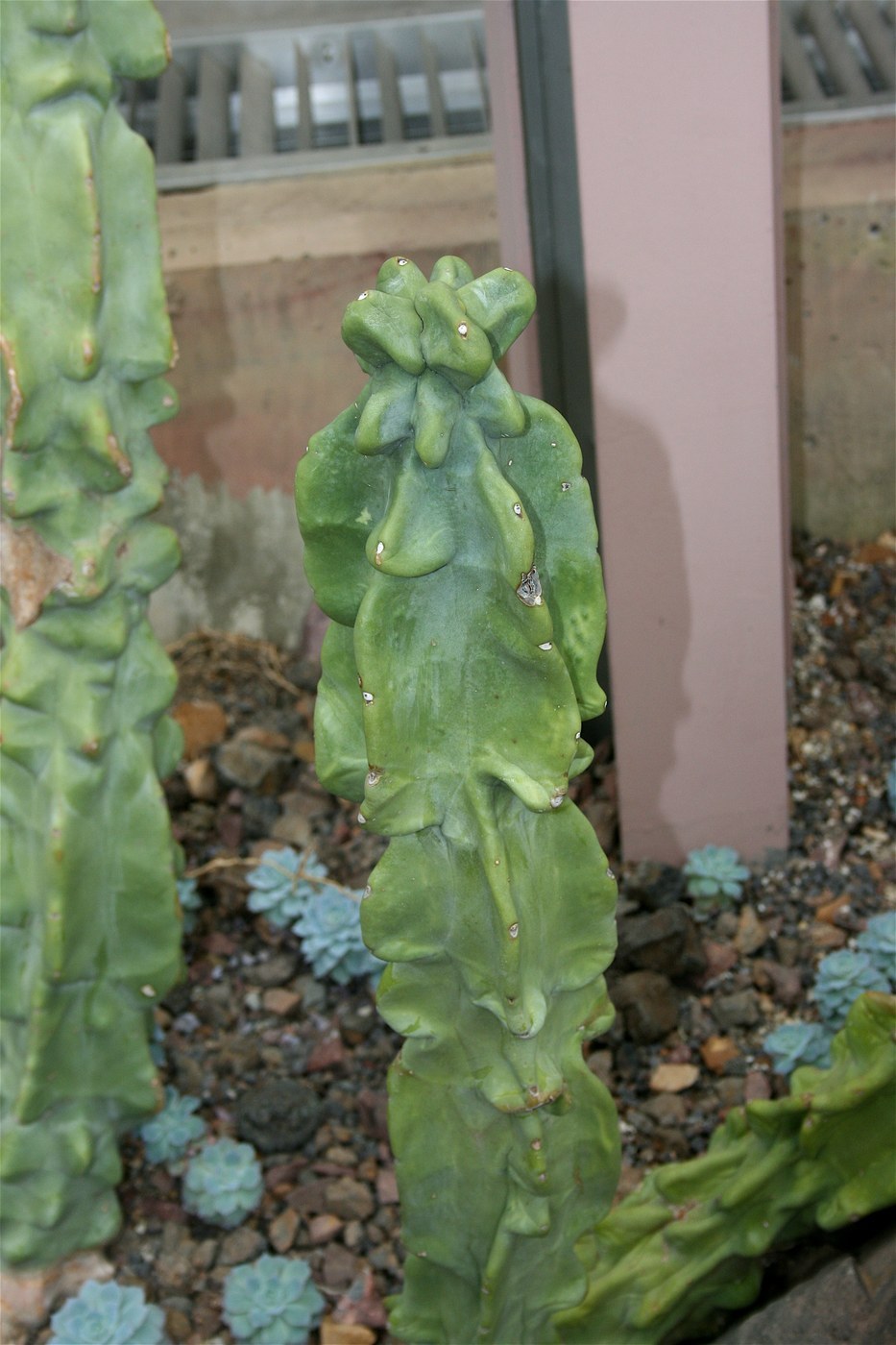
The Totem Pole Cactus (Lophocereus schottii f. monstrosus) is a slow-growing columnar cactus prized for its smooth, spineless, knobby stems that look hand-carved. It is an easy, undemanding plant as long as you give it plenty of light and never let it sit in wet soil.
Light
Give this cactus the brightest spot you have. Outdoors it thrives in full, direct sun; indoors place it directly against a south- or west-facing window where it gets several hours of unobstructed sunlight. Insufficient light causes weak, etiolated growth that leans toward the window and loses the plant's chunky, sculptural character. If moving a plant from indoors to strong outdoor sun, acclimate it gradually over a couple of weeks to prevent scorching of the epidermis.
Water
Water sparingly and always let the soil dry out completely between waterings. During the warm growing season, a deep soak every 2-3 weeks is typically enough; in winter, cut back drastically to roughly once a month or less. The single biggest risk to this plant is overwatering, which leads to soft, mushy stem bases and rot. When in doubt, wait another week.
Soil & Potting
Use a fast-draining mineral cactus mix. A blend of commercial cactus soil cut with extra pumice, perlite, or coarse sand (about one-third grit) ensures water races through. Always plant in a container with drainage holes; unglazed terracotta is ideal because it wicks moisture and helps the root zone dry. Avoid dense, moisture-retentive potting soil.
Humidity & Temperature
This is a warm-desert plant that prefers dry air and hot conditions. Normal household humidity is fine. It enjoys temperatures from 70-95F (21-35C) in the growing season and should be protected from frost. Keep it above about 40F (4C); bring outdoor plants inside before the first cold snap.
Feeding
Feed lightly. A diluted, low-nitrogen cactus fertilizer applied once or twice during spring and summer is plenty. Do not feed in fall or winter when the plant is resting. Over-fertilizing produces soft, weak growth.
Propagation
Propagate from stem cuttings. Cut a section of stem with a clean knife, then set the cutting aside in a dry, shaded spot for one to two weeks until the cut end forms a firm callus. Plant the callused cutting in barely moist gritty mix and withhold water until roots establish, then resume normal sparse watering.
Repotting / Pruning
Repot only every few years, when the plant becomes top-heavy or clearly outgrows its pot. Repot in spring, let the roots dry for a few days beforehand, and wait about a week after repotting before watering. Pruning is rarely needed; you can remove a stem section to control height or shape, always with a clean, sharp blade.
Common Problems & Pests
Root and stem rot from excess moisture is the main problem, showing as soft, discolored, collapsing tissue at the base. Watch also for mealybugs (white cottony clusters in crevices) and scale; treat by wiping with a swab dipped in dilute isopropyl alcohol. Corky brown patches usually indicate old sunburn or physical scarring and are cosmetic.
Seasonal Care Tips
Ramp up watering slightly as growth resumes in spring and feed lightly through summer. In fall, taper watering and stop feeding. In winter, keep the plant cool, bright, and nearly dry to encourage a proper rest, which supports healthier growth the following season.
Frequently asked questions
Why is my Totem Pole Cactus growing thin and stretched?
Stretched, thin new growth is etiolation caused by too little light. Move it to your brightest window or outdoors in full sun and it will resume chunky, compact growth.
How often should I water a Totem Pole Cactus?
Roughly every 2-3 weeks in warm months, only after the soil is fully dry, and about once a month or less in winter. Overwatering is the most common way to kill it.
Why is the base of my cactus turning soft and mushy?
Soft, mushy tissue signals rot from too much water or poorly draining soil. Let it dry out, improve drainage, and if rot is advanced, cut above the damage and re-root a healthy section.
Does the Totem Pole Cactus need a special soil?
Yes, use a gritty, fast-draining cactus mix amended with pumice, perlite, or coarse sand, in a pot with drainage holes.