
Totem Pole Cactus Identification Guide
Identify the Totem Pole Cactus (Lophocereus / Pachycereus schottii f. monstrosus) by its tall, spineless, smooth columnar stems covered in lumpy, sculptural bumps.
Read the full Totem Pole Cactus encyclopedia entry →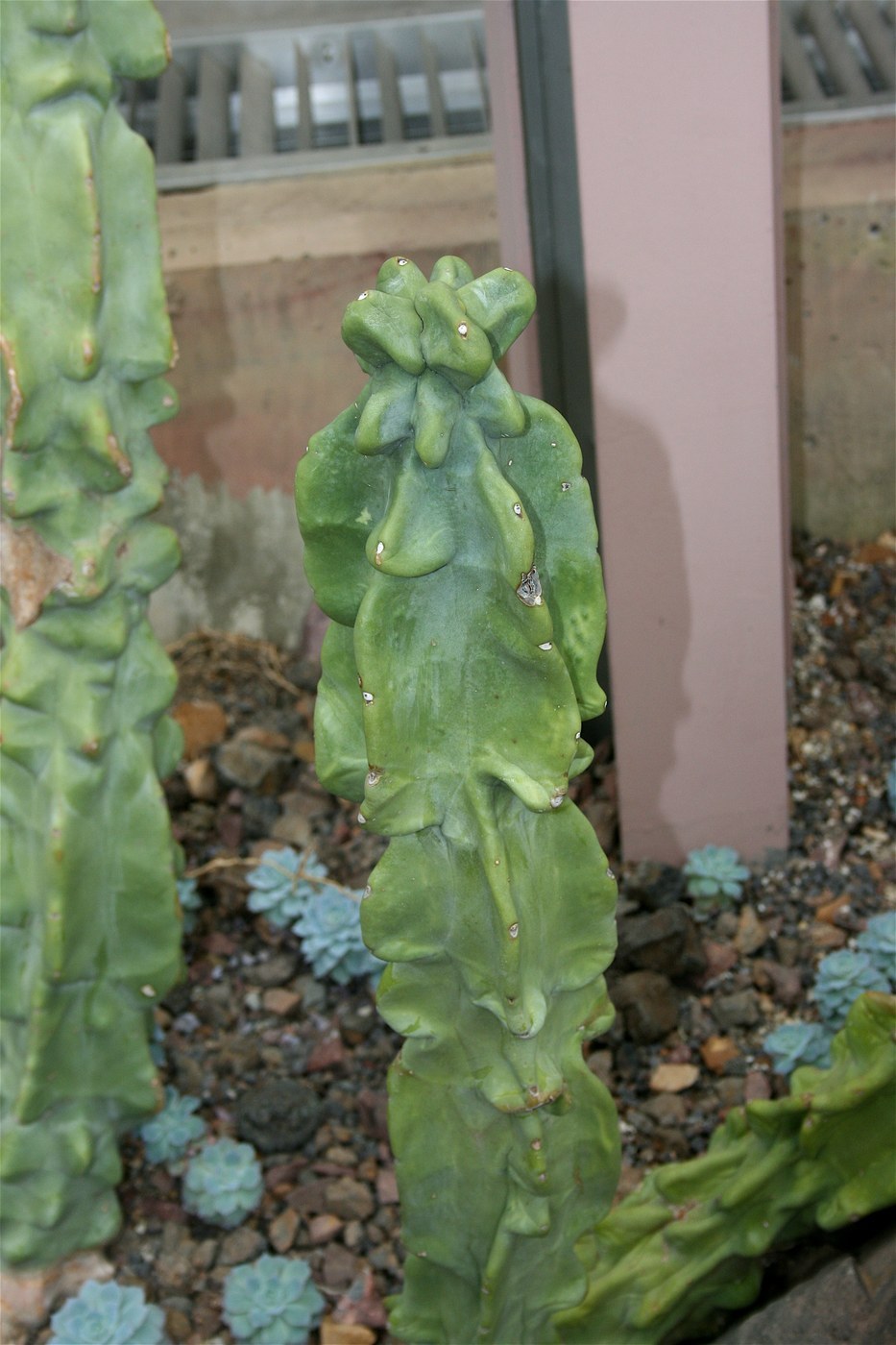
Key Identifying Features
The Totem Pole Cactus (Lophocereus schottii f. monstrosus, also classified as Pachycereus schottii 'Monstrosus') is a striking columnar cactus prized for being smooth, spineless, and covered in irregular, lumpy bumps that make each tall stem look like a hand-carved totem pole.
- Tall, upright columnar stems (can reach 10-12+ feet in the ground)
- Surface smooth and essentially spineless, with no defined ribs
- Covered in random knobs, wrinkles, and bumpy protrusions (monstrose growth)
- Soft gray-green to green color
Leaves & Stems
There are no leaves. The signature is the monstrose stem: instead of the normal ribbed, spiny columns of the wild Senita Cactus, this mutant form grows as fleshy, smooth, bumpy pillars with irregular knobby surfaces and shallow folds. Crucially, mature totem pole stems are nearly spineless — a rare trait among large columnar cacti and a key ID point. Stems branch from the base and grow slowly upright, sometimes with sculptural twists. The green skin is soft-looking and matte.
Flowers & Fruit
Flowering is uncommon and less showy than the parent species, but established plants may produce small pink to pale flowers along the upper stems, typically opening at night or near dusk. Fruit, when it forms, is a small reddish berry. Because the monstrose form is propagated mainly by cuttings, flowering is rarely the main identification cue.
How to Tell It Apart from Look-Alikes
- Normal Senita Cactus (Lophocereus schottii): has distinct ribs and bristly gray spines near the tips; if you see ribs and spines, it's the wild form, not the smooth Totem Pole.
- Other monstrose/crested columnar cacti (e.g., monstrose Cereus): these can also be bumpy, but Totem Pole is notably spineless and soft gray-green; many monstrose Cereus retain some spines and bluer coloring.
- Cereus 'Monstrose' (Apple Cactus): has knobs but usually keeps small spines and a bluer body.
Where You'll Find It
The parent species is native to the Sonoran Desert of Mexico and Arizona. The Totem Pole form is grown as a prized landscape and container specimen in warm, dry climates (USDA zones 9-11) and as a slow-growing novelty houseplant elsewhere. Look for it as a sculptural accent in xeriscapes and modern desert gardens.
Quick ID Checklist
- Tall, upright columnar stems
- Smooth and spineless surface (key trait)
- Covered in irregular bumps, knobs, and wrinkles
- No defined ribs (monstrose, lumpy texture)
- Soft gray-green color
- Branches from the base; very slow growing
Tip: Spinelessness plus a bumpy, totem-like column is the combination that separates this from nearly every other large columnar cactus.
Frequently asked questions
Why doesn't the Totem Pole Cactus have spines?
It is a monstrose (mutant) form of the Senita Cactus. The mutation produces smooth, bumpy, essentially spineless stems, unlike the ribbed and bristly wild species.
How fast does it grow?
Very slowly, typically only a few inches per year, which is part of why mature specimens are prized and relatively expensive. It can eventually reach 10-12 feet in the ground.
How can I tell it from the normal Senita Cactus?
Normal Senita has clear vertical ribs and gray bristly spines near the stem tips, while the Totem Pole form is smooth, ribless, bumpy, and spineless.
Does the Totem Pole Cactus flower?
It can produce small pink to pale flowers near the stem tips, often at night, but flowering is uncommon and not the main way the plant is identified.