
Tricolor Beech Identification Guide
Identify the tricolor beech (Fagus sylvatica 'Roseomarginata') by its purple leaves edged in pink and cream, smooth gray elephant-skin bark, and long pointed cigar-shaped buds.
Read the full Tricolor Beech encyclopedia entry →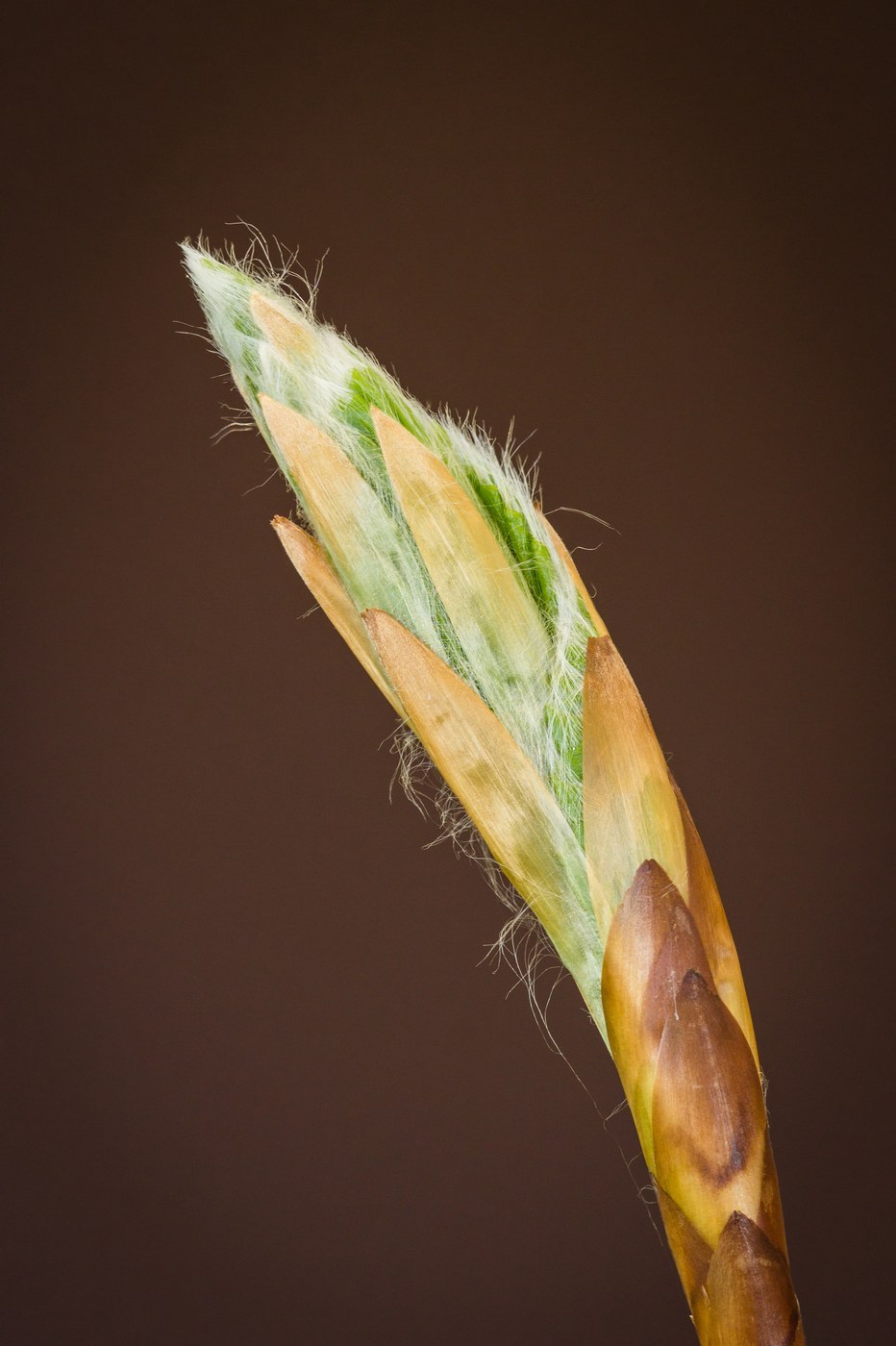
Key Identifying Features
Tricolor beech (Fagus sylvatica 'Roseomarginata', also sold as 'Tricolor' or 'Purpurea Tricolor') is a striking cultivar of European beech grown for foliage. Identify it by:
- Purple to maroon leaves irregularly margined and streaked with pink and creamy-white, the variegation most vivid in spring and early summer
- Smooth, gray, "elephant-skin" bark typical of all beeches
- Long, slender, sharply pointed, cigar-shaped buds held at an angle to the twig
- A dense, oval to pyramidal crown, usually a smaller, slower tree than the green species
The variegated purple-and-pink foliage is unmistakable and is the primary ID feature.
Leaves & Stems
Leaves are alternate, simple, ovate to elliptical, 2-4 inches long, with a wavy or slightly toothed margin and prominent straight, parallel side veins running to the edge — a key beech trait. In this cultivar each leaf is deep purple-bronze with a ragged border of rose-pink fading to cream. New growth is most colorful; intense summer sun can scorch the pale margins, and color tends to deepen toward bronze-purple by late season.
Twigs are slender and zigzag, tipped with long (½-¾ inch), narrow, coppery, sharply pointed buds that splay outward — one of the most reliable winter ID features of any beech. The bark stays smooth and gray even on old trunks, looking taut like elephant hide, unlike the furrowed bark of oaks or maples.
Flowers & Fruit
Beech flowers are inconspicuous: small greenish-yellow clusters appear with the leaves in spring (separate male catkin-like heads and tiny female flowers). Fruit is a small, bristly, four-parted husk (cupule) enclosing two triangular beechnuts, ripening in fall. Fruiting is often sparse on ornamental specimens.
How to Tell It Apart from Look-Alikes
- Copper/purple beech (F. sylvatica 'Atropurpurea'): solid purple leaves without the pink-cream margins — tricolor's variegation is the difference.
- Green European/American beech: green leaves; same smooth bark and pointed buds but no purple coloring.
- Variegated maples or dogwoods: have opposite leaves and different bark; beech is alternate with parallel-veined wavy leaves and elephant-skin bark.
The purple leaf + irregular pink/cream edge + smooth gray bark + long pointed buds combination is diagnostic.
Where You'll Find It
A cultivated specimen tree in USDA zones 4-7, planted in gardens, estates, and parks for its dramatic color. It prefers moist, well-drained soil and benefits from some afternoon shade in hot climates to protect the variegation. It is not found in the wild; any tricolor beech you see was deliberately planted.
Quick ID Checklist
- Slow-growing oval-to-pyramidal tree
- Purple leaves edged/streaked pink and cream
- Wavy-margined leaves with straight parallel side veins
- Smooth gray elephant-skin bark
- Long, slender, pointed, cigar-shaped buds angled off the twig
- Bristly husked beechnuts in fall (when present)
A compact tree glowing with purple leaves rimmed in pink and cream, set on smooth gray bark with long pointed buds, is the tricolor beech.
Frequently asked questions
How is tricolor beech different from purple/copper beech?
Both are purple-leaved European beech cultivars, but tricolor beech leaves have irregular pink and creamy-white margins and streaks, while copper or purple beech leaves are a solid purple-bronze without the variegated edges.
Why do the leaf edges sometimes look scorched?
The pale pink and cream margins contain less chlorophyll and are more sensitive to intense sun and heat, so they can brown or scorch in hot, exposed sites. Light afternoon shade helps keep the variegation crisp.
What is the easiest winter identification clue?
The long, slender, sharply pointed, coppery cigar-shaped buds that angle away from the zigzag twigs, combined with smooth taut gray bark, identify it as a beech even when the colorful leaves are gone.
Does tricolor beech produce nuts?
It can produce small triangular beechnuts inside bristly four-parted husks like other European beeches, though ornamental specimens often fruit sparsely.