
Tulip Identification Guide
How to recognize tulips by their cup-shaped six-tepal flowers, smooth strap-like leaves, and single upright stems rising from a bulb.
Read the full Tulip encyclopedia entry →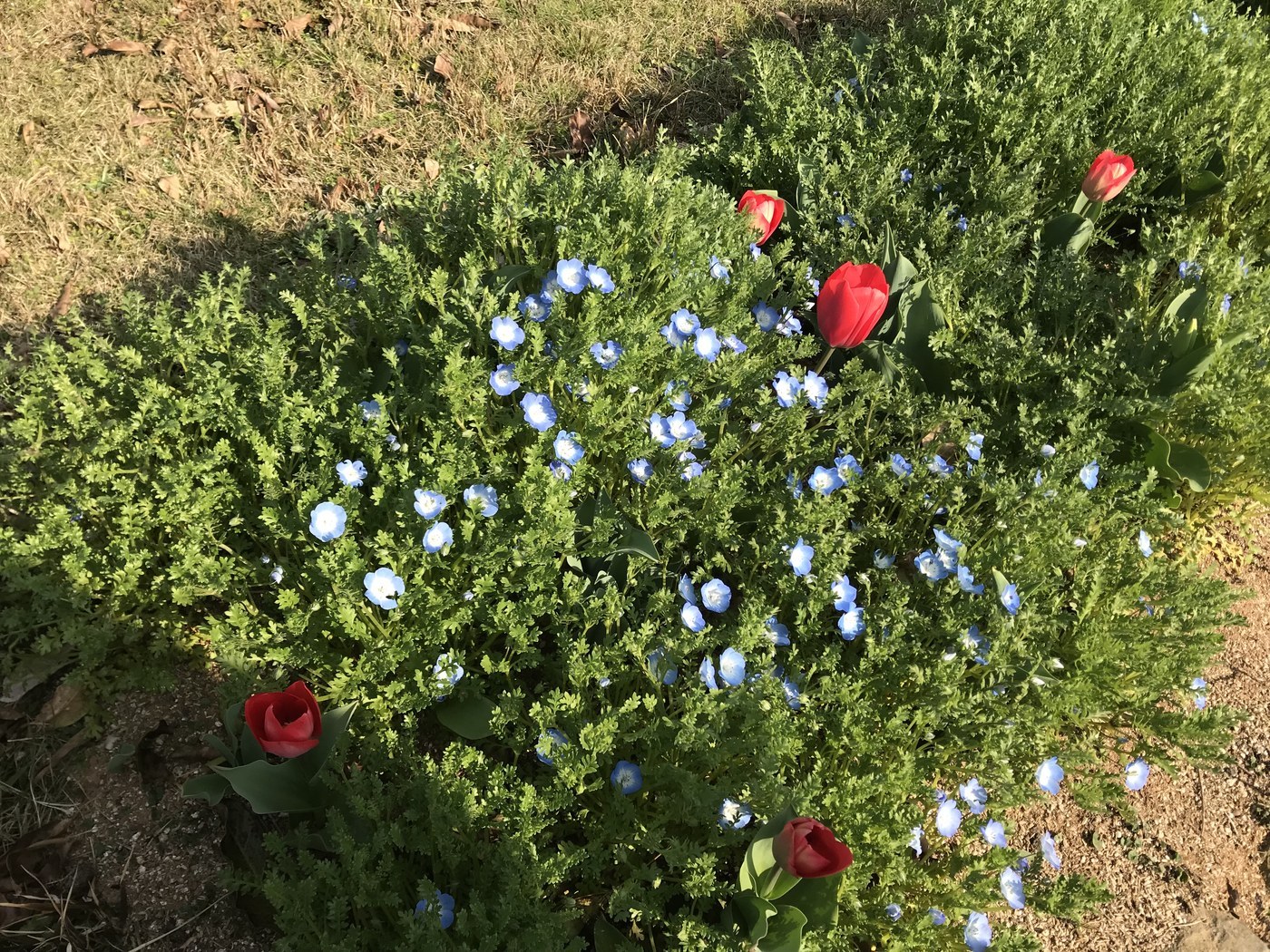
Key Identifying Features
Tulips (Tulipa species and hybrids) are spring-flowering bulbs in the lily family. Identify them by:
- A single cup- or goblet-shaped flower (occasionally a few per stem in multi-flowered types) at the top of a smooth, leafless stalk
- Six tepals (three petals plus three petal-like sepals that look identical) forming the cup
- Six stamens and a single stout central pistil, often with a star-shaped or dark blotch at the flower's base inside
- A few broad, smooth, waxy blue-green leaves clasping the lower stem
- Growth from an underground tunicated bulb with a papery brown skin
Leaves & Stems
Tulip leaves are lance-shaped to broadly strap-like, hairless, and slightly fleshy with a waxy bloom that gives them a gray- or blue-green cast. There are usually only 2-6 leaves, mostly clustered near the base and clasping the stem. The flowering stem is smooth, round, unbranched, and typically 15-60 cm tall depending on variety. There are no leaves on the upper stem between the foliage and the flower.
Flowers & Fruit
The flower is the giveaway: a symmetrical cup of six tepals that may be rounded, pointed, fringed, or reflexed depending on cultivar. Colors span nearly the whole spectrum except true blue, often with contrasting blotches, flames, or feathering. Flowers open in sun and close at night or in cold. Bloom time is early to late spring. If pollinated, the flower forms a dry three-chambered capsule that splits to release flat, papery brown seeds, though most garden tulips are propagated by bulb offsets.
How to Tell It Apart from Look-Alikes
- Crocus flowers also emerge in spring but are smaller, with grass-like leaves bearing a white midrib stripe, and they arise nearly stemless from a corm.
- Daffodils have a trumpet or cup (corona) in the center of the flower and flat strap leaves, never the simple six-tepal cup of a tulip.
- Lilies are taller, leafier up the stem, and bloom in summer with larger, often spotted or recurved flowers.
- The mark of a tulip is the single smooth-stemmed cup with six matching tepals and few basal waxy leaves.
Where You'll Find It
Tulips are grown in gardens, parks, borders, and containers across temperate regions, blooming in spring. Native species occur in Central Asia, Turkey, and the Mediterranean on rocky slopes and steppes. They need a cold winter dormancy to flower well.
Quick ID Checklist
- Single cup-shaped flower on a smooth bare stem
- Exactly six identical tepals
- Six stamens, often a dark basal blotch inside
- Few broad, waxy blue-green basal leaves
- Grows from a brown-skinned bulb
- Blooms in spring
A neat goblet of six tepals on a clean stem above a small rosette of waxy leaves is the unmistakable signature of a tulip.
Frequently asked questions
How can I tell a tulip from a daffodil before it blooms?
Tulip leaves are broad, flat, and waxy blue-green, while daffodil leaves are narrower and more grass-like. Once in bloom, tulips show a simple six-tepal cup, whereas daffodils have a central trumpet or cup.
Why do tulip flowers open and close?
Tulip tepals are sensitive to temperature and light, opening wide in warm sun and closing in cold or darkness. This is normal and helps protect pollen.
Do tulips really have petals and sepals?
Technically yes, but in tulips the three sepals look exactly like the three petals, so botanists call all six 'tepals.' To the eye it appears as a six-petaled cup.
How many flowers does a tulip stem have?
Most tulips bear a single flower per stem, though some multi-flowered (bouquet) cultivars produce three to six blooms on one stalk.