
Turnip Identification Guide
Identify the turnip by its rough, bristly bright-green leaves and its swollen white root capped with a purple-to-green shoulder where it meets the soil.
Read the full Turnip encyclopedia entry →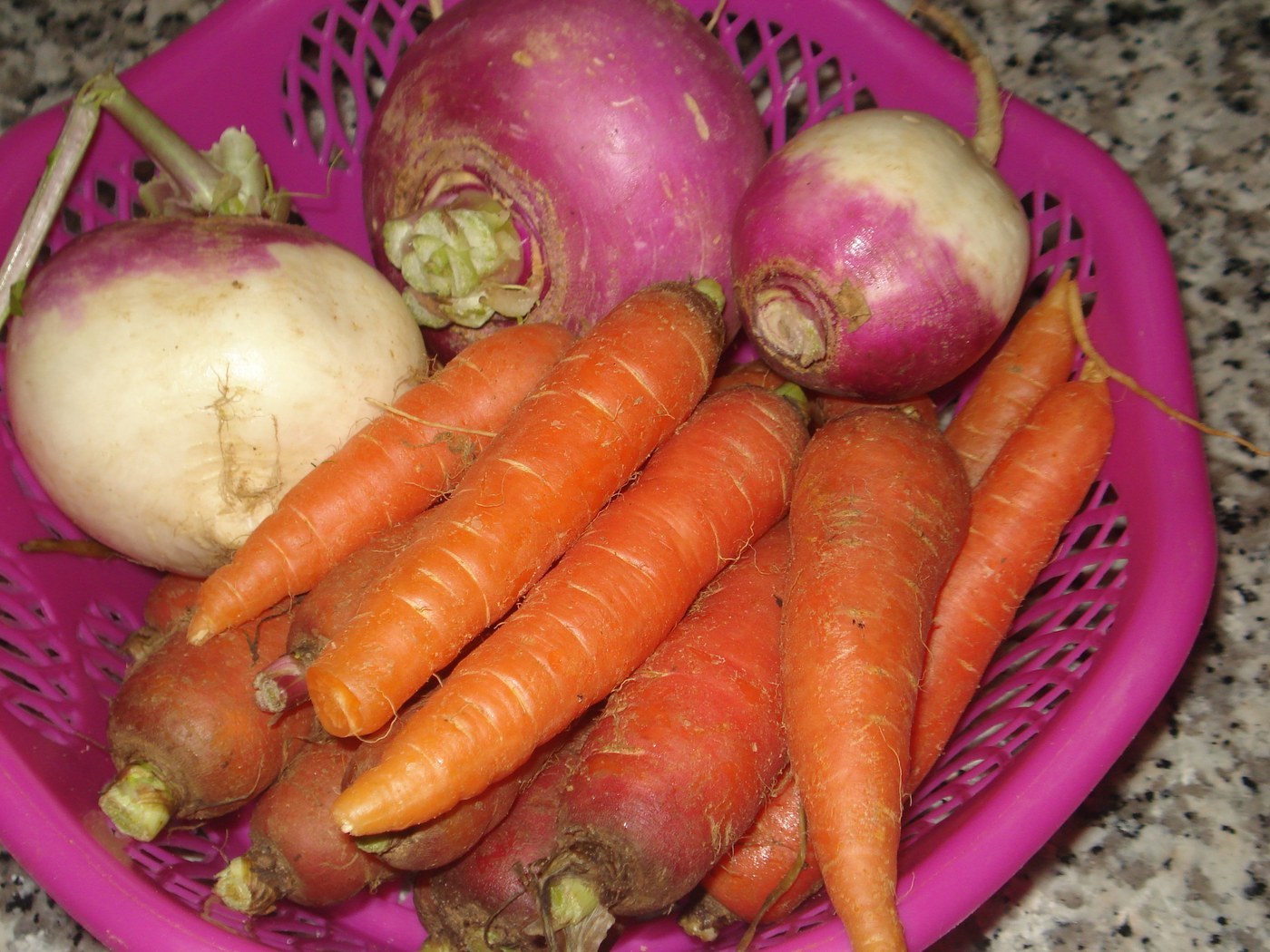
Key Identifying Features
The turnip (Brassica rapa subsp. rapa) is a cool-season biennial root vegetable in the cabbage family (Brassicaceae), usually grown as an annual. It is identified by its rosette of rough, bright-green, bristly-hairy leaves above a rounded, swollen storage root that is white below with a distinctive purple, red, or green crown at the top where it emerges into sunlight.
- Growth habit: low leafy rosette in year one; tall flowering stalk in year two
- Signature: the bi-colored globe root (white bottom, purple/green top)
Leaves & Stems
Turnip greens are bright (light) green, thin, and noticeably rough or bristly to the touch (scabrous), lobed and toothed, with a large terminal lobe — they look somewhat like coarse mustard leaves. They grow in a loose basal rosette directly from the top of the root. This rough, hairy texture distinguishes them from the smooth, waxy blue-green leaves of the related rutabaga (swede).
Flowers & Fruit
In its second year (or when bolting), the turnip produces a branched stalk topped with small, bright-yellow four-petaled flowers in the typical crucifer cross. The flower clusters often sit above the unopened buds. These mature into slender, beaked seed pods (siliques) holding small round seeds.
The root is the main ID feature: a rounded to slightly flattened globe, 2–4 inches across, smooth-skinned, white with a purple/red/green top, and a slender taproot tail at the bottom. The flesh is white inside.
How to Tell It Apart from Look-Alikes
- Rutabaga (swede): larger, more elongated, with yellow-tan flesh, smooth waxy blue-green leaves and a ringed/ridged neck — turnip leaves are rough and bright green.
- Radish: roots usually smaller and red/white, leaves rough but plants smaller; turnip root is a fatter globe.
- Beet: has red-veined smooth leaves and is in a different family (Amaranthaceae); root flesh is red with rings inside.
- Wild mustard: similar yellow flowers and rough leaves but no swollen storage root.
The rough bright-green leaves + white globe root with a purple shoulder combination is diagnostic.
Where You'll Find It
Turnips are grown worldwide as a cool-season crop in vegetable gardens, market farms, and field plots. They tolerate frost and prefer cool spring and fall weather. You'll find them in home beds, allotments, and sometimes naturalized at field edges.
Quick ID Checklist
- Rosette of rough, bristly, bright-green lobed leaves
- Rounded white root with a purple/red/green crown at the top
- Slender taproot tail below the globe
- Yellow 4-petaled flowers and slim beaked pods in year two
- Leaves rough (not waxy) — separates it from rutabaga
Frequently asked questions
How do I tell a turnip from a rutabaga?
Turnips have rough, bristly, bright-green leaves and a white root with a purple top, while rutabagas have smooth, waxy, blue-green leaves and a larger, elongated root with yellowish flesh and a ridged neck.
Why is the top of my turnip purple but the bottom white?
The purple, red, or green coloring develops on the 'shoulder' of the root where it pokes above the soil and is exposed to sunlight, while the part underground stays white.
How do I recognize turnip greens?
Turnip greens are the rough-textured, bright-green, lobed leaves that grow in a rosette from the top of the root. They are coarser and hairier than the smooth leaves of cabbage or rutabaga.
What do turnip flowers look like?
When a turnip bolts, it produces small bright-yellow flowers with four petals in a cross shape (typical of the mustard family), followed by slender beaked seed pods.