
How to Care for Waffle Plant
Care guide for Hemigraphis alternata, an easy trailing houseplant with puckered metallic-purple foliage.
Read the full Waffle Plant encyclopedia entry →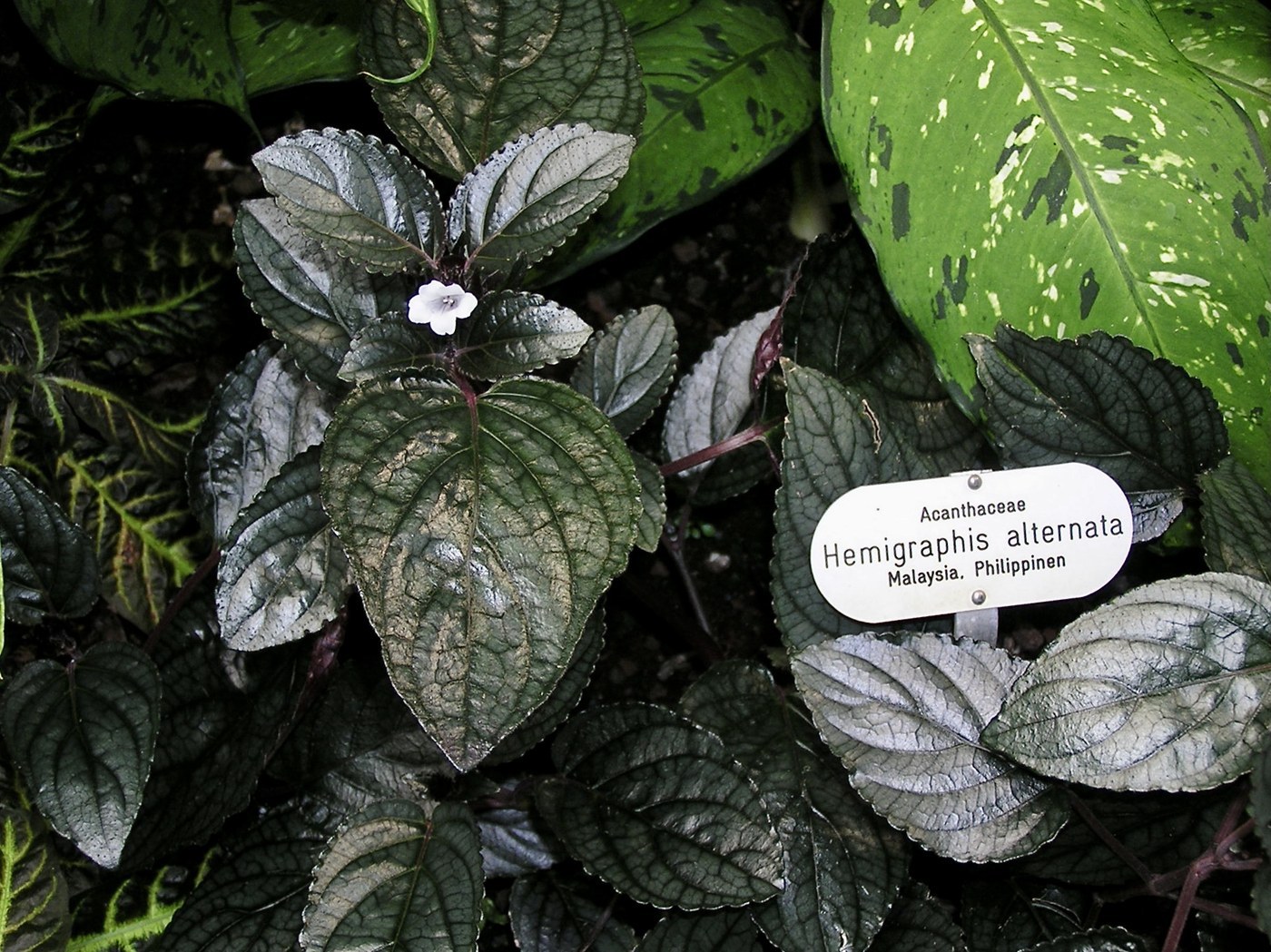
The Waffle Plant (Hemigraphis alternata) is an easy, fast-growing tropical trailer named for its deeply puckered, waffle-textured leaves that are silvery-purple above and rich wine-purple beneath. It is forgiving and quick to fill a pot or hanging basket, thriving as long as it stays warm, humid, and evenly moist.
Light
Grow in bright indirect light to bring out the strongest metallic-purple colouring. In too little light the leaves fade toward plain green and the growth becomes leggy, while harsh direct sun scorches the thin foliage. A spot near an east window, or filtered light from a brighter window, is ideal.
Water
Keep the soil evenly moist at all times, watering when the surface just begins to feel dry. Waffle Plant wilts dramatically when it dries out but usually revives quickly once watered. Avoid letting it sit in standing water, which causes root rot. Consistent moisture, not soggy roots, keeps the foliage lush and the trailing stems full.
Soil & Potting
Use a rich, well-draining, moisture-retentive potting mix, such as a peat- or coir-based houseplant mix with perlite added for aeration. Choose a pot with drainage holes; hanging baskets and shallow containers both suit its spreading, trailing habit well.
Humidity & Temperature
As a tropical plant it loves warmth and humidity: 40-60% or higher and 18-27 C (65-80 F). It dislikes cold and should be kept above about 15 C (60 F), away from drafts and cold windows. Dry indoor air causes crisping leaf edges, so raise humidity with a pebble tray, grouping, terrarium culture, or a humidifier.
Feeding
Feed with a balanced, diluted liquid fertiliser roughly every two to four weeks during the spring and summer growing season. Ease off in autumn and winter when growth slows. As a fast grower it responds well to regular light feeding, but avoid over-fertilising, which can burn the delicate roots.
Propagation
Waffle Plant roots very easily from stem cuttings. Snip a healthy stem tip just below a node, remove the lowest leaves, and place it in water or directly into moist potting mix; roots typically form within a couple of weeks. Trailing stems also root where they touch damp soil, so layering is another simple option. Warmth and humidity speed rooting.
Repotting / Pruning
Repot in spring when the plant becomes rootbound, moving up one pot size. Pinch and prune stem tips regularly to keep the plant bushy and full rather than sparse and straggly; the trimmings make ready cuttings. Removing tired or overly long stems encourages fresh, densely coloured growth.
Common Problems & Pests
Wilting signals the soil has dried out; water promptly and it usually bounces back. Faded, greenish leaves mean too little light, while crispy edges indicate low humidity. Overwatering leads to soft, rotting stems. Watch for spider mites, aphids, whiteflies, and mealybugs, especially in dry air; rinse the foliage and treat with insecticidal soap as needed.
Seasonal Care Tips
In spring and summer the plant grows quickly, so water regularly, feed lightly, and pinch to shape it. In autumn and winter reduce feeding and water a little less while keeping the soil from fully drying, maintain warmth and humidity, and keep it clear of cold drafts and chilly glass.
Frequently asked questions
Why did my Waffle Plant suddenly wilt?
It has almost certainly dried out. Waffle Plant droops dramatically when thirsty but usually recovers within hours of a thorough watering. Keep the soil evenly moist to avoid the repeated stress of wilting.
How do I keep the purple colour strong?
Give it bright indirect light. In dim conditions the metallic silver-purple fades toward plain green and stems stretch. Move it somewhere brighter, but out of harsh direct sun that would scorch the leaves.
How do I propagate it?
Take a stem-tip cutting just below a node, remove the lowest leaves, and root it in water or moist mix. Roots usually appear within a couple of weeks, especially in warm, humid conditions.
How do I stop it looking leggy?
Pinch and prune the stem tips regularly. This encourages branching and keeps the plant dense and full, and the trimmings can be rooted to make more plants or fill out the same pot.