
How to Care for Watch Chain
Watch Chain (Crassula muscosa) is an easy trailing succulent; give it bright light, sparing water, and gritty soil for its tight, scaly stems.
Read the full Watch Chain encyclopedia entry →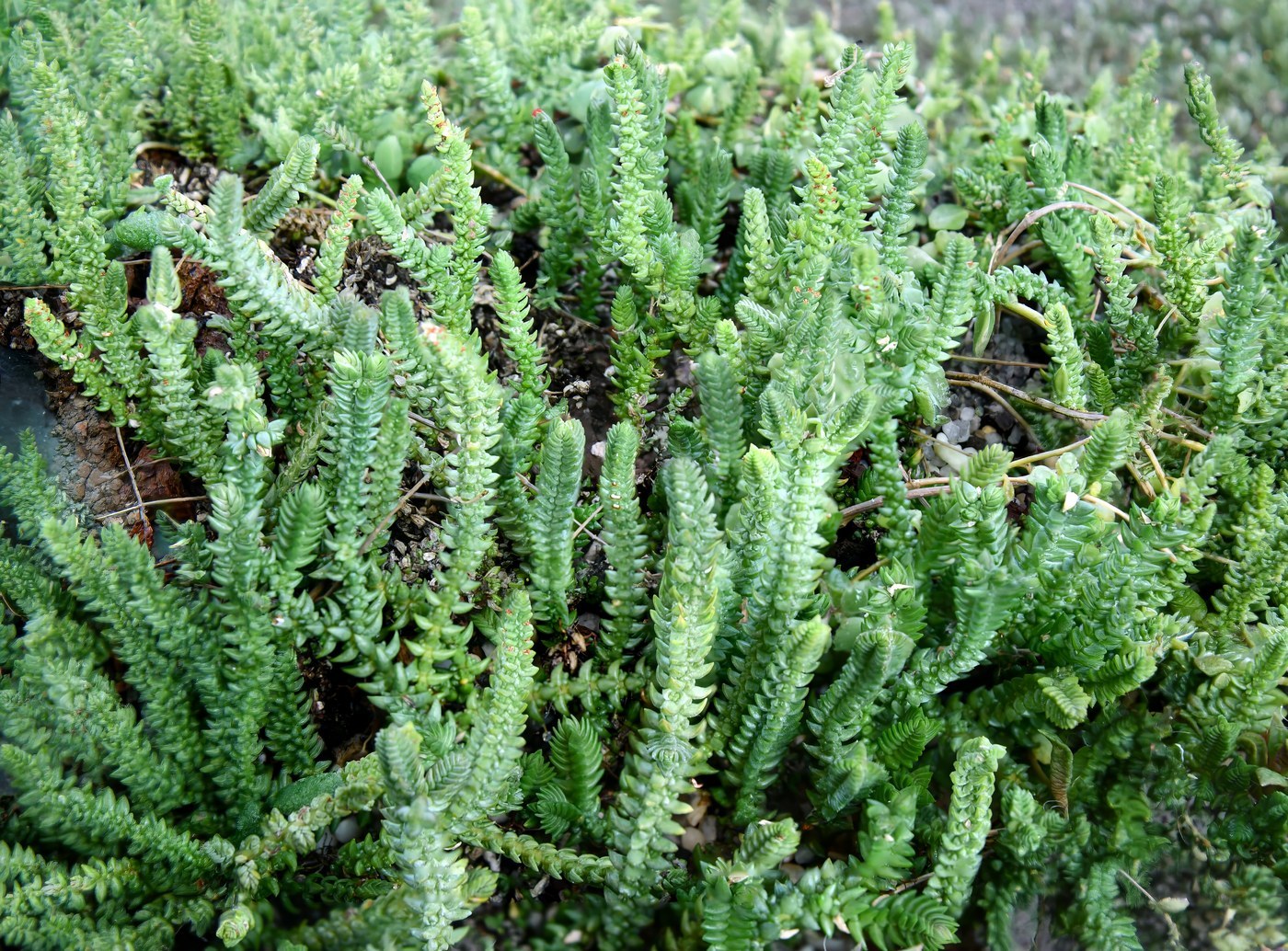
Watch Chain (Crassula muscosa), also known as the Princess Pine or Rattail Crassula, is a distinctive succulent with slender stems densely packed with tiny, tightly overlapping leaves that resemble braided cord or a zipper. It grows in a cascading, clustering mound, making it a favorite for containers, dish gardens, and hanging displays.
Light
Watch Chain does best in bright light with some direct sun. A few hours of gentle morning sun keeps the stems compact and can bring out subtle bronze or yellow-green tones. Indoors, a bright south- or east-facing window is ideal. In too little light the stems stretch, thin out, and lose their tidy, chain-like density.
Water
Water sparingly and let the soil dry out almost completely between waterings, following the classic succulent soak-and-dry approach. During active growth in spring and fall, a thorough watering when the soil is dry keeps it happy. In winter, reduce watering significantly. Overwatering is the primary way to harm this plant, causing soft, mushy, rotting stems.
Soil & Potting
Use a gritty, fast-draining succulent or cactus mix, ideally amended with extra perlite, pumice, or coarse sand. Sharp drainage is essential to prevent root rot. Always plant in a container with drainage holes; unglazed terracotta is excellent because it wicks away excess moisture. Shallow, wide pots suit its clustering, spreading growth well.
Humidity & Temperature
Watch Chain prefers warm, dry conditions and typical indoor humidity, so it is well suited to average household air. It thrives roughly between 60 and 80 degrees Fahrenheit and is not frost-hardy, so protect it from freezing temperatures. Good air circulation helps keep the dense stems dry and rot-free.
Feeding
This is a light feeder. A diluted, balanced succulent fertilizer applied once or twice during the spring and summer growing season is plenty. Avoid feeding in winter when growth naturally slows. Excess fertilizer can cause weak, floppy growth that spoils the plant's neat, geometric form.
Propagation
Watch Chain is very easy to propagate from stem cuttings. Snip a healthy segment, let the cut end callus over for a day or two, then lay or insert it into barely moist gritty soil, where it roots readily. It also naturally roots where trailing stems touch the soil, so you can simply pin down a stem to encourage new plants.
Repotting / Pruning
Repot every couple of years, or when the plant outgrows its pot, using fresh gritty mix and refreshing the drainage. Spring is the best time. Prune leggy or stretched stems to keep the plant compact and full; trimmings can be replanted as cuttings. Pinching back also encourages denser branching.
Common Problems & Pests
Root and stem rot from overwatering is the most common problem, appearing as soft, translucent, mushy stems; correct it by cutting away healthy portions to re-root and letting the soil dry. Mealybugs and occasionally aphids can hide among the tight foliage, so inspect regularly and treat with insecticidal soap or a cotton swab dipped in alcohol. Stretched, sparse growth signals insufficient light.
Seasonal Care Tips
In spring and fall, water normally as the plant actively grows and take cuttings to propagate. In summer, provide bright light but shield from harsh, scorching afternoon sun that can bleach the stems. In winter, cut back watering sharply and keep the plant on the dry, cool side while still bright, and protect it from any frost.
Frequently asked questions
Why are my Watch Chain stems turning mushy?
Soft, mushy, translucent stems are a sign of overwatering and rot. Let the soil dry out fully between waterings, use gritty fast-draining soil, and cut away healthy sections to re-root if rot has set in.
How much light does Watch Chain need?
It wants bright light with some direct sun, such as a south- or east-facing window. Too little light makes the stems stretch and lose their dense, chain-like appearance.
How often should I water Watch Chain?
Water sparingly, letting the soil dry almost completely between waterings. Water more in spring and fall growth periods and much less in winter.
How do I propagate Watch Chain?
Take a stem cutting, let the cut end callus for a day or two, then set it in barely moist gritty soil. It roots easily, and trailing stems will also root where they touch soil.