
Watch Chain Identification Guide
Identify the Watch Chain plant (Crassula muscosa) by its slender stems tightly wrapped in tiny overlapping scale-like leaves resembling a braided chain.
Read the full Watch Chain encyclopedia entry →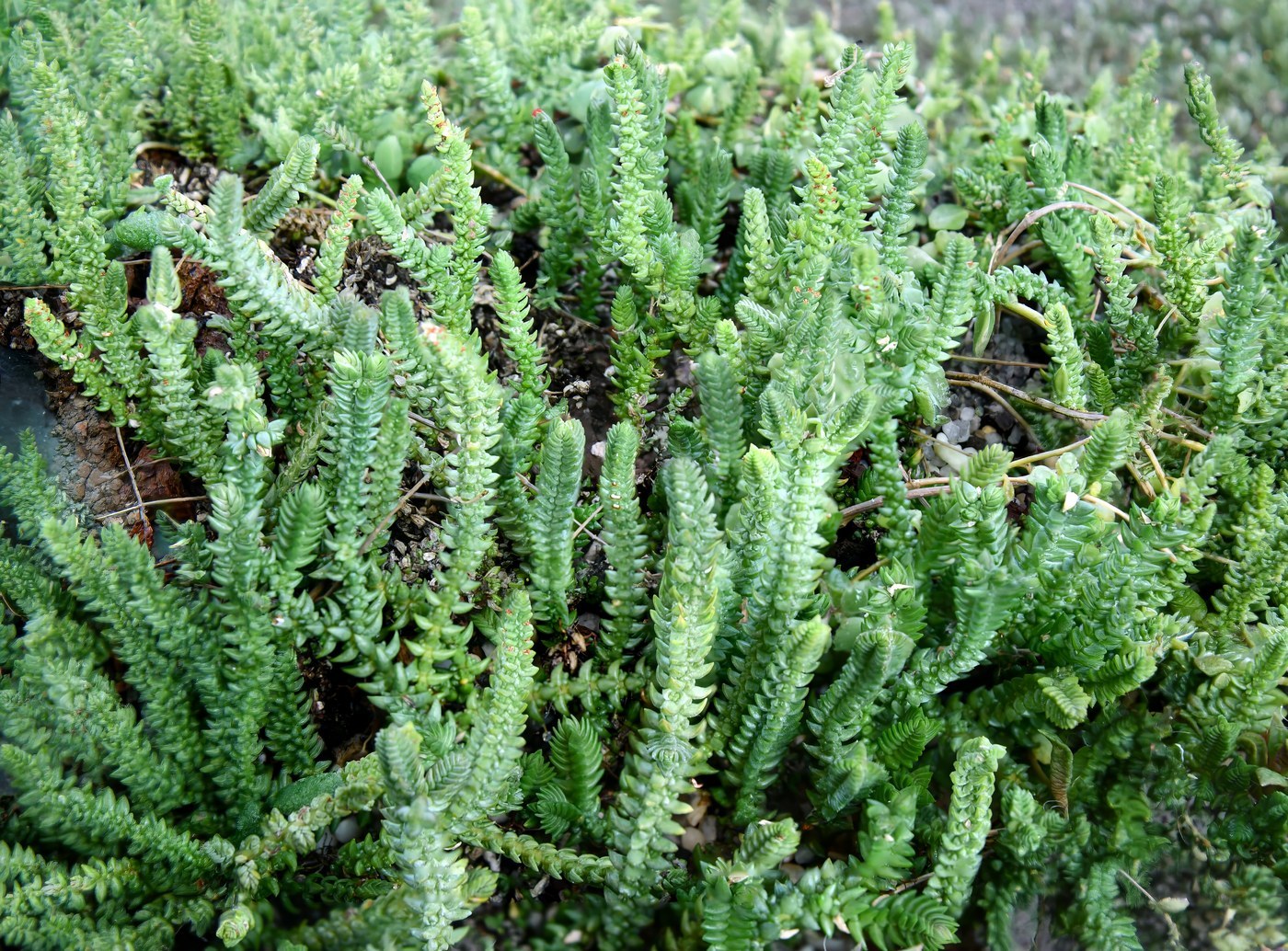
Key Identifying Features
The Watch Chain (Crassula muscosa, also called Princess Pine or Zipper Plant) is a small succulent whose thin stems are densely packed with tiny, tightly overlapping leaves, giving each stem the look of a braided watch chain or zipper. It forms bushy, sprawling clumps usually under 6–12 inches tall.
- Slender, square-ish stems completely clothed in minute leaves
- Tiny green scale-like leaves stacked in overlapping rows (4-ranked)
- Stems resemble a fine chain, rope, or zipper
- Branching, mounding to trailing habit; light green to yellow-green
Leaves & Stems
The leaves are extremely small, triangular, and pressed flat against the stem in four neat rows, so the stem looks geometric and woven rather than leafy. Stems are thin and wiry, branching freely to form dense cushions or trailing tufts. In bright light or stress the foliage can take on yellow-green to bronze tones. The overall mossy, chain-like texture is unmistakable.
Flowers & Fruit
Flowers are tiny and easily overlooked — minute, pale yellow-green to cream blooms tucked in the leaf axils along the stems. They have a faint, sometimes slightly unpleasant scent. The plant is grown for its quirky foliage texture, not its flowers.
How to Tell It Apart from Look-Alikes
- Crassula 'Watch Chain' forms (e.g., var. pseudolycopodioides): Variants differ slightly in stem thickness and color but share the chain texture.
- Clubmosses (Lycopodium) / 'Princess Pine': Watch Chain superficially mimics a clubmoss but is a succulent with thick, firm stems and stores water, unlike a true moss/clubmoss.
- Crassula ovata (jade) and other Crassulas: Have large, flat, fleshy paddle leaves — completely different from the tiny scale leaves of Watch Chain.
Where You'll Find It
Native to South Africa and Namibia, growing in rocky, arid spots. It is a popular easy houseplant and rockery/fairy-garden succulent worldwide, grown in bright light, well-drained gritty soil, and with sparing water. Hardy to about USDA zones 9–11; elsewhere a houseplant. It propagates extremely easily from stem cuttings.
Quick ID Checklist
- Thin stems wrapped in tiny overlapping scale leaves (chain/zipper look)
- Leaves in four neat rows, triangular and pressed flat
- Bushy, mounding to trailing green clumps
- Insignificant pale yellow-green flowers in leaf axils
- Succulent texture; South African origin
Frequently asked questions
Why does it look like a chain or zipper?
Its tiny triangular leaves are stacked in four tight, overlapping rows pressed flat against the slender stems, creating a woven, chain-like or zipper-like appearance.
Is it a moss or a clubmoss?
No, despite the 'Princess Pine' nickname and mossy look, it is a true succulent (Crassula) that stores water in its firm stems, unlike real mosses or clubmosses.
Does it flower?
Yes, but the flowers are tiny, cream to yellow-green, and tucked along the stems, so they're easy to miss. The plant is grown mainly for its unusual foliage.
How do I propagate it?
Very easily. Snip a stem segment, let it callus briefly, and lay or insert it in gritty soil; it roots readily from cuttings.