
Watercress Identification Guide
Learn to identify watercress (Nasturtium officinale), an aquatic herb, by its hollow floating stems, rounded compound leaves, and tiny white four-petaled flowers.
Read the full Watercress encyclopedia entry →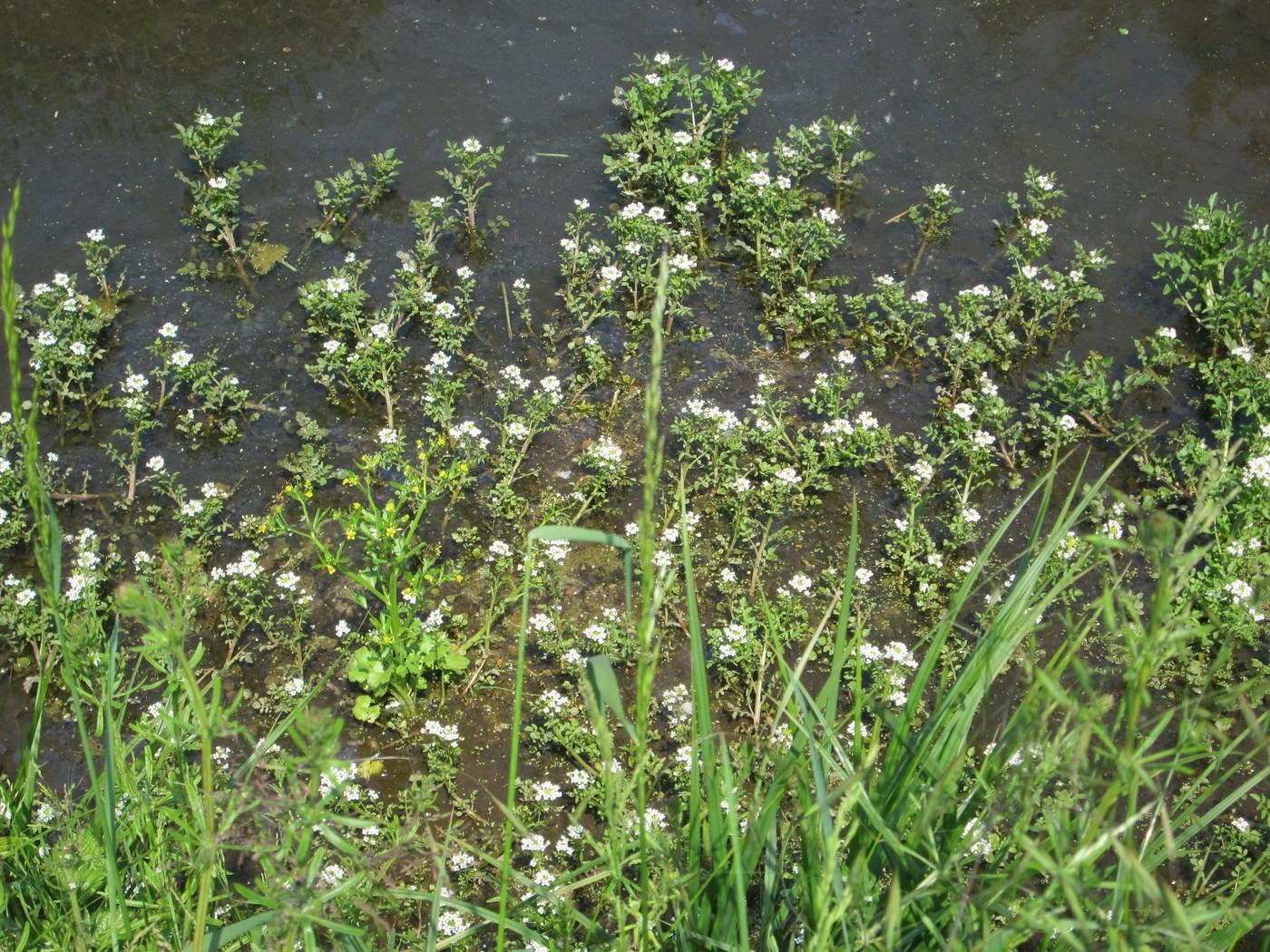
Key Identifying Features
Watercress (Nasturtium officinale) is a low, sprawling perennial of clean, flowing fresh water. It forms dense floating or creeping mats in streams, springs, and ditches. The signature traits are its hollow, succulent stems that root at the nodes, its pinnately compound leaves with a large rounded terminal leaflet, and a distinct mustard-like scent when the foliage is crushed.
Leaves & Stems
- Stems are smooth, green to purplish, hollow, and brittle, floating on water or creeping over wet mud; they root readily from each node.
- Leaves are compound (pinnate), with 3-11 leaflets arranged in pairs along the stalk plus one larger terminal leaflet.
- Leaflets are oval to round, smooth-edged or slightly wavy, dark green and glossy, never sharply toothed.
- The whole plant is hairless and stays green through mild winters.
- Crushed foliage gives off a mustard-like scent — a key confirming feature.
Flowers & Fruit
- Flowers are tiny (4-6 mm), white, with four petals arranged in a cross — typical of the mustard family (Brassicaceae).
- They cluster in small rounded heads at the stem tips, blooming spring through summer.
- Fruits are slender curved pods (siliques), 1-2 cm long, holding two rows of seeds, held outward on short stalks.
How to Tell It Apart from Look-Alikes
Several look-alikes share wet habitats, so check the details carefully:
- Fool's watercress (Apium nodiflorum): Grows in similar habitat but its leaflets are toothed/serrated, and flowers are tiny and white in flat umbels, not crosses.
- Lesser water-parsnip (Berula erecta) and related wetland umbellifers: Have umbrella-shaped (umbel) flower clusters rather than four-petaled crosses, and toothed or feathery leaves.
- Bittercress (Cardamine): Smaller, with more dissected leaves; true watercress has the big rounded terminal leaflet.
Confirm with these features together: four-petaled white flowers, hollow stems rooting at the nodes, and the large rounded terminal leaflet.
Where You'll Find It
Look in shallow, clear, slow-moving fresh water: spring-fed streams, chalk brooks, ditches, and the edges of ponds. It prefers cool, alkaline, oxygen-rich water and full sun to part shade. Native to Europe and Asia, it is now naturalized across North America and worldwide, often forming bright green mats.
Quick ID Checklist
- Growing in or right beside clean flowing fresh water
- Hollow, succulent stems rooting at the nodes
- Pinnate leaves with a large rounded terminal leaflet, smooth margins
- Hairless, deep green, glossy
- Four-petaled white flowers in small clusters
- Mustard-like scent when crushed
Frequently asked questions
How do I tell watercress from similar wetland plants?
Check the flowers: watercress has four white petals in a cross (mustard family), while many similar wetland umbellifers have umbrella-shaped umbel flowers. Combine that with the hollow node-rooting stems and the large rounded terminal leaflet to confirm.
Does watercress have a distinctive scent?
Yes, crushed foliage gives off a mustard-like scent, which together with the hollow node-rooting stems and the rounded terminal leaflet helps confirm the plant.
Can watercress grow out of water?
It can creep over wet mud and damp ground at the water's edge, but it always stays in saturated soil or shallow water. A cress-like plant on dry ground is more likely bittercress or another relative.
What time of year is watercress easiest to identify?
Late spring and summer, when the tiny white four-petaled flowers and slender seed pods appear. The hollow rooting stems and rounded leaflets are visible year-round in mild climates.