
Wild Columbine Identification Guide
Identify wild columbine (Aquilegia canadensis) by its nodding red-and-yellow flowers with five backward-pointing spurs and its delicate blue-green compound leaves. Includes habitat and look-alike comparisons.
Read the full Wild Columbine encyclopedia entry →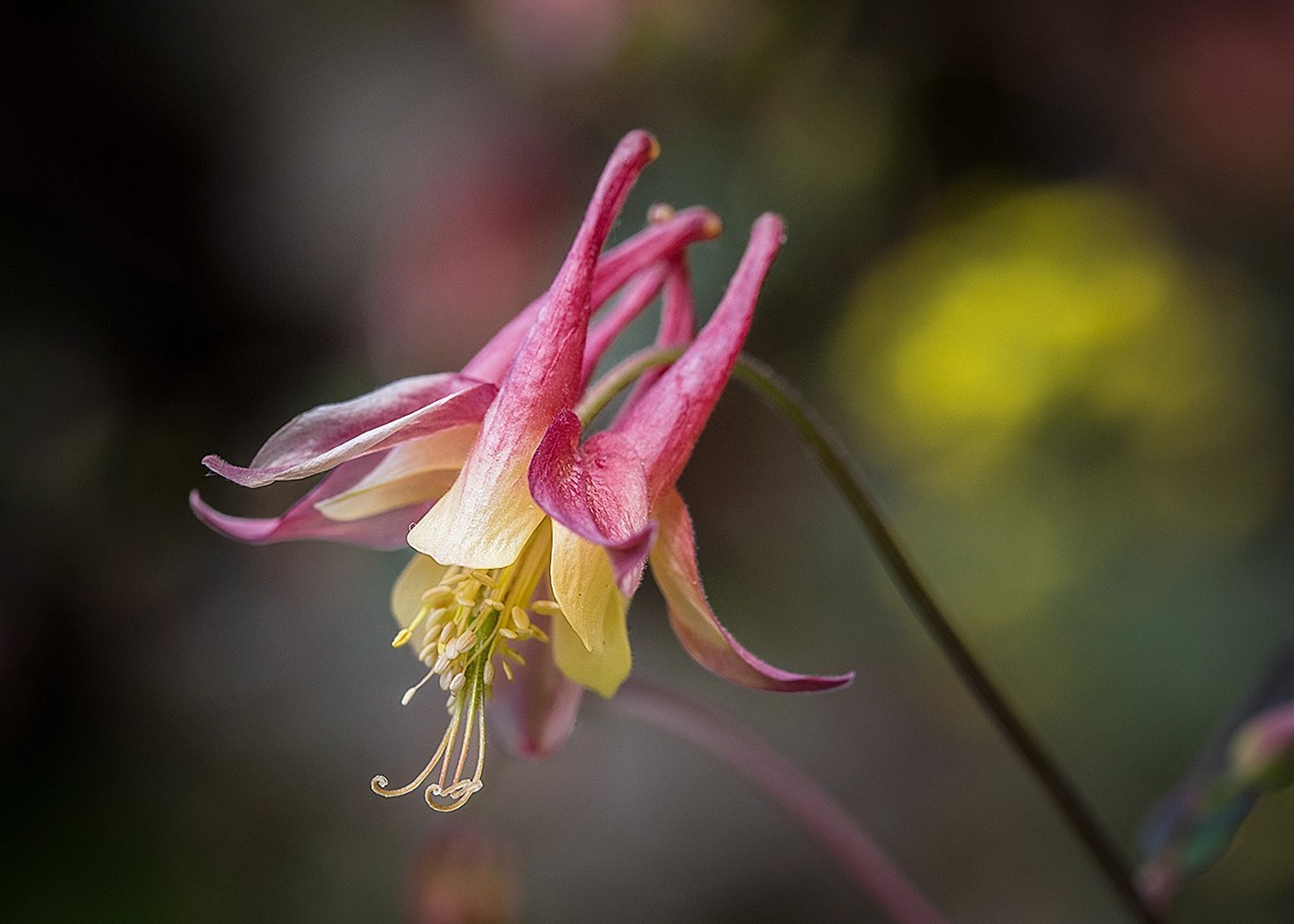
Key Identifying Features
Wild columbine (Aquilegia canadensis), also called eastern red columbine, is a graceful native perennial wildflower of eastern North America. Its unmistakable feature is the nodding, bell-like flower with five red, backward-pointing tubular spurs and a flaring yellow center, dangling on slender stalks above lacy, blue-green foliage.
- Nodding red-and-yellow flowers with five hollow spurs
- Delicate, compound blue-green leaves divided in threes
- Slender, airy plant, 1 to 3 feet tall
- Protruding yellow stamens beneath each flower
- Native perennial of woods and rocky places
Leaves & Stems
The leaves are compound and twice divided into threes (biternate): each leaf splits into three stalked groups, and each group into three lobed leaflets. The leaflets are rounded with shallow scalloped lobes, soft, and a distinctive blue-green (glaucous) above and paler beneath, giving a fine, lacy, maidenhair-like texture. Most leaves rise from the base on long stalks, with a few smaller ones on the slender, branching flower stems. The overall plant is airy and delicate.
Flowers & Fruit
The flowers are the signature: nodding (hanging downward), about 1 to 2 inches long, with five red, slender, hollow spurs pointing upward/backward and five flaring petal blades that are yellow inside, plus yellow sepals. A cluster of yellow stamens dangles below the flower. The spurs hold nectar and are pollinated by hummingbirds and long-tongued insects. After bloom, the flower turns upward and forms a cluster of erect, beaked seed pods (follicles) that split to drop shiny black seeds. Flowering occurs in spring to early summer.
How to Tell It Apart from Look-Alikes
- Garden/European columbine (Aquilegia vulgaris) and hybrids: Have flowers in blue, purple, pink, or white with shorter, hooked spurs and often upward-facing blooms; wild columbine is distinctly red-and-yellow and nodding with straight spurs.
- Western columbines (e.g., A. formosa): Similar red-and-yellow but native to the West; range distinguishes them.
- Meadow-rue (Thalictrum): Has similar lacy blue-green compound leaves but tiny fluffy flowers without spurs.
The nodding red-and-yellow spurred flowers over blue-green thrice-divided leaves make wild columbine easy to confirm in the eastern US.
Where You'll Find It
Wild columbine grows in rocky woodlands, wooded slopes, ledges, bluffs, and partly shaded clearings across eastern and central North America. It favors well-drained, often rocky or calcareous soils and dappled light, frequently tucked into crevices and on dry, rocky ledges. It is a popular native plant for shade and pollinator gardens.
Quick ID Checklist
- Airy perennial, 1 to 3 ft
- Nodding red flowers with five backward spurs
- Yellow flaring centers and dangling stamens
- Blue-green leaves divided twice in threes, scalloped leaflets
- Erect beaked seed pods after bloom
- Rocky woods and ledges, eastern North America, spring
Frequently asked questions
What makes wild columbine flowers so distinctive?
Each nodding flower has five red, slender, backward-pointing hollow spurs surrounding a flaring yellow center, with yellow stamens dangling below, a shape no other native eastern wildflower matches.
How do I tell wild columbine from garden columbine?
Wild columbine (A. canadensis) is consistently red-and-yellow with nodding flowers and straight spurs, while garden columbines come in many colors with often upward-facing flowers and shorter, hooked spurs.
What pollinates wild columbine?
The nectar-filled spurs are adapted for hummingbirds and long-tongued insects such as hawk moths and bumblebees, which reach into the spurs to feed.
Where is the best place to look for it?
Search rocky woodlands, wooded slopes, ledges, and bluffs with well-drained, often calcareous soil and dappled shade across eastern and central North America in spring.