Wild Garlic Identification Guide
How to recognize wild garlic by its hollow, round, onion-scented leaves and its papery underground bulbs. Covers the key ID features, look-alikes, and the all-important smell test.
Read the full Wild Garlic encyclopedia entry →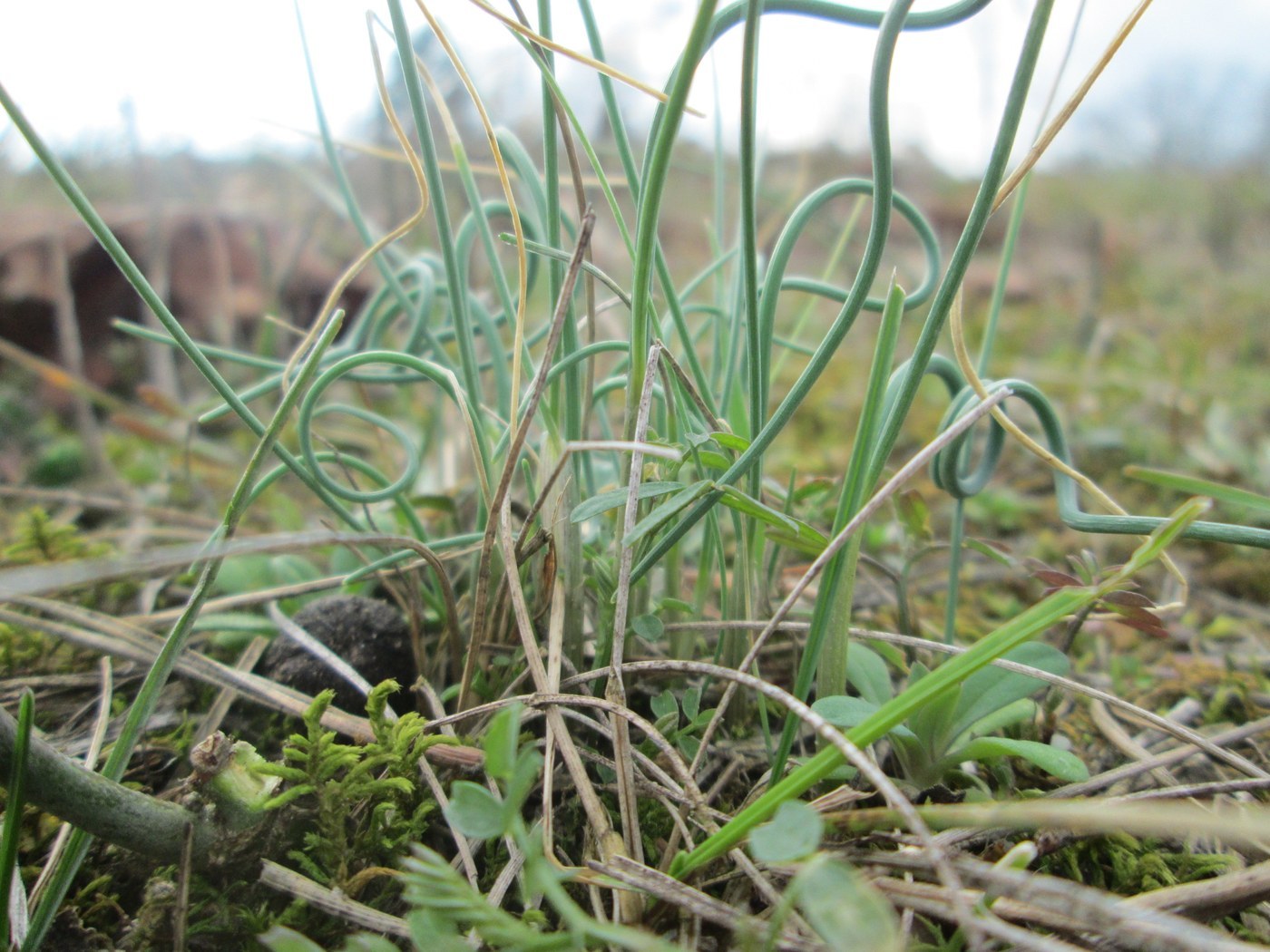
Key Identifying Features
Wild garlic (Allium vineale), sometimes called field garlic or crow garlic, is a cool-season perennial that emerges in distinct upright clumps, often standing taller than the surrounding turf in early spring. The single most reliable identifier is the strong garlic-onion odor released when any part of the plant is crushed or mowed. If it smells like garlic, it is in the Allium genus; if it has no smell, it is not wild garlic no matter how grass-like it looks.
- Hollow, round leaves that are nearly cylindrical in cross-section
- Strong garlic scent when bruised
- Grows from a papery white underground bulb with offset bulblets
- Forms upright, tufted clumps that outgrow nearby grass
Leaves & Stems
The leaves are slender, hollow and round (tubular) rather than flat, and they attach to the lower portion of a central stem. Run a leaf between your fingers and you can feel that it is a thin tube. Leaves are a waxy gray-green and can reach 1 to 3 feet long, flopping over as they lengthen. This hollow, rounded leaf is the easiest way to separate wild garlic from wild onion, whose leaves are flat and solid.
Flowers & Fruit
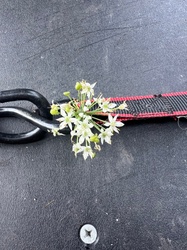
In late spring to early summer, mature plants send up a smooth flowering stalk topped by a cluster. Wild garlic typically produces a head of aerial bulblets (bulbils) — tiny green-to-purple bulbs that often grow slender green tails and sometimes a few small greenish-white to pink flowers. These bulbils drop and root, which is a major way the plant spreads. The papery membrane (spathe) covering the young flower head is another tell.
How to Tell It Apart from Look-Alikes
- Wild onion (Allium canadense): Has flat, solid leaves and produces true flowers more often than bulbils. Wild garlic leaves are hollow and round.
- Turf grasses / wild chives: Grasses have no garlic smell and flat leaves with a midrib. The crush-and-smell test settles it instantly.
- Star-of-Bethlehem (Ornithogalum): Has a white midrib stripe down a flat leaf and no onion smell, so confirm the odor before assuming you have wild garlic.
Where You'll Find It
Wild garlic thrives in lawns, pastures, roadsides, fallow fields, and the edges of woods across much of eastern and central North America (introduced from Europe). It greens up early when most turf is still dormant, which makes the dark-green vertical clumps stand out against a brown winter lawn.
Quick ID Checklist
- Strong garlic/onion smell when crushed
- Leaves hollow and round in cross-section
- Grows from a papery white bulb underground
- Upright tufted clumps taller than surrounding grass
- Flower stalk bears aerial bulbils, often with tails
If you can check all five, you have wild garlic. The absence of a garlic smell rules it out entirely.
Frequently asked questions
What is the difference between wild garlic and wild onion?
The leaves are the giveaway: wild garlic has hollow, round (tubular) leaves, while wild onion has flat, solid leaves. Both smell of onion when crushed, but wild garlic also tends to form clusters of aerial bulblets at the top of its stalk.
Is the garlic smell a reliable way to identify it?
Yes. All true Allium species release a sulfurous garlic-onion odor when crushed. If a grass-like plant has no smell, it is not wild garlic but one of several odorless grassy look-alikes, so always do the smell test before assuming.
Why does wild garlic stand out in my lawn?
It is a cool-season perennial that greens up and grows quickly in late winter and early spring, well before most turfgrasses break dormancy. Its upright, dark-green clumps shoot above the shorter dormant grass.
What are the bulbils on top of the stalk?
In late spring to early summer, wild garlic produces a head of aerial bulblets (bulbils) — tiny green-to-purple bulbs that often grow slender tails — which drop and root to spread the plant.
Wild Garlic identified by the community
Recent Wild Garlic specimens identified with Plant Identifier.