
Wild Geranium Identification Guide
Identify Wild Geranium (Geranium maculatum) by its five-petaled pink-purple flowers, deeply lobed palmate leaves, and beak-like seed pods. This guide covers key woodland field marks.
Read the full Wild Geranium encyclopedia entry →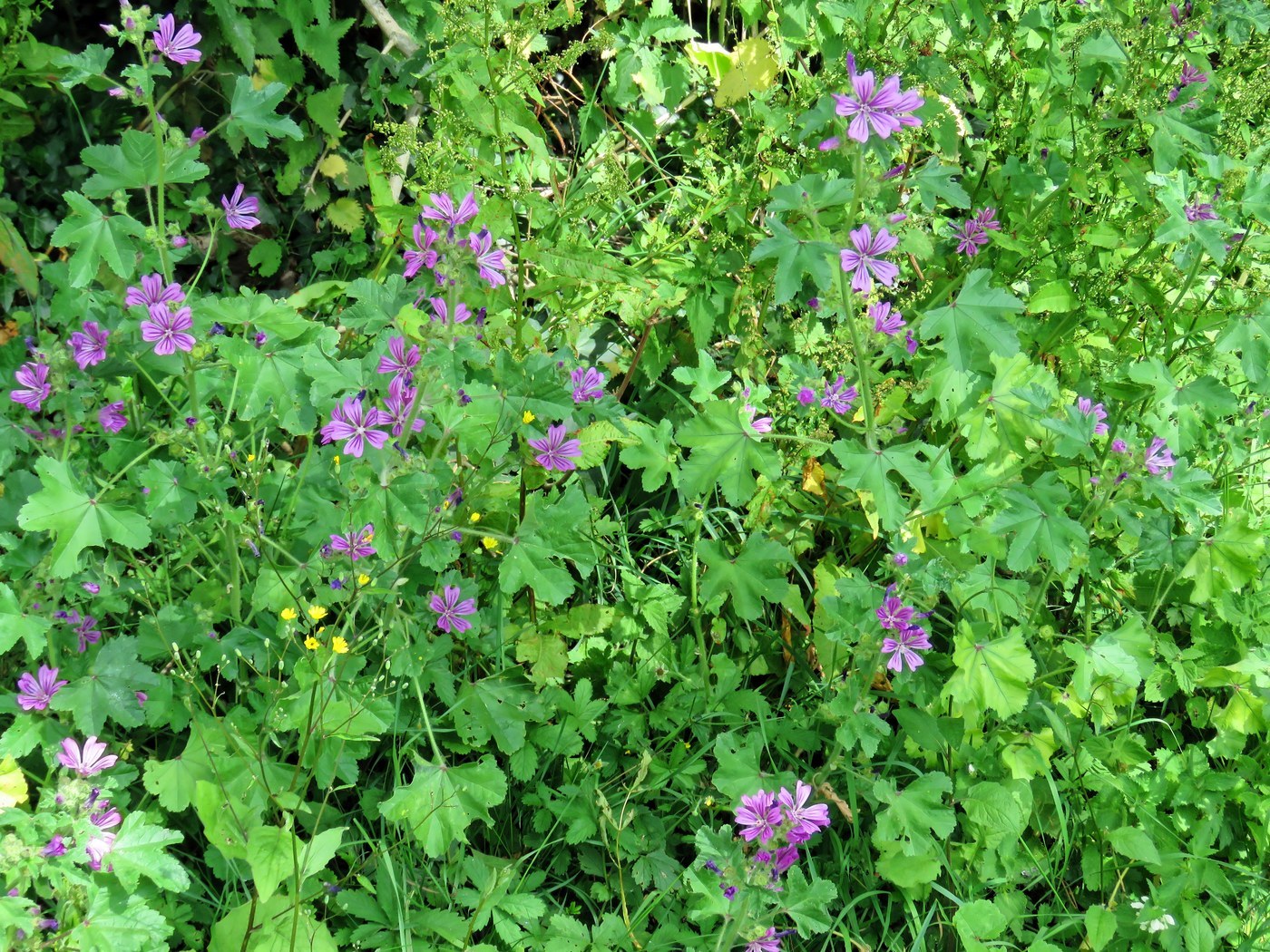
Key Identifying Features
Wild Geranium (Geranium maculatum), also called spotted geranium or cranesbill, is a graceful spring woodland perennial with five-petaled pink to rose-purple flowers held above deeply lobed leaves. Plants form leafy clumps 1 to 2 feet (30 to 60 cm) tall and bloom in late spring.
- Five symmetrical petals, pink-lavender to rose-purple
- Deeply lobed, palmate (hand-shaped) leaves
- Distinctive long, beak-like seed pods ("cranesbill")
- Mounded woodland clump
Leaves & Stems
Leaves are palmately divided into 5 to 7 deep, toothed lobes, resembling an open hand, and are mostly basal with a few on the flowering stems. Foliage is green, hairy, and coarsely toothed. Stems are slender, hairy, and branching, holding flowers in loose pairs above the leaves.
Flowers & Fruit
Each flower spans about 1 to 1.5 inches (2.5 to 4 cm) with five rounded petals, ten stamens, and fine darker veins (nectar guides) leading to the center. Color ranges from soft pink-lavender to rose-purple; white forms occur occasionally. Blooming runs April to June. The signature fruit is a long, pointed seed capsule shaped like a crane's bill that springs open to fling seeds when ripe.
How to Tell It Apart from Look-Alikes
- Herb Robert (Geranium robertianum): smaller, with finely divided fern-like leaves and a strong odor.
- Garden cranesbills: cultivated geraniums with similar flowers but varied leaf shapes.
- Wild blue phlox: five petals but flat-faced, tubular base, with un-lobed lance leaves.
The palmate lobed leaves plus the long beaked seed pod are the surest identifiers; the pod gives the plant its "cranesbill" name.
Where You'll Find It
Wild Geranium grows in rich, moist deciduous woodlands, shaded meadows, and woodland edges across eastern and central North America. It prefers dappled shade and humus-rich soil and often forms attractive drifts on the spring forest floor.
Quick ID Checklist
- Five pink to rose-purple petals with darker veins
- Palmate, deeply lobed toothed leaves
- Long beak-like seed pods (cranesbill)
- Hairy stems, mounded clump
- Blooms late spring
- Shaded woodlands and edges
Frequently asked questions
Why is wild geranium called cranesbill?
Because its seed capsule is long and pointed, resembling the bill of a crane. When ripe, the pod splits and springs upward, flinging the seeds away from the parent plant.
What do wild geranium leaves look like?
They are palmate and hand-shaped, deeply divided into 5 to 7 toothed lobes radiating from a central point, with most leaves arising from the base of the plant.
Is wild geranium related to the geraniums sold in garden centers?
It is in the true geranium genus (Geranium), while most potted bedding geraniums are actually Pelargonium. Wild geranium is a hardy native woodland perennial, distinct from those tender annuals.
Where and when does wild geranium bloom?
It blooms in late spring, roughly April through June, in rich, moist deciduous woodlands and shaded edges across eastern and central North America.