
Wishbone Flower Identification Guide
Identify Wishbone Flower (Torenia) by its two-lipped trumpet flowers with a contrasting throat and the wishbone-shaped pair of stamens inside.
Read the full Wishbone Flower encyclopedia entry →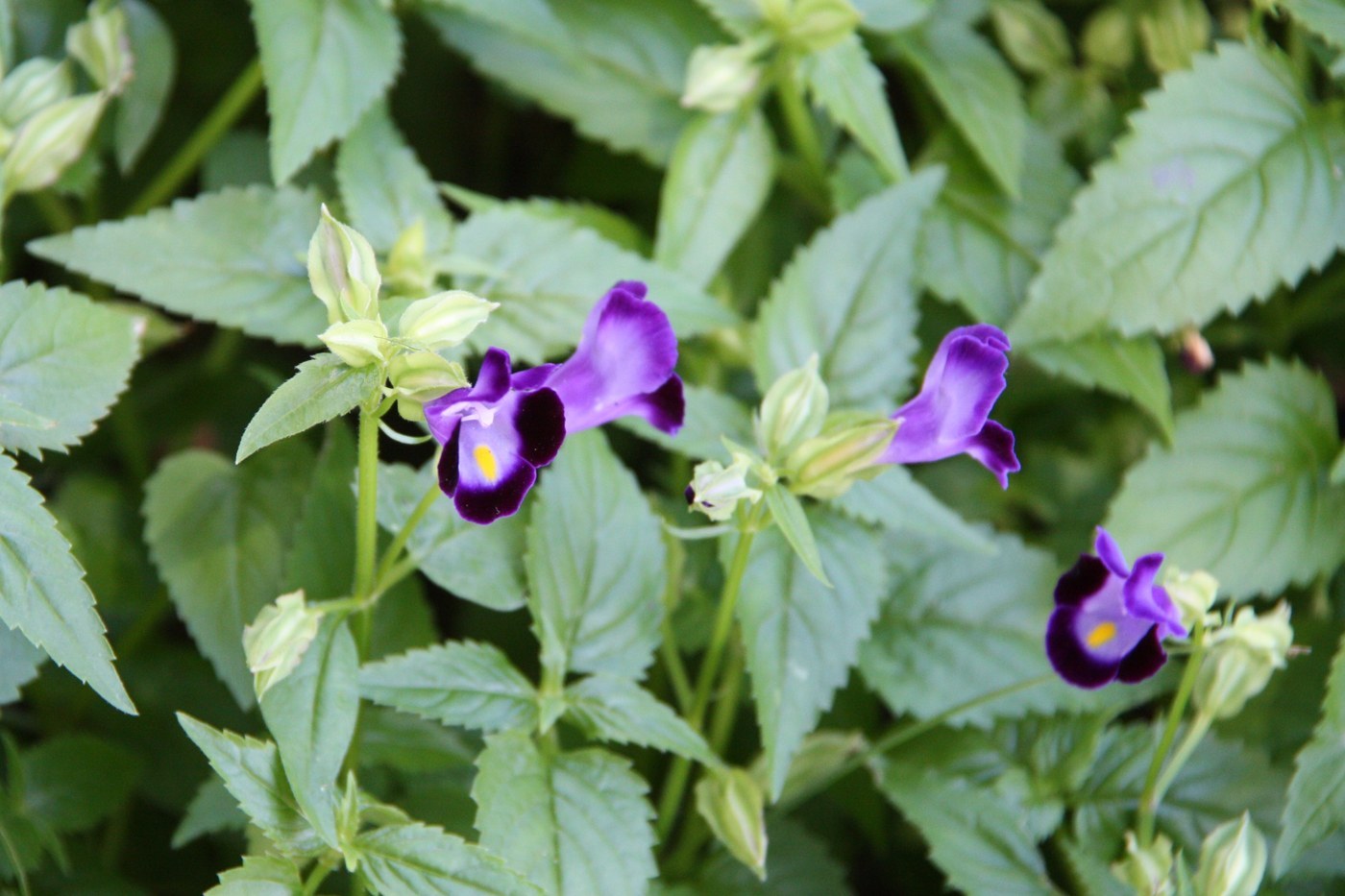
Key Identifying Features
Wishbone Flower (Torenia fournieri) is a compact, shade-tolerant warm-season annual recognized by its two-lipped trumpet flowers with a velvety contrasting throat and, on close inspection, a pair of curved stamens that meet to form a tiny "wishbone" inside the bloom — the source of its name.
- Bushy or mounding/trailing habit, usually 6-12 in (15-30 cm) tall
- Flowers 1-1.5 in (2.5-4 cm), trumpet- or pansy-like
- Bicolor pattern: pale tube with a deeper purple, blue, pink, or burgundy lower lip and often a yellow throat spot
- Loves shade and heat, unusual among shade annuals
- Tiny wishbone-shaped stamens visible inside
Leaves & Stems
Leaves are opposite, oval to lance-shaped, 1-2 in long, with toothed (serrated) margins and a pointed tip, medium green and sometimes bronze-tinged. Stems are squarish, slender, and branching, forming a tidy bushy or softly trailing mound. The neat opposite leaves and four-angled stems hint at its membership in the figwort/linderniaceae group.
Flowers & Fruit
Each flower is a tubular, two-lipped (bilabiate) bloom flaring into a flat, pansy-like face. Look down the throat to find two arching stamens whose tips touch, forming a wishbone — a unique, reliable confirmation. Flowers come in striking bicolors with a yellow blotch in the throat. After bloom, small capsules form holding fine seeds; the plant self-sows in warm climates.
How to Tell It Apart from Look-Alikes
- Pansy/viola: similar flat pansy-like face, but pansies are cool-season, five-petaled, flat flowers without a tubular throat or wishbone stamens; torenia is heat-loving and tubular.
- Mimulus (monkey flower): also two-lipped and shade-tolerant, but lacks the inner wishbone stamens and has stickier foliage.
- Lobelia: small two-lipped flowers too, but much smaller and without the contrasting velvety throat.
- The two-lipped trumpet with a contrasting throat + the inner wishbone-shaped stamens is unmistakable.
Where You'll Find It
Wishbone flower is one of the best annuals for shade and part shade, valued for color in spots where many flowers won't bloom. It thrives in moist, rich soil with filtered light, performing well in summer heat and humidity. You'll find it in shade borders, woodland edges, containers, and hanging baskets, where trailing types cascade nicely.
Quick ID Checklist
- Compact shade-loving annual under ~12 in
- Two-lipped trumpet/pansy-like flowers
- Bicolor with a darker lower lip and yellow throat spot
- A wishbone-shaped pair of stamens inside the bloom
- Opposite, toothed leaves on squarish stems
- Thrives in shade plus heat and humidity
Frequently asked questions
Why is it called the wishbone flower?
Inside each bloom, two curved stamens arch toward each other and their tips meet to form a shape like a tiny wishbone. Spotting this is the single most reliable way to confirm the plant.
Can wishbone flower grow in shade?
Yes, it's one of the few annuals that blooms well in part to full shade while also tolerating summer heat and humidity, making it a go-to for shady beds and containers.
How is it different from a pansy?
Pansies are cool-season flowers with flat, five-petaled faces and no tube, while wishbone flower is a heat-loving plant with tubular, two-lipped blooms and the distinctive inner wishbone stamens.
Will wishbone flower reseed itself?
In warm climates it often self-sows from the small seed capsules that form after flowering, producing volunteer seedlings the following season.