
Wood Sorrel Identification Guide
How to identify wood sorrel (Oxalis) by its clover-like heart-shaped leaflets, small five-petaled yellow or pink flowers, and seed capsules that burst when ripe.
Read the full Wood Sorrel encyclopedia entry →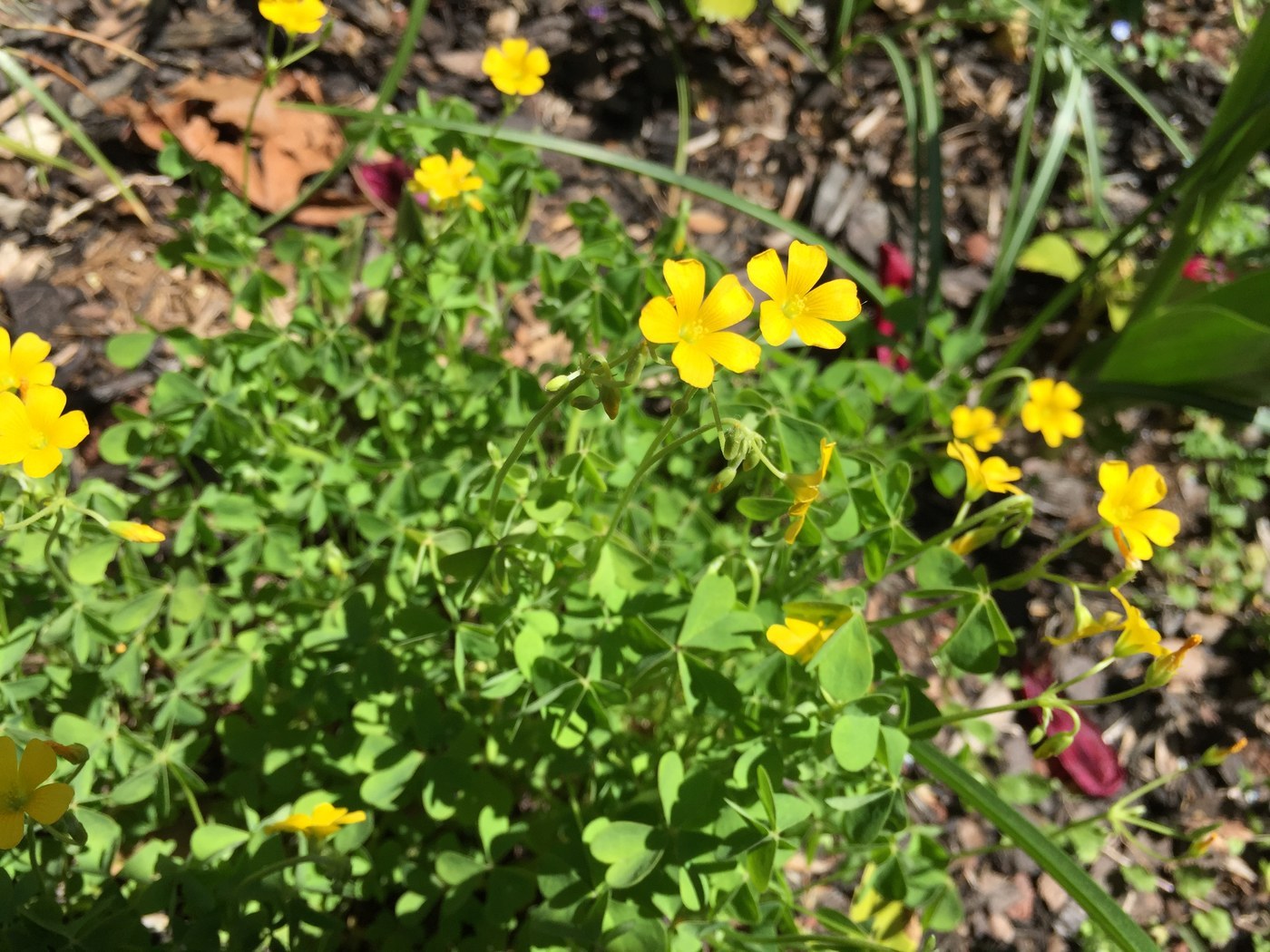
Key Identifying Features
Wood sorrel (Oxalis species) is a low, delicate plant often mistaken for clover. The defining traits are:
- Three heart-shaped (inversely heart) leaflets that pinch inward at the tip
- Five-petaled flowers, usually bright yellow (Oxalis stricta) or pink/purple (Oxalis species and shamrock types)
- Slender, pointed seed capsules that burst open when ripe
- Leaflets that fold down at night and in bright sun (nyctinasty)
The plant is small, usually 4-12 inches tall, and often sprawls.
Leaves & Stems
Each leaf is palmately compound with three leaflets radiating from a single point at the top of a thin stalk. Unlike clover's oval leaflets, wood sorrel leaflets are distinctly heart-shaped, broad at the outer edge and notched. Foliage is bright green, sometimes purple-tinged or fully burgundy in ornamental forms. Stems are slender and somewhat hairy, branching freely. Many species spread by slender rhizomes or bulblets, which makes them persistent garden weeds.
Flowers & Fruit
Flowers are small (under half an inch), with five petals and yellow, white, or pink coloring depending on species. They open in sunshine and close at night. After flowering, wood sorrel produces a distinctive upright, narrow, pointed seed capsule shaped like a tiny okra pod. When ripe, these capsules burst explosively, flinging seeds several feet — a reliable confirming feature if you gently squeeze a ripe pod.
How to Tell It Apart from Look-Alikes
- Clover (Trifolium): Has oval leaflets with a faint pale chevron and round flower heads; wood sorrel has heart-shaped notched leaflets and five-petaled solitary flowers.
- Black medic: Three small oval leaflets and tiny yellow clustered flowers, but no heart-notch.
- True shamrock/false shamrock: Often the same genus (Oxalis) sold as houseplants.
- Creeping woodsorrel vs. yellow woodsorrel: Creeping types root along the ground while yellow woodsorrel grows more upright.
The heart-shaped notched trifoliate leaves plus five-petaled flowers and bursting seed pods together rule out clover and medic.
Where You'll Find It
Wood sorrel is found nearly worldwide in lawns, garden beds, sidewalk cracks, woodlands, fields, and flowerpots. It tolerates sun and shade and a wide range of soils, often appearing as a volunteer weed in container plants and vegetable gardens. Native woodland species favor moist, shaded forest floors.
Quick ID Checklist
- Three heart-shaped, notched leaflets from one point
- Leaflets fold down at night
- Five-petaled yellow, white, or pink flowers
- Okra-shaped seed pods that burst when ripe
- Low, sprawling, 4-12 inches tall
If you find a clover-like plant with heart-shaped notched leaflets, five-petaled flowers, and exploding seed pods, it is wood sorrel.
Frequently asked questions
Is wood sorrel the same as clover?
No. They look similar but wood sorrel (Oxalis) has heart-shaped, notched leaflets and five-petaled flowers, while true clover (Trifolium) has oval leaflets with a pale chevron mark and a round flower head.
Why do wood sorrel leaves fold up?
Wood sorrel exhibits nyctinasty, folding its leaflets downward at night and sometimes in intense midday sun. This movement is a normal response to light and is a helpful identification clue.
What are the little pointed pods on wood sorrel?
Those are its seed capsules, shaped like miniature okra pods. When ripe they split open explosively and scatter seeds several feet, which helps the plant spread quickly through gardens and lawns.
How can I tell wood sorrel from black medic?
Black medic has oval leaflets with a tiny tooth at the tip and tight clusters of small yellow flowers, while wood sorrel has heart-shaped, notched leaflets, five-petaled flowers, and pointed seed capsules that burst when ripe.