Black-eyed Susan
Scientific Name: Rudbeckia hirta
Plant Family: Asteraceae
Native Region: North America
Brief Description
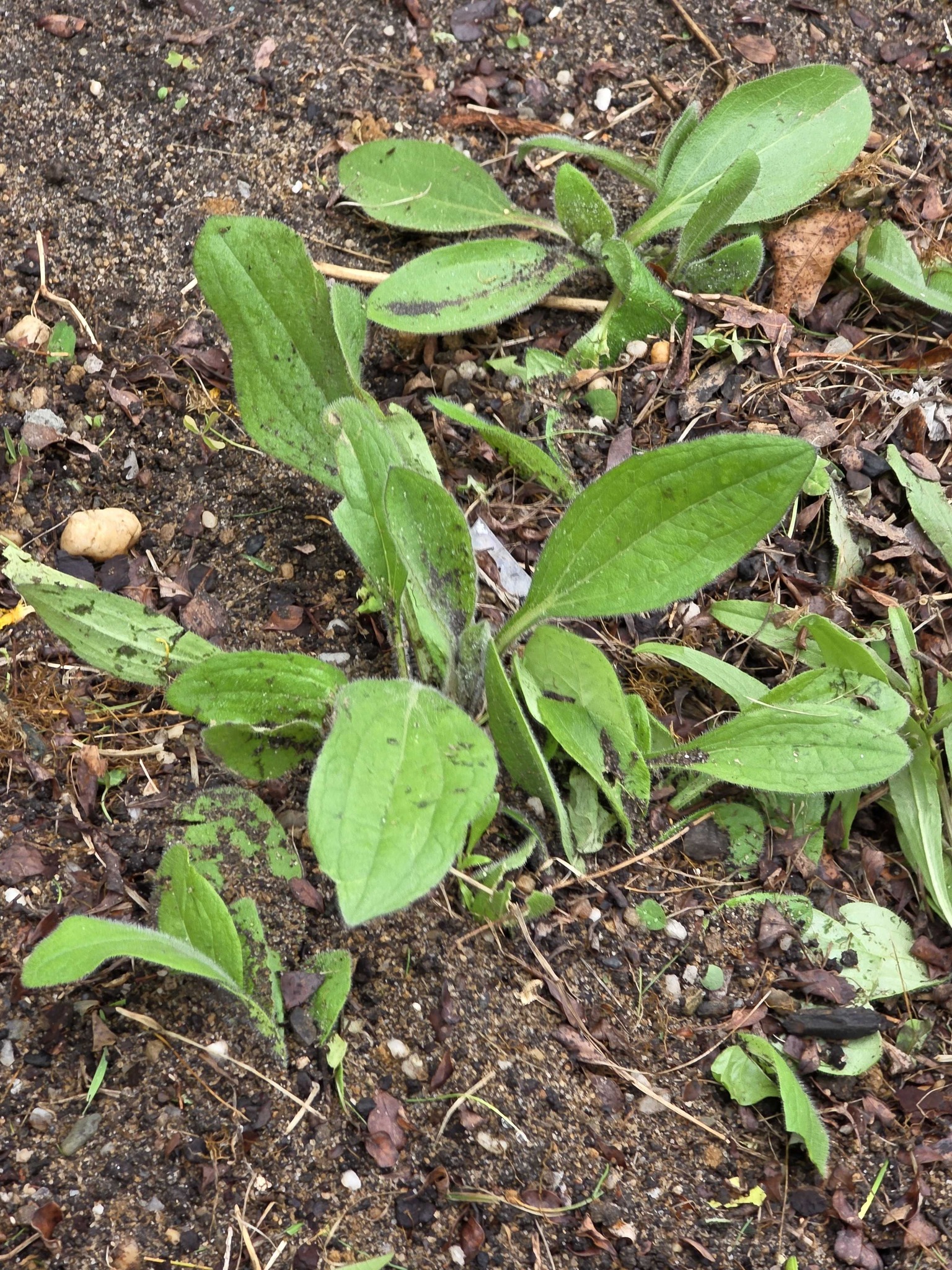
A herbaceous plant featuring a basal rosette of coarsely hairy, oval-to-lanceolate green leaves. When mature, it produces upright stalks with bright yellow daisy-like flowers and a dark brown central cone.
Care Instructions
This is a low-maintenance plant. Provide full sun for the best blooms. Once established, it is drought-tolerant but enjoys regular watering during peak heat. No heavy fertilization is required; a light layer of compost in spring is sufficient.
Medicinal Value
We do not currently provide medicinal value for plant identifications.
Sunlight
Full sun (6-8 hours daily); can tolerate light partial shade but may become leggy.
Watering
Moderate; water once or twice a week until established. Mature plants are drought-tolerant but will droop if too dry. Avoid overhead watering to prevent leaf spot.
Soil
Well-drained soil, though it is quite adaptable to clay, loam, or sandy soils. Prefers a pH of 6.0 to 7.0.
Hardiness Zone
3-9
Growth Habit
Short-lived perennial or biennial often grown as an annual. Forms a mound 1-3 feet tall and spreads 1-2 feet wide.
Bloom Season
Early summer to early fall; flowers are yellow with dark centers.
Toxicity
Generally non-toxic to humans and pets, though the seeds and leaves can cause mild stomach upset if ingested in large quantities by livestock.
Propagation
Easily grown from seed in autumn or early spring; also propagates by division of mature clumps every 3-4 years.
Common Pests & Issues
Susceptible to powdery mildew, septoria leaf spot, and snails or slugs in damp conditions. Ensure good air circulation to prevent fungal issues.
Similar Species
Echinacea (Coneflower) has similar hairy leaves but often produces pink/purple flowers and has a different cone structure. Other Rudbeckia species like R. fulgida have smoother, narrower leaves.
Interesting Facts
It is the state flower of Maryland. The plant is a high-value nectar source for bees, butterflies, and other beneficial insects.
Created At: 2026-05-01T20:36:01.219427