Boxwood Topiary
Scientific Name: Buxus sempervirens
Plant Family: Buxaceae
Native Region: Europe, Northwest Africa, and Southwest Asia
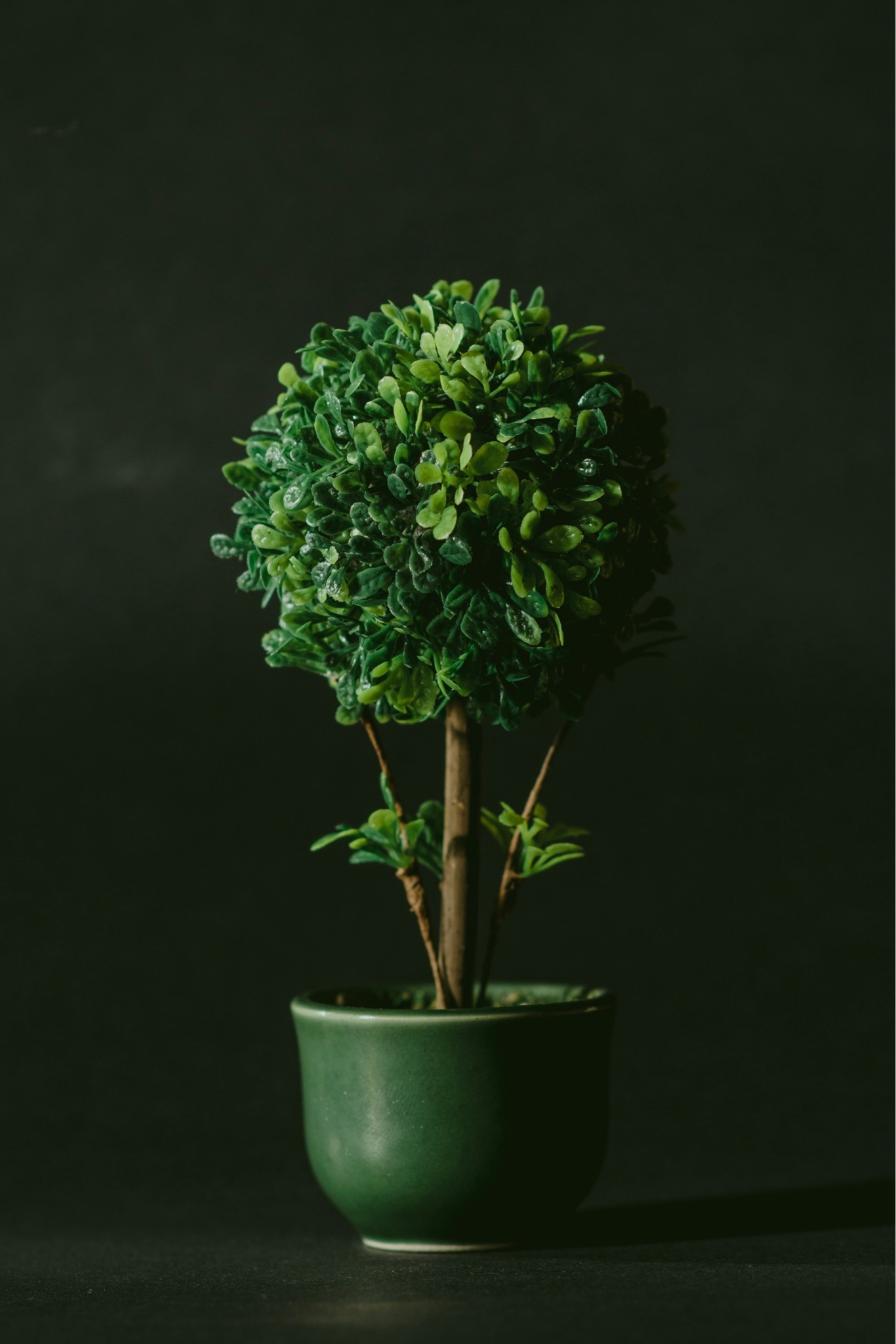
Brief Description
An evergreen shrub frequently pruned into formal geometric shapes (topiaries), featuring small, rounded, leathery leaves with a glossy deep green upper surface and a pale green underside.
Care Instructions
Thrives in various light conditions from sun to shade. Needs well-drained soil and consistent moisture during its first year; once established, it is moderately drought-tolerant. Feed with a balanced fertilizer in early spring.
Medicinal Value
We do not currently provide medicinal value for plant identifications.
Sunlight
Full sun to partial shade (4-6 hours of sunlight); in hot climates, afternoon shade is beneficial to prevent leaf scorch.
Watering
Requires regular watering (once or twice a week depending on heat) to keep soil moist but not soggy. Avoid overhead watering to prevent fungal issues.
Soil
Prefers well-drained, loamy soil with a neutral to slightly alkaline pH (6.5 to 7.5). Susceptible to root rot in poorly drained soil.
Hardiness Zone
5 to 9
Growth Habit
Slow-growing evergreen perennial shrub. As a topiary, size is maintained by pruning; naturally, it can reach 10-15 feet in height and spread.
Bloom Season
Spring; flowers are small, yellow-green, and inconspicuous, lacking petals but providing nectar for bees.
Toxicity
Toxic to humans, dogs, cats, and horses if ingested; contains alkaloids that cause gastrointestinal distress, vomiting, and in rare cases, respiratory failure.
Propagation
Typically propagated via semi-hardwood cuttings taken in summer or autumn. Seed propagation is possible but much slower.
Common Pests & Issues
Susceptible to Boxwood Blight (fungus), Leafminers, and Boxwood Mites. Physical 'winter bronzing' can occur in extremely cold, exposed locations.
Similar Species
Japanese Holly (Ilex crenata), which looks very similar but has alternate leaf arrangement, whereas Boxwood has opposite leaf arrangement.
Interesting Facts
Boxwood is the world's oldest known garden ornamental, dating back to Roman times. Its wood is extremely dense and was historically used for making high-quality woodblocks and musical instruments.
Created At: 2026-04-26T18:22:18.073890