Slender Deutzia
Scientific Name: Deutzia gracilis
Plant Family: Hydrangeaceae
Native Region: Japan
Brief Description
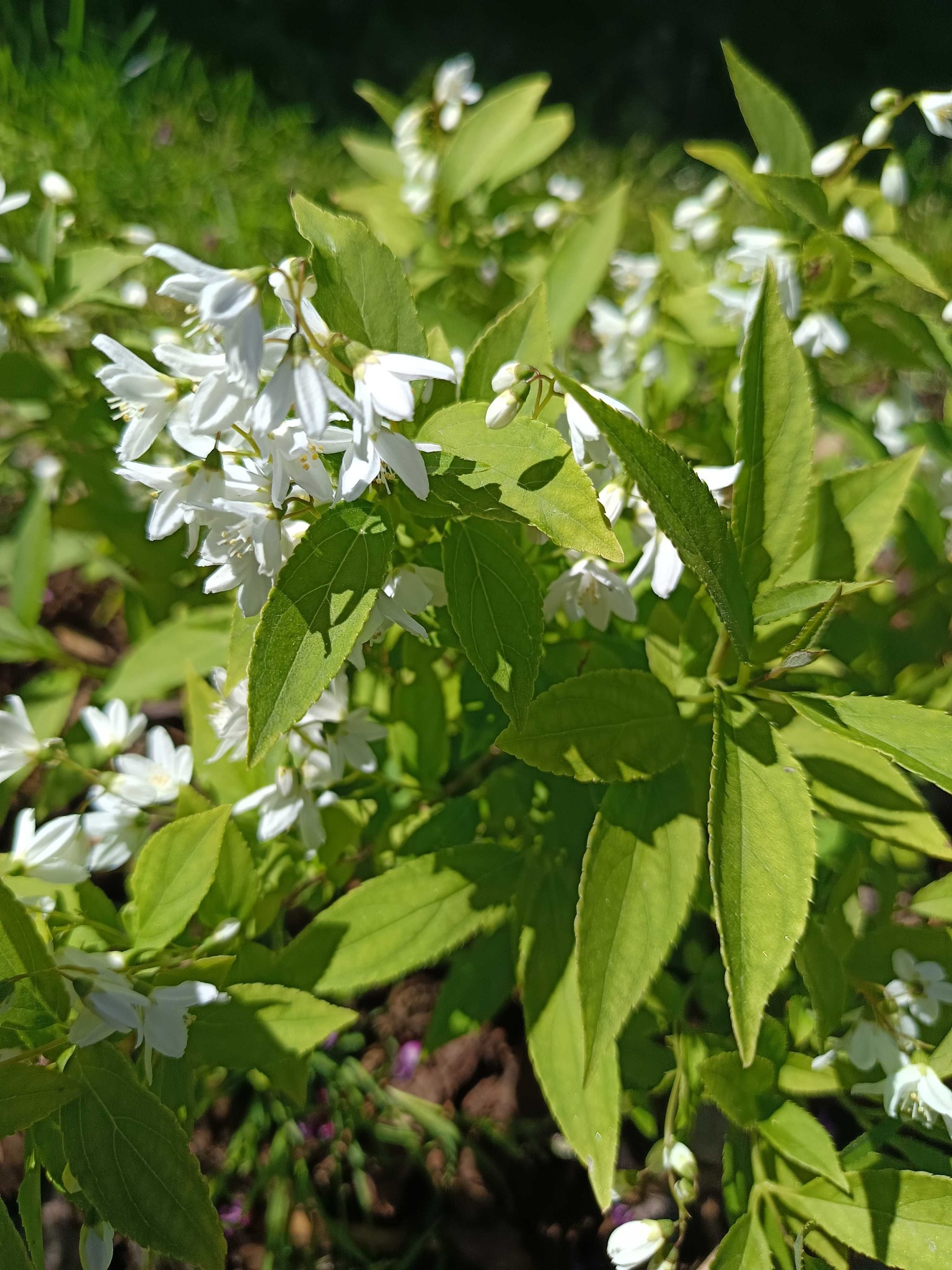
A low-growing, mounded deciduous shrub known for its arching branches and profuse clusters of small, star-shaped white flowers. It has bright green, lance-shaped leaves with finely serrated edges.
Care Instructions
Low-maintenance. Plant in well-drained soil in a sunny to partially shady spot. Prune immediately after flowering to shape and encourage vigor, as it blooms on old wood. Feed with a balanced fertilizer in early spring.
Medicinal Value
We do not currently provide medicinal value for plant identifications.
Sunlight
Full sun to partial shade (4-6+ hours of sunlight per day); better flowering occurs in full sun.
Watering
Moderate; requires regular watering, especially during dry spells. Soil should be kept consistently moist but not waterlogged. Established plants have moderate drought tolerance.
Soil
Prefers moist, well-draining loamy soil with a neutral to slightly acidic pH (6.0 to 7.5).
Hardiness Zone
5 to 8
Growth Habit
Deciduous perennial shrub; mounded and arching habit. Typically reaches 2-5 feet in height and spread with a slow to medium growth rate.
Bloom Season
Mid to late spring; produces clusters (racemes) of fragrant, pure white, five-petaled star-shaped flowers.
Toxicity
Not known to be toxic to humans, dogs, or cats, though ingestion of any non-food plant may cause mild stomach upset.
Propagation
Propagate by softwood cuttings in early summer or by hardwood cuttings in winter. It can also be propagated by layering.
Common Pests & Issues
Generally pest and disease resistant. Occasionally susceptible to leaf spot or aphids. Crown gall can occur in poorly drained soils.
Similar Species
Deutzia scabra (Fuzzy Deutzia) is taller with rougher, hairy leaves. Philadelphus (Mock Orange) looks similar but generally has larger, more strongly scented 4-petaled flowers.
Interesting Facts
The genus is named after Johann van der Deutz, a patron of botany. The variety 'Nikko' is a popular dwarf cultivar often used as a groundcover.
Created At: 2026-05-03T09:01:37.682419