Baltic Blue Pothos
Scientific Name: Epipremnum pinnatum 'Baltic Blue'
Plant Family: Araceae
Native Region: Native to Southeast Asia and the Western Pacific; this specific cultivar is a horticultural selection.
Brief Description
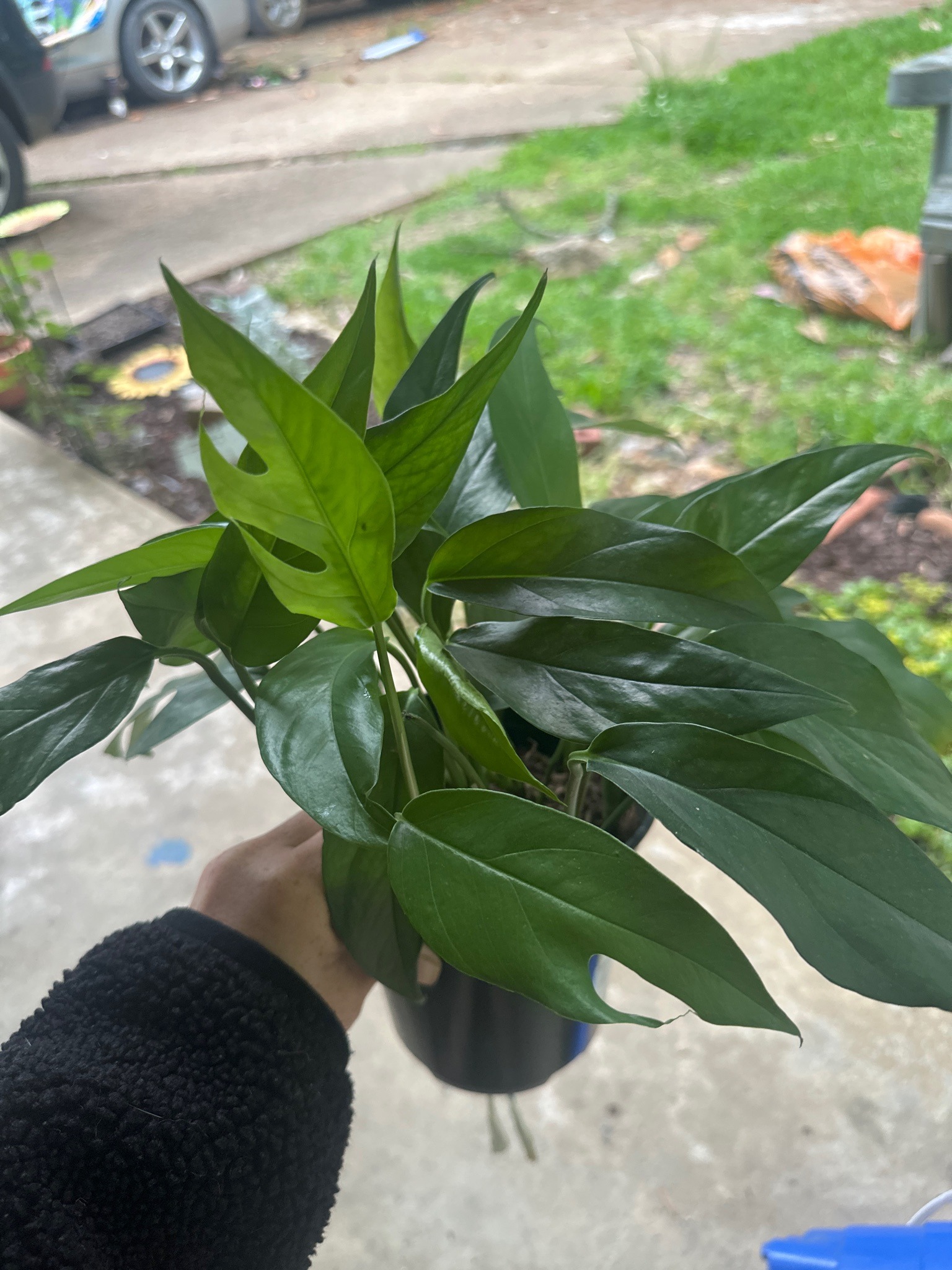
A climbing tropical vine with lance-shaped, dark green-blue foliage that develops dramatic fenestrations (slits) at an earlier age than the standard species.
Care Instructions
Thrives in medium to bright indirect light. Water when the top inch of soil feels dry. Use well-draining potting mix and feed monthly during the growing season with a balanced liquid fertilizer.
Medicinal Value
We do not currently provide medicinal value for plant identifications.
Sunlight
Bright indirect light is ideal (6-8 hours). Can tolerate medium light, but growth will slow and leaves may stay smaller.
Watering
Moderate. Water every 1-2 weeks depending on environment. Drought tolerant but will wilt when thirsty; sensitive to overwatering which causes root rot.
Soil
Well-draining, chunky mix. A blend of potting soil, orchid bark, and perlite is ideal. pH 6.1 to 6.5.
Hardiness Zone
USDA zones 9b-11; typically grown as a houseplant in cooler climates.
Growth Habit
Perennial climbing or trailing vine. Can grow 10-20 feet indoors if provided a moss pole for support. Fast growth rate.
Bloom Season
Rarely flowers indoors; in nature, produces a spathe and spadix characteristic of aroids.
Toxicity
Toxic to humans, dogs, and cats if ingested due to calcium oxalate crystals. Causes oral irritation, swelling, and vomiting.
Propagation
Easily propagated via stem cuttings with at least one node. Cuttings can be rooted in water, sphagnum moss, or soil.
Common Pests & Issues
Susceptible to mealybugs, spider mites, and scale. Yellow leaves usually indicate overwatering, while brown crispy tips suggest low humidity.
Similar Species
Cebu Blue Pothos (has more silver-blue, thinner leaves and lacks early fenestrations) and Monstera adansonii (has rounder leaves and circular holes rather than slits).
Interesting Facts
Unlike many other Pothos varieties that need to reach a massive size to develop holes, Baltic Blue is prized for producing fenestrations while the plant is still relatively young and small.
Created At: 2026-04-28T18:42:47.828997