Oregano
Scientific Name: Origanum vulgare
Plant Family: Lamiaceae (Mint family)
Native Region: Mediterranean region and temperate Eurasia
Brief Description
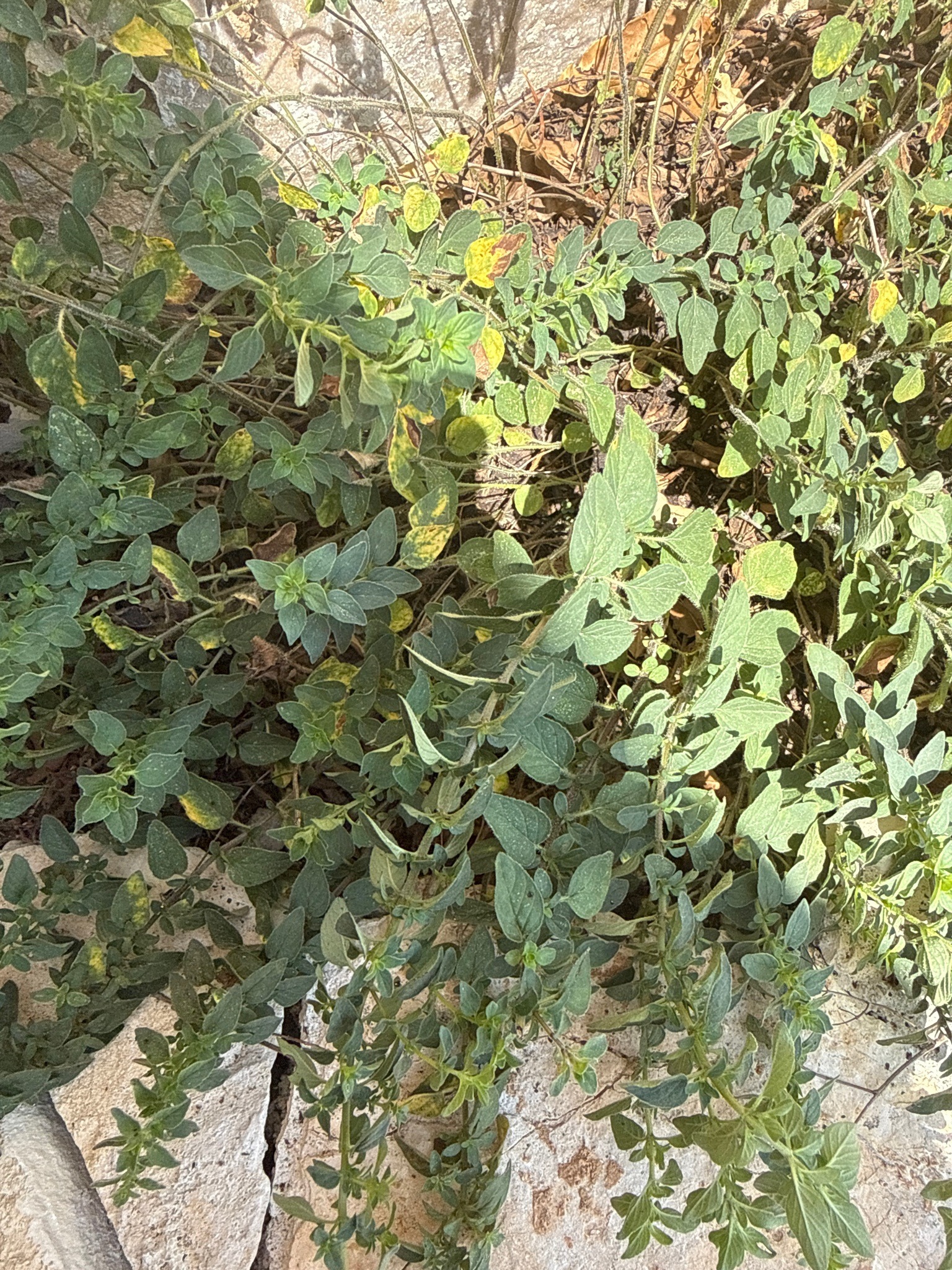
A woody-based perennial herb with small, oval, opposite, grayish-green leaves that are often hairy and highly aromatic.
Care Instructions
Thrives in full sun and well-drained soil. Avoid overwatering; allow the soil to dry out between watering sessions. Prune back after flowering to maintain a bushy shape.
Medicinal Value
We do not currently provide medicinal value for plant identifications.
Sunlight
Full sun (6-8 hours per day)
Watering
Low to moderate. Drought-tolerant once established. Water when the top inch of soil feels dry. Susceptible to root rot if sitting in wet soil.
Soil
Well-drained, sandy or loamy soil with a neutral to slightly alkaline pH (6.5 to 8.0).
Hardiness Zone
USDA Zones 4-10, depending on the variety.
Growth Habit
Perennial subshrub; grows in a mounding or spreading habit to about 1-2 feet tall and 18 inches wide.
Bloom Season
Mid-summer to early autumn; produces small, tubular white, pink, or purple flowers in clusters.
Toxicity
Generally safe for human consumption. It is mildly toxic to dogs, cats, and horses if ingested in large quantities, potentially causing gastrointestinal upset.
Propagation
Best propagated through stem cuttings, root division in spring or fall, or by seed.
Common Pests & Issues
Spider mites and aphids can occur in dry conditions. Root rot and fungal diseases like powdery mildew occur in overly damp or poorly ventilated conditions.
Similar Species
Marjoram (Origanum majorana), which has a sweeter, milder flavor and less hairy leaves, and Greek Oregano (Origanum vulgare hirtum), which is more pungent.
Interesting Facts
The name 'Oregano' comes from the Greek words 'oros' (mountain) and 'ganos' (joy), meaning 'joy of the mountain.' It was famously used by the ancient Greeks as a symbol of happiness.
Created At: 2026-06-22T12:47:38.034185